Alessandro Michele’s Valentino Pre‑Fall 2026: A New Aristocracy for a New Generation
There are designers who follow the rhythm of fashion, and then there are those who rewrite its tempo entirely. Alessandro Michele has always belonged to the latter. From the moment he stepped onto the Gucci runway with his first collection a shockwave of eccentricity, poetry, and unapologetic maximalism his vision has been unmistakable. Today, at Valentino, that vision is evolving once again. Pre‑Fall 2026 marks a pivotal moment: a conversation between glamour and informality, heritage and reinvention, aristocracy and youth. It is Michele speaking a new language, but with the same unmistakable accent.
Valentino, as a house, has always been synonymous with entrance‑making. It was never a minimalist brand. It was born for the red carpet, for the woman who understands that clothing can be a form of ceremony. Even the ready‑to‑wear collections historically flirted with couture the only difference was that they weren’t bespoke. When I visited the Valentino exhibition in Rome last summer, walking through the archives from the 1960s to the 1980s, I was struck by the beauty, yes, but also by the distance. Those pieces belonged to another era, another society, another rhythm of life. Fashion cannot remain in a museum; it must move forward. And Michele, perhaps more than any designer working today, understands that evolution is not betrayal it is survival.
His Valentino is not the Valentino of the 1960s, nor should it be. Yet the DNA is unmistakable. The aristocratic aura remains, but refracted through the lens of 2026: freer, younger, more emotionally intuitive. Michele has always been a master of references, but here he is editing himself, stripping back the excess to reveal a new kind of opulence one built on restraint rather than accumulation.
“I’m in a phase where absence seems an element of decoration to me,” he told WWD. “As if I’m creating the negative of my maximalism.” It is a fascinating confession from a designer who built an empire on abundance. But it also feels deeply contemporary. We live in a world overwhelmed by imagery, information, and noise. Michele’s response is not silence, but a different kind of clarity one that still carries his signature romance, but with a sharper, more architectural edge.
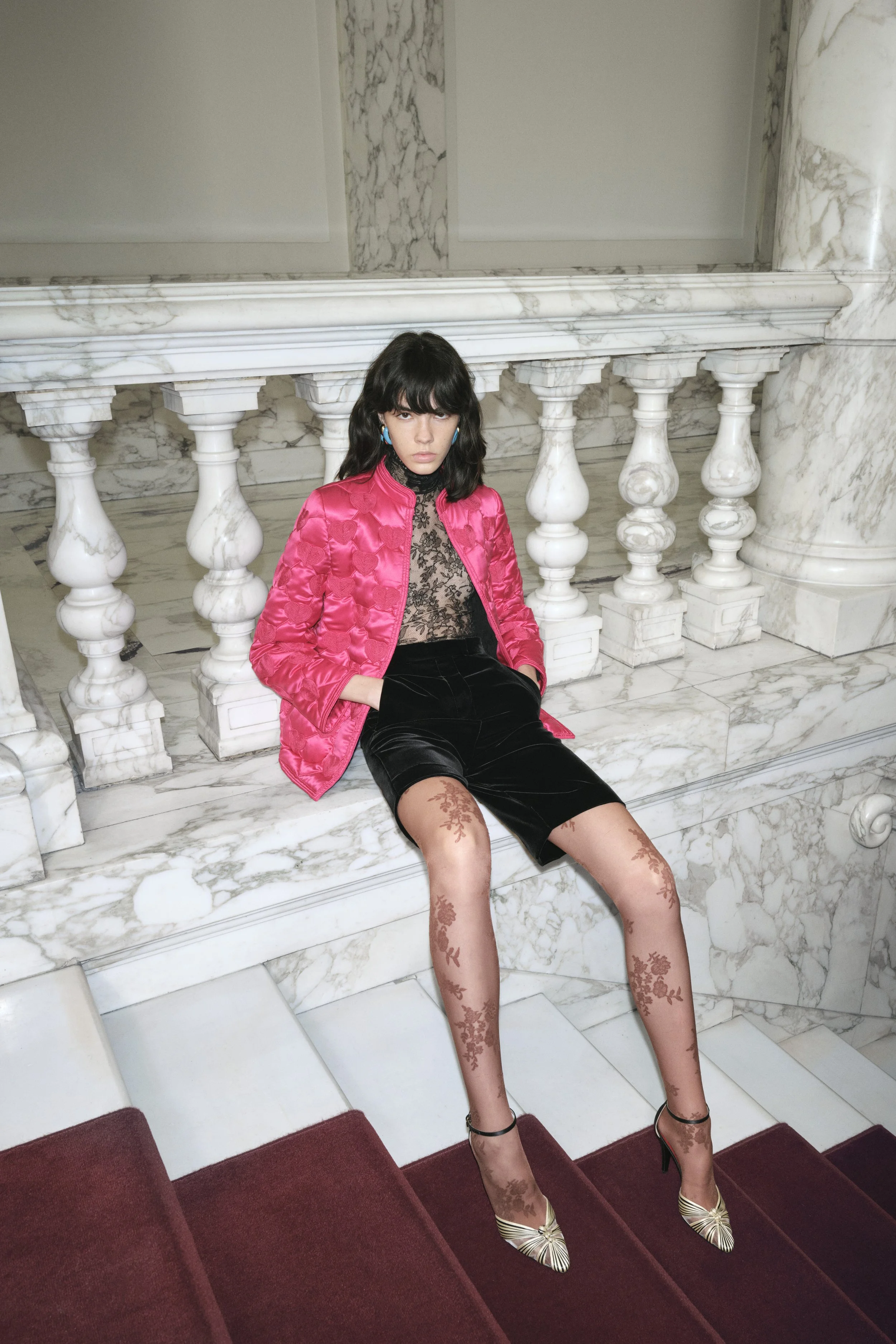
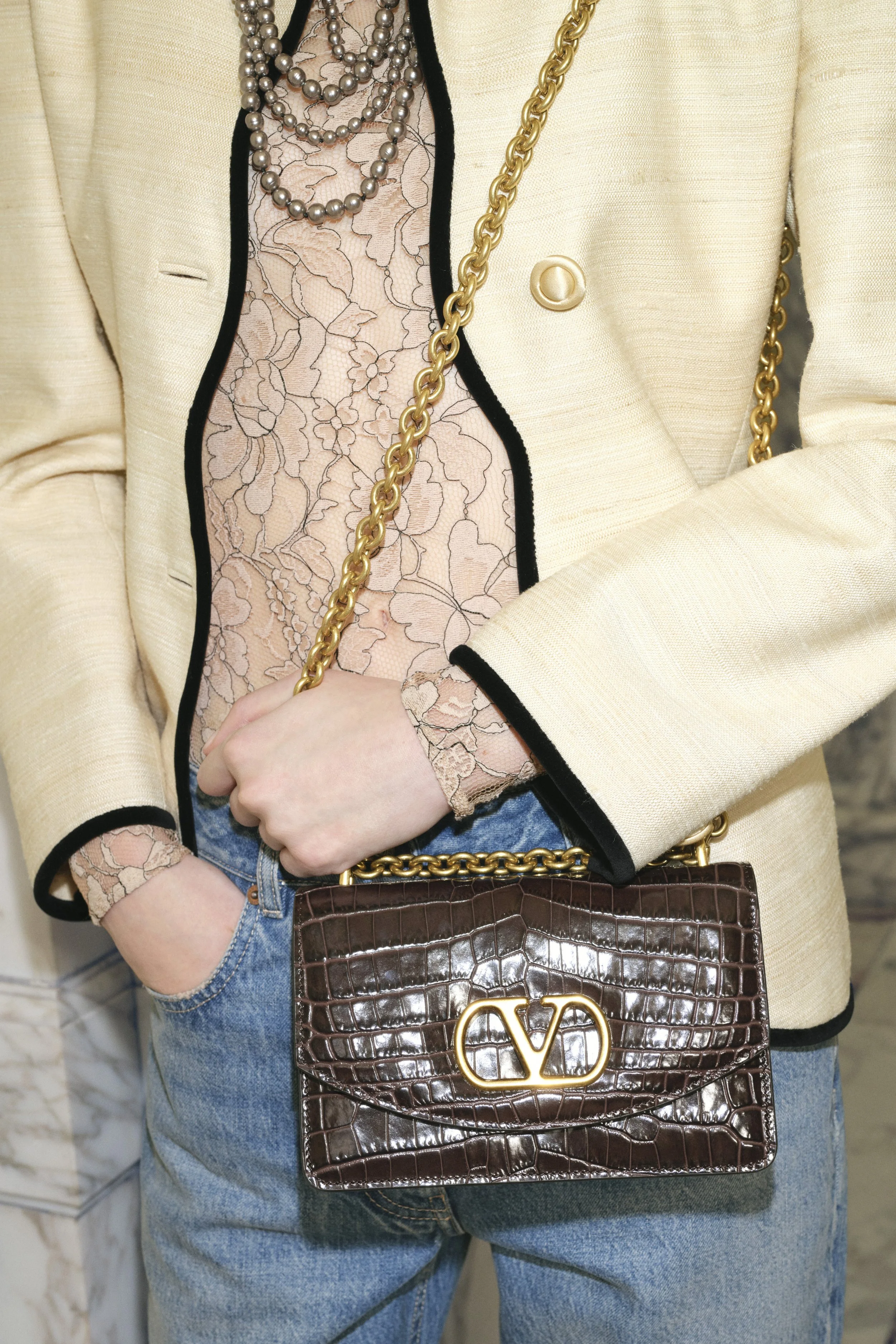
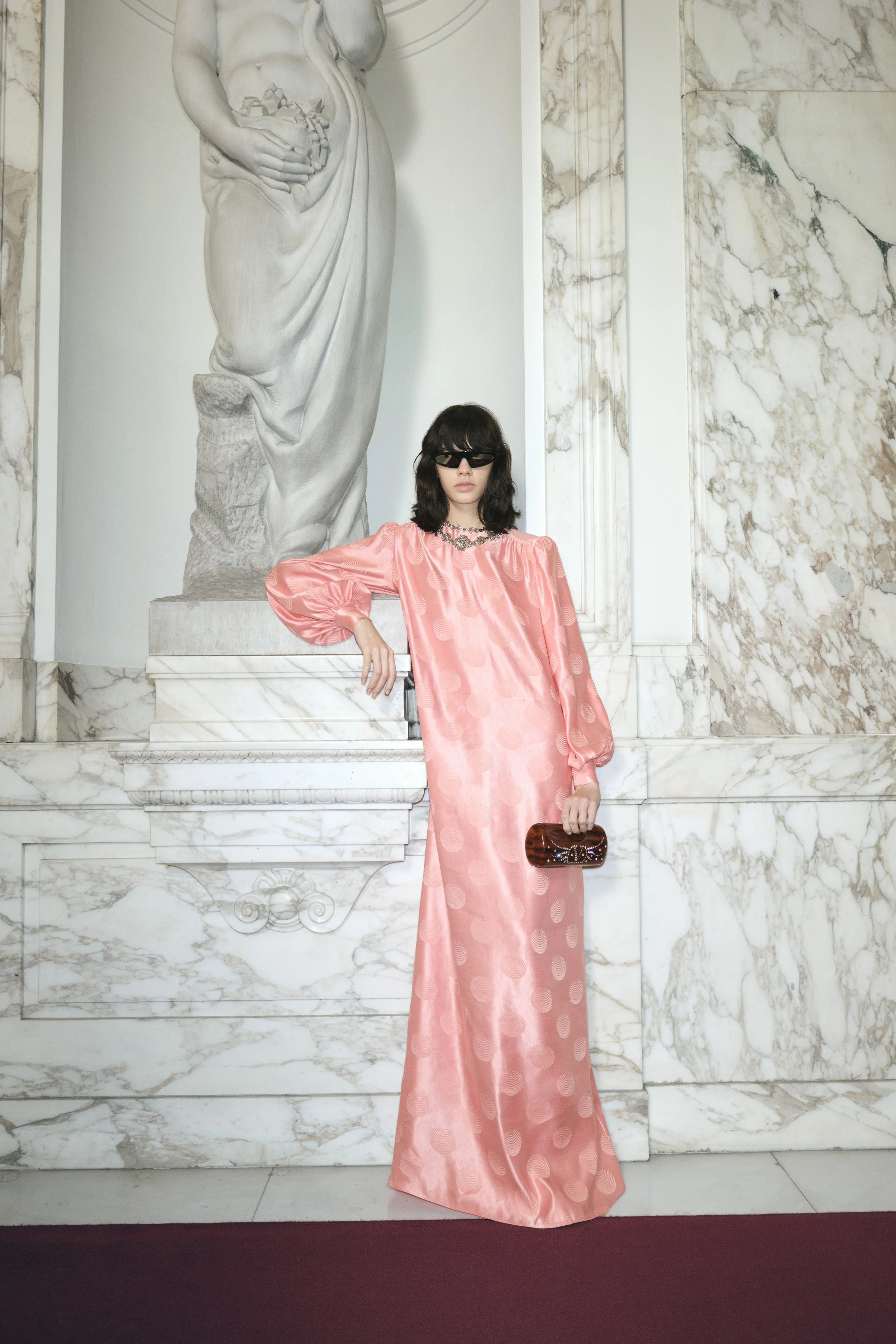
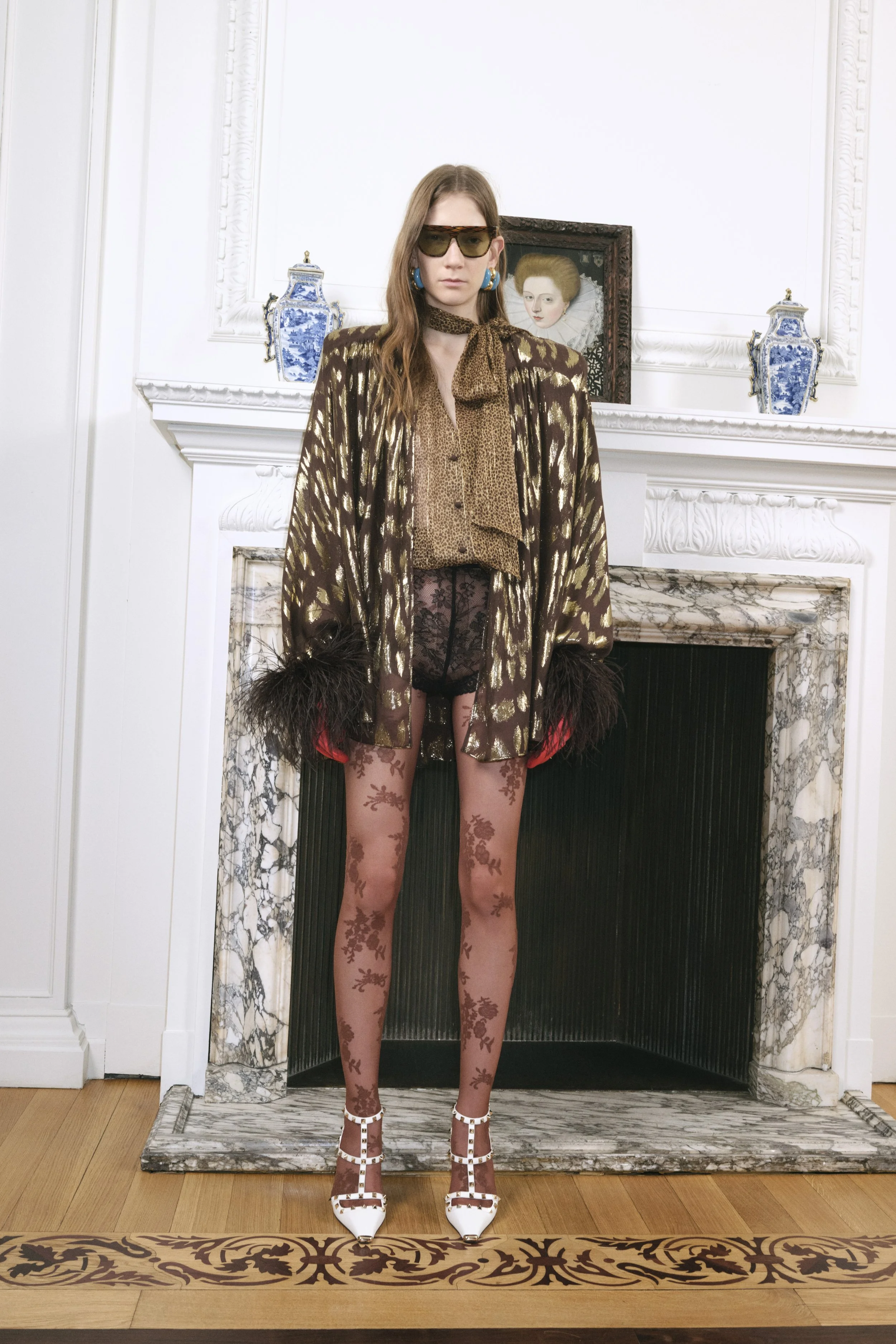
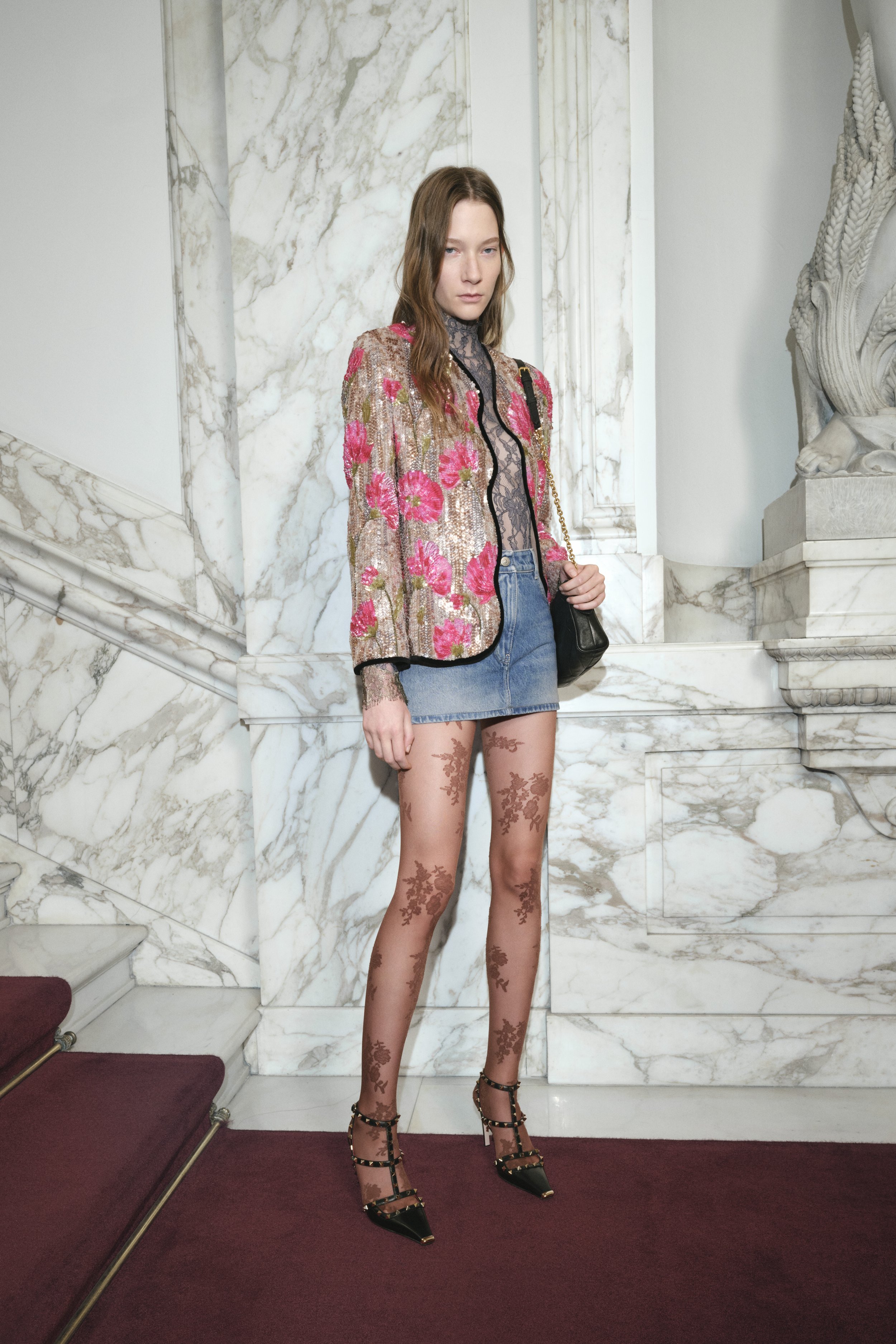
This shift is visible throughout the Pre‑Fall 2026 collection. Silhouettes nod to the 1980s with heightened shoulders and bold color blocking, but the execution is lighter, more fluid. Silk drapes rather than swallows. Tweed becomes airy rather than rigid. Poplin shirting is cut into a striped chemisier minidress that feels effortless, almost mischievous. Linen tailoring appears with scalloped trims outlined in contrasting piping a whisper of whimsy rather than a shout. Even the vichy taffeta skirt suit, embellished with a pleated motif, feels like a reinterpretation rather than a revival.
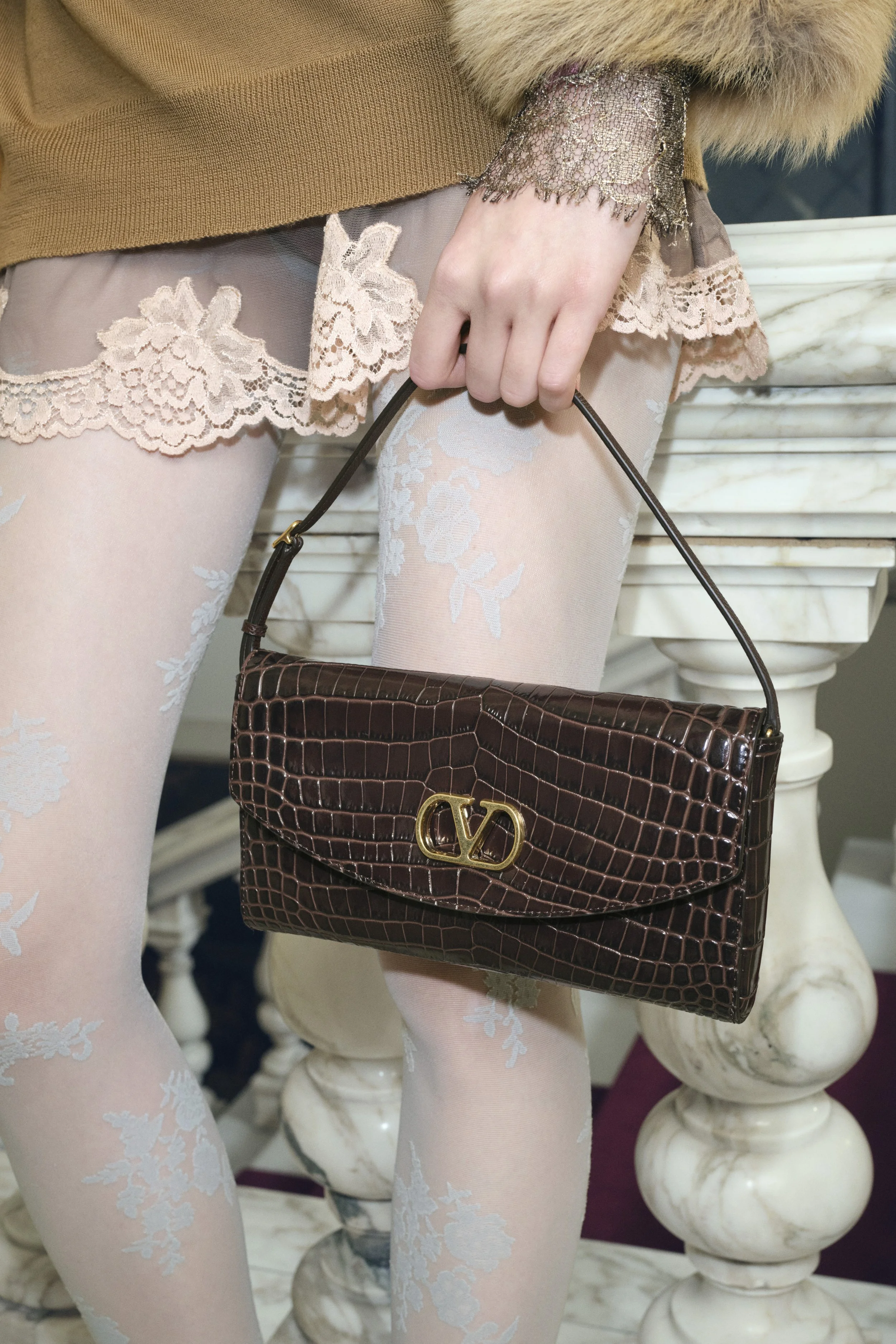
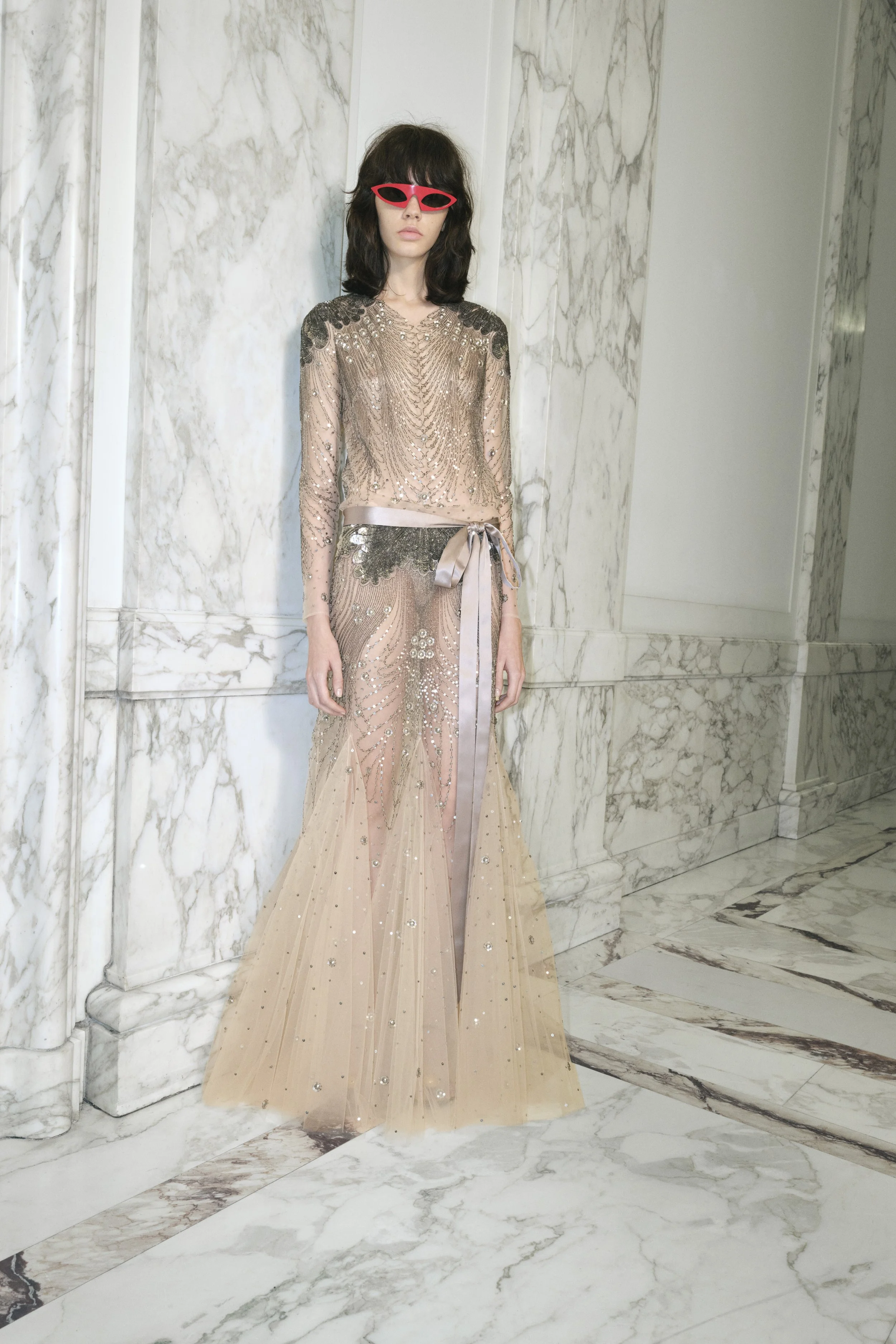
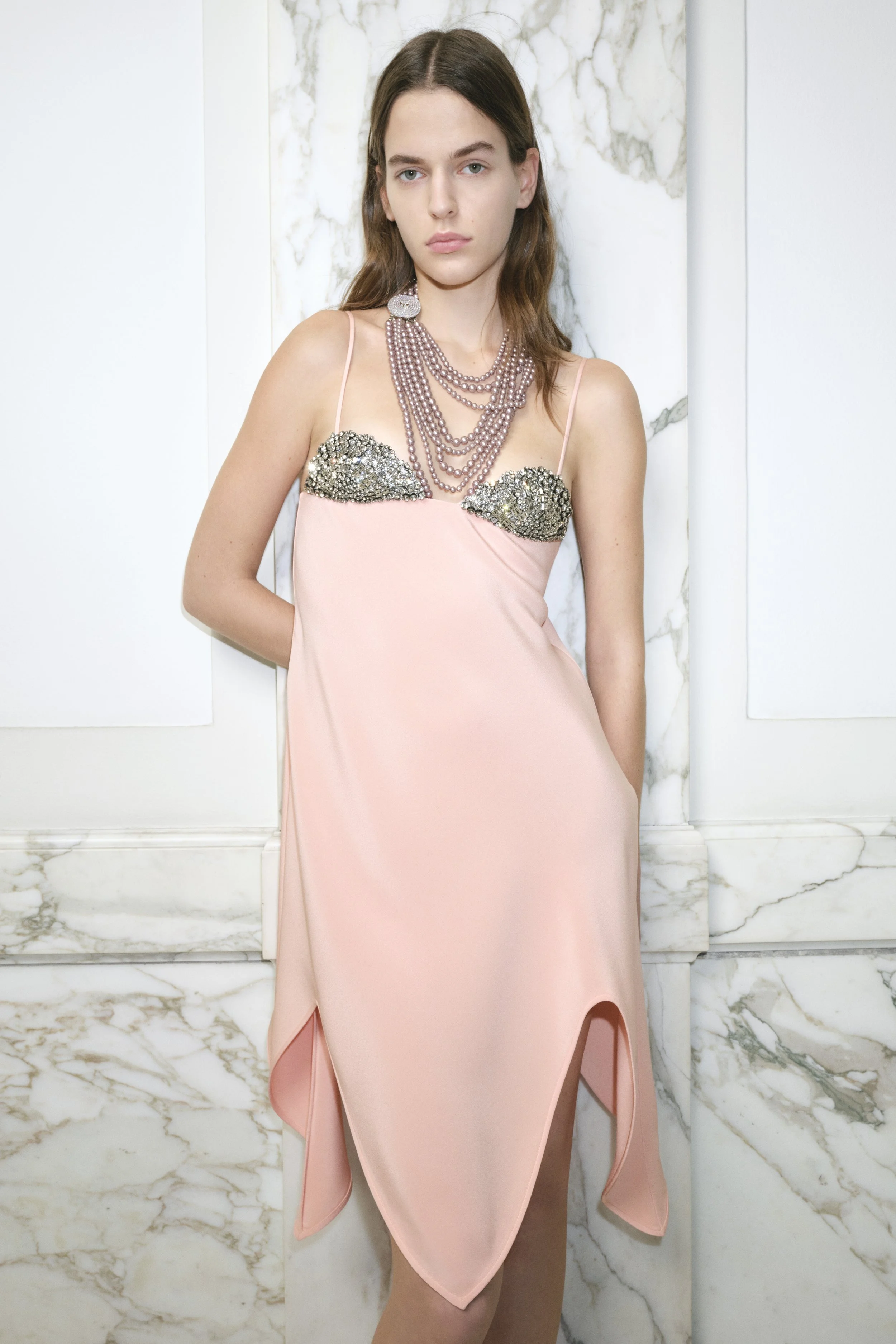
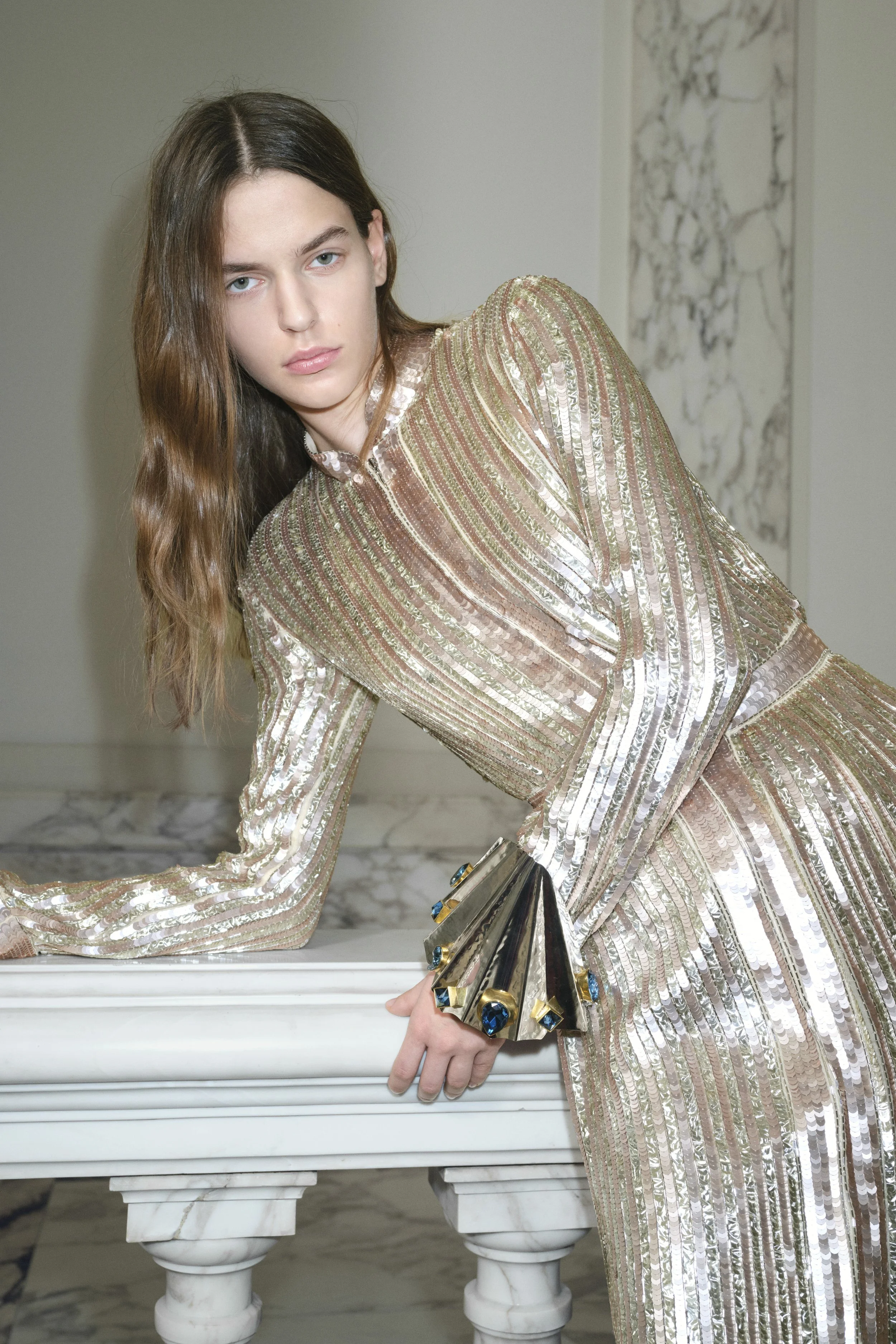
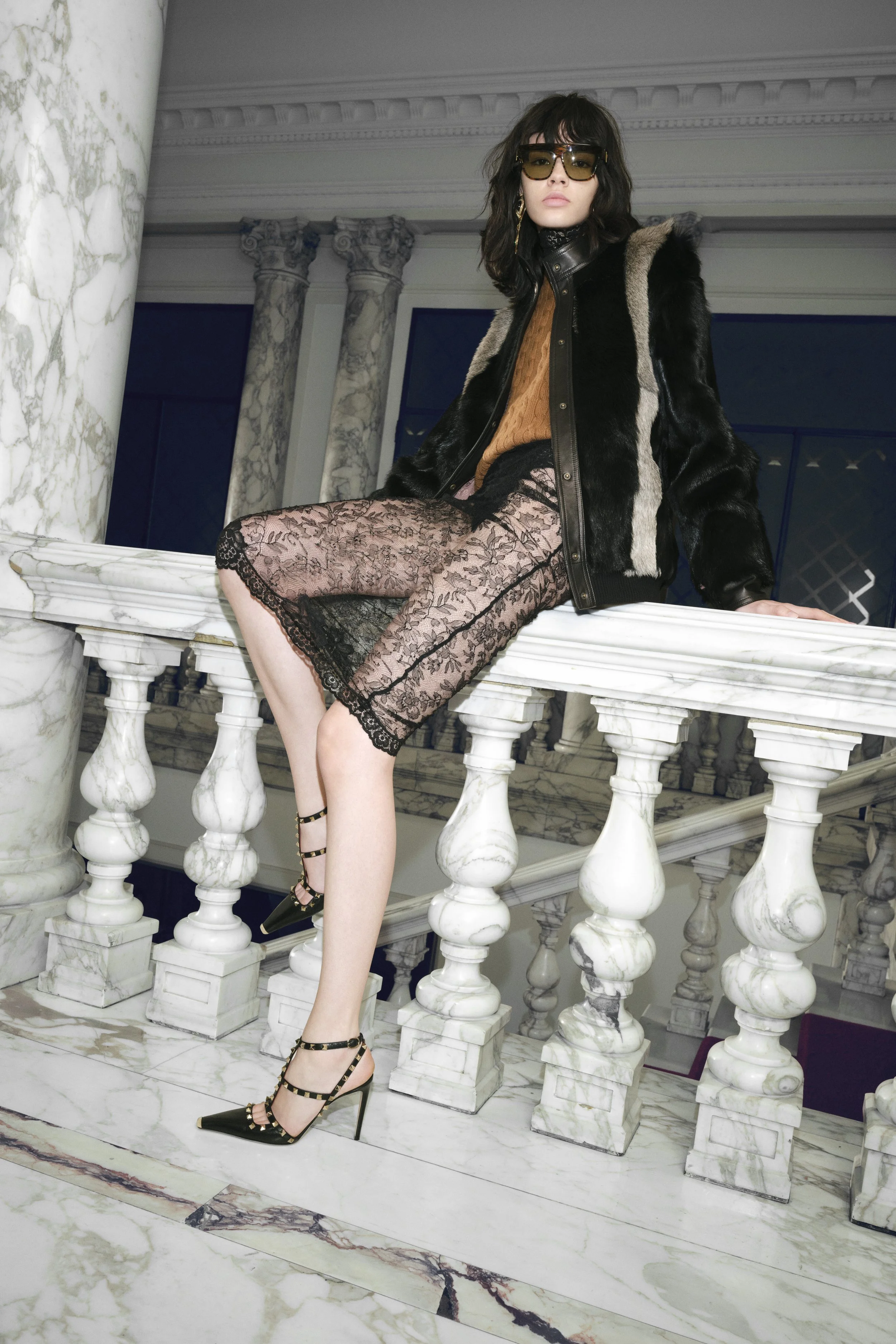
Michele’s play with contrasts is particularly compelling. Lingerie‑inspired pieces meet meaty leather jackets and shearling coats, creating a dialogue between fragility and strength. Archival logos and patterns appear not as nostalgia, but as anchors familiarity reimagined. And then there is the eveningwear: a dreamscape of tulle, sequins, embroideries, and embellishments that remind us that Valentino’s couture heart still beats loudly. If the rest of the collection is Michele exploring absence, the evening looks are where he allows himself to indulge in presence.
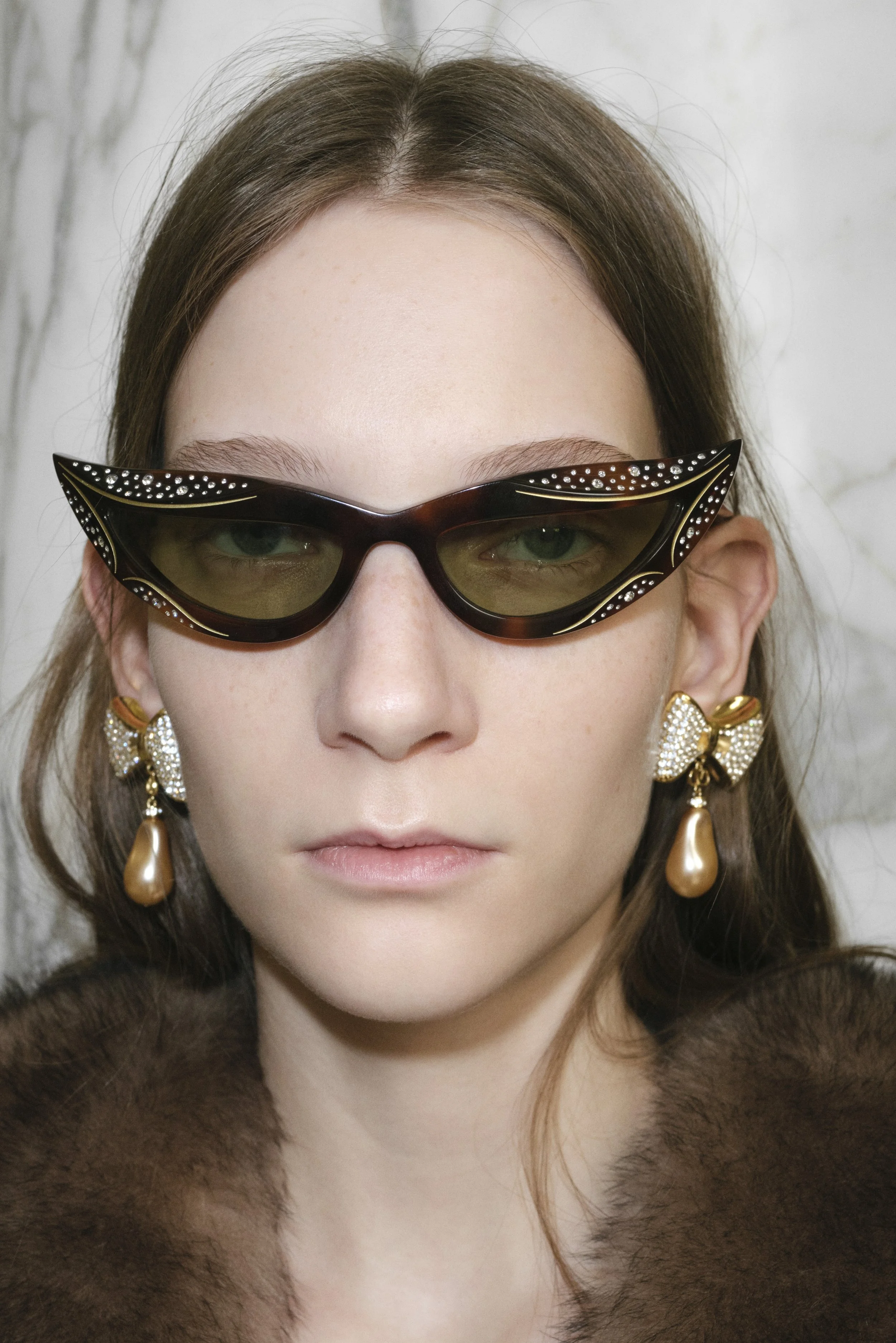
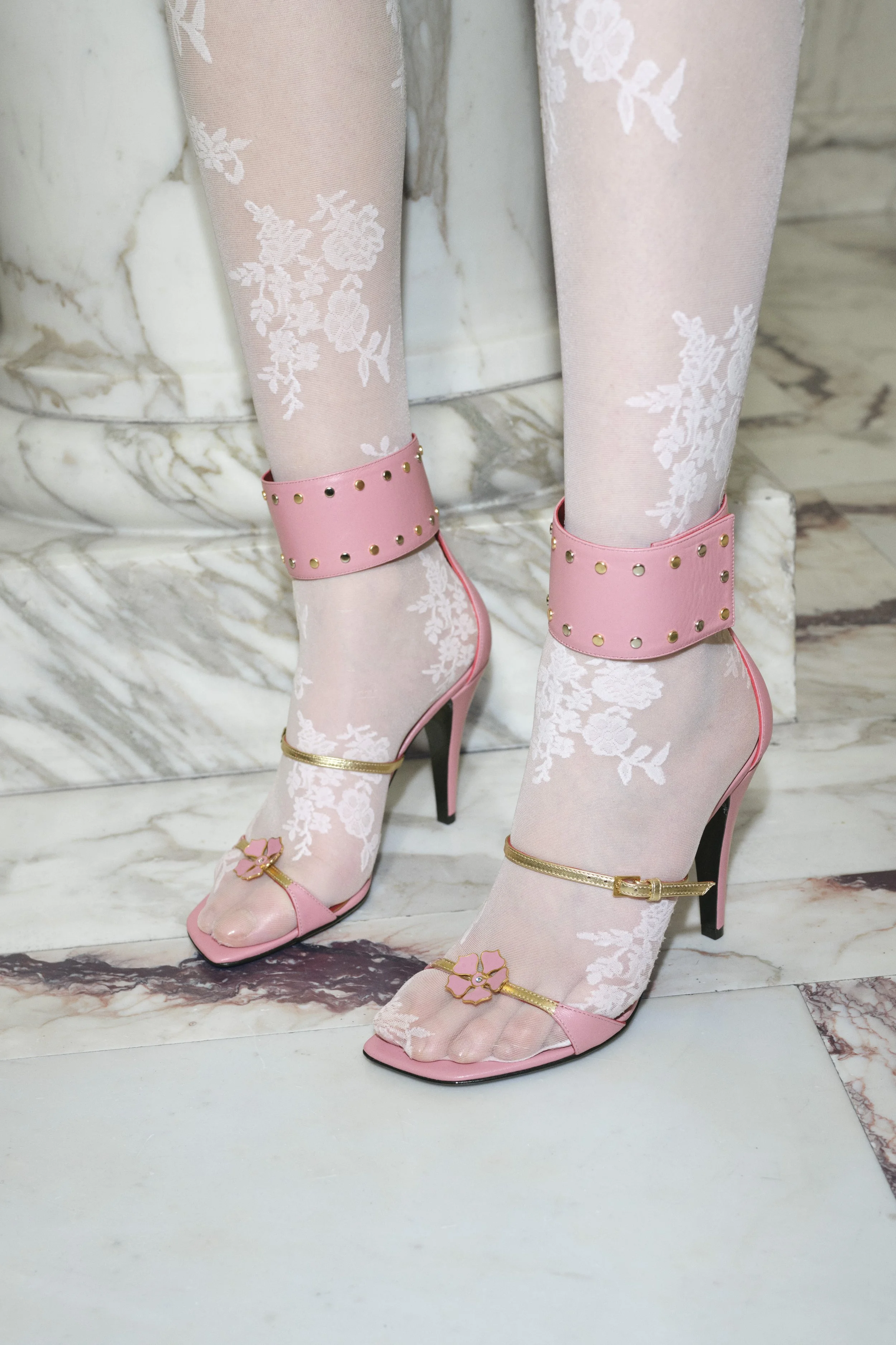
And then, of course, there are the shoes.
The Valentino Rockstud born in 2010 under Maria Grazia Chiuri and Pierpaolo Piccioli became the brand’s bread and butter, its first true entry‑price icon. Loved, hated, debated, but undeniably influential. When a red Rockstud pump appeared in the trailer for The Devil Wears Prada 2, the internet erupted. Many twisted their noses, mine included. It felt off, almost caricatured. Anna Wintour, despite her famously conservative wardrobe, would never be caught in a pair of red pumps. Patricia Field’s absence was felt immediately; she was instrumental to the magic of the first film.
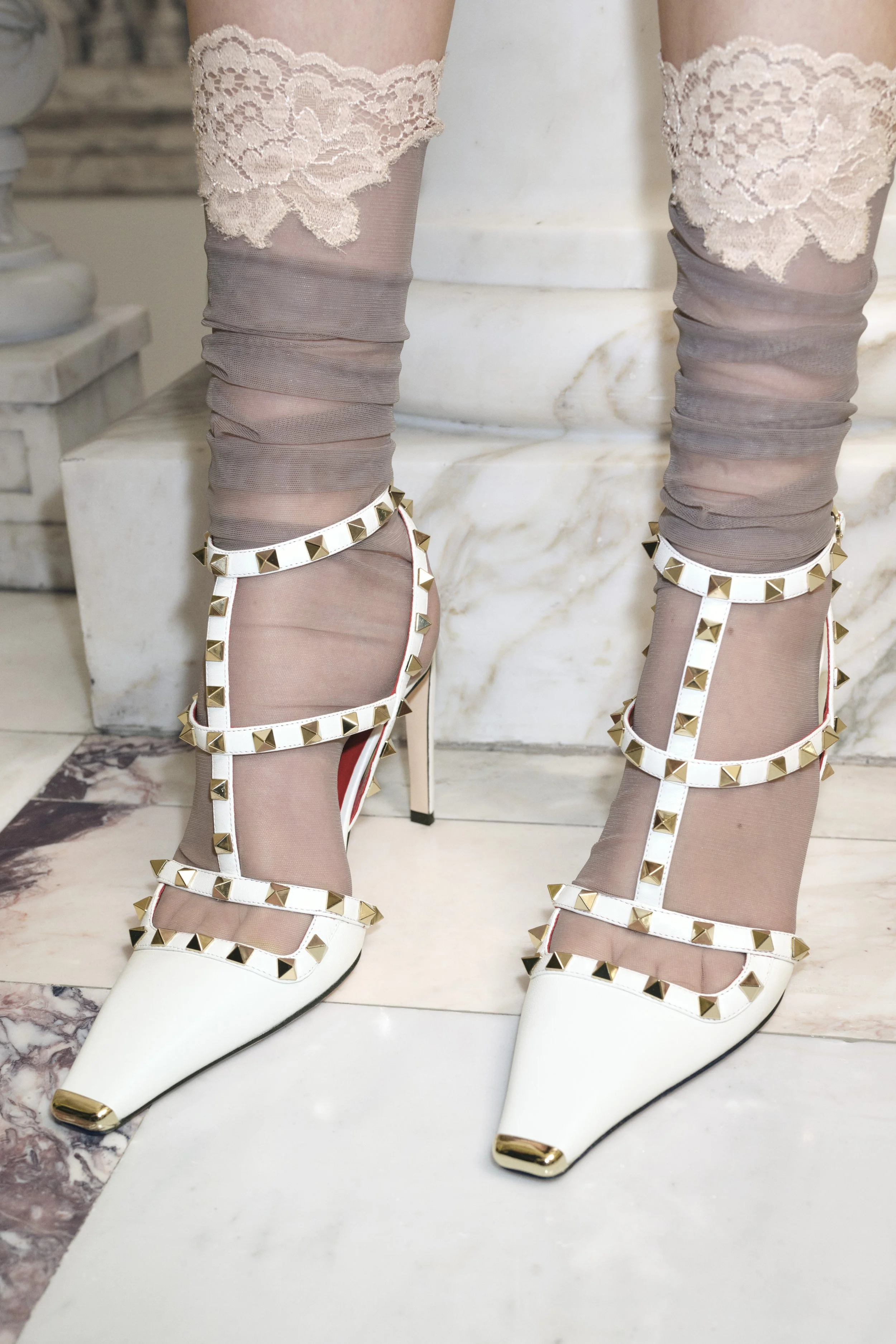
Michele, however, dismissed the moment as pure serendipity. And perhaps it was. Because in his hands, the Rockstud is reborn. The spiky motif remains, but the shoe is transformed: a tapered squared toe, reinforced with a metal cap, sharper, edgier, more directional. It is no longer the Rockstud of 2010 it is the Rockstud of Michele’s Valentino. And that, I believe, will place it firmly back on the fashion radar.
What makes this collection so compelling is not just its beauty, but its honesty. Michele is not trying to recreate the past, nor is he rejecting it. He is engaging with it questioning, editing, reframing. His Valentino is aristocratic, yes, but not in the old sense. It is an aristocracy of imagination, of individuality, of emotional intelligence. It speaks to a generation that values authenticity over perfection, narrative over nostalgia.
Fashion, at its core, is movement. It is the refusal to remain still. The Valentino of the 1960s was perfect for its time, but that time has passed. Today, Michele is writing a new chapter one that honours the house’s heritage while acknowledging the world we live in now. A world where glamour can coexist with informality, where youthfulness is not about age but about attitude, where absence can be as expressive as excess.
Pre‑Fall 2026 is not just a collection. It is a statement of intent. A reminder that even the most storied houses must evolve. And under Alessandro Michele, Valentino is not just evolving it is dreaming again.