
Gucci Cruise 2026–27: When Times Square Became a Runway of Real New Yorkers
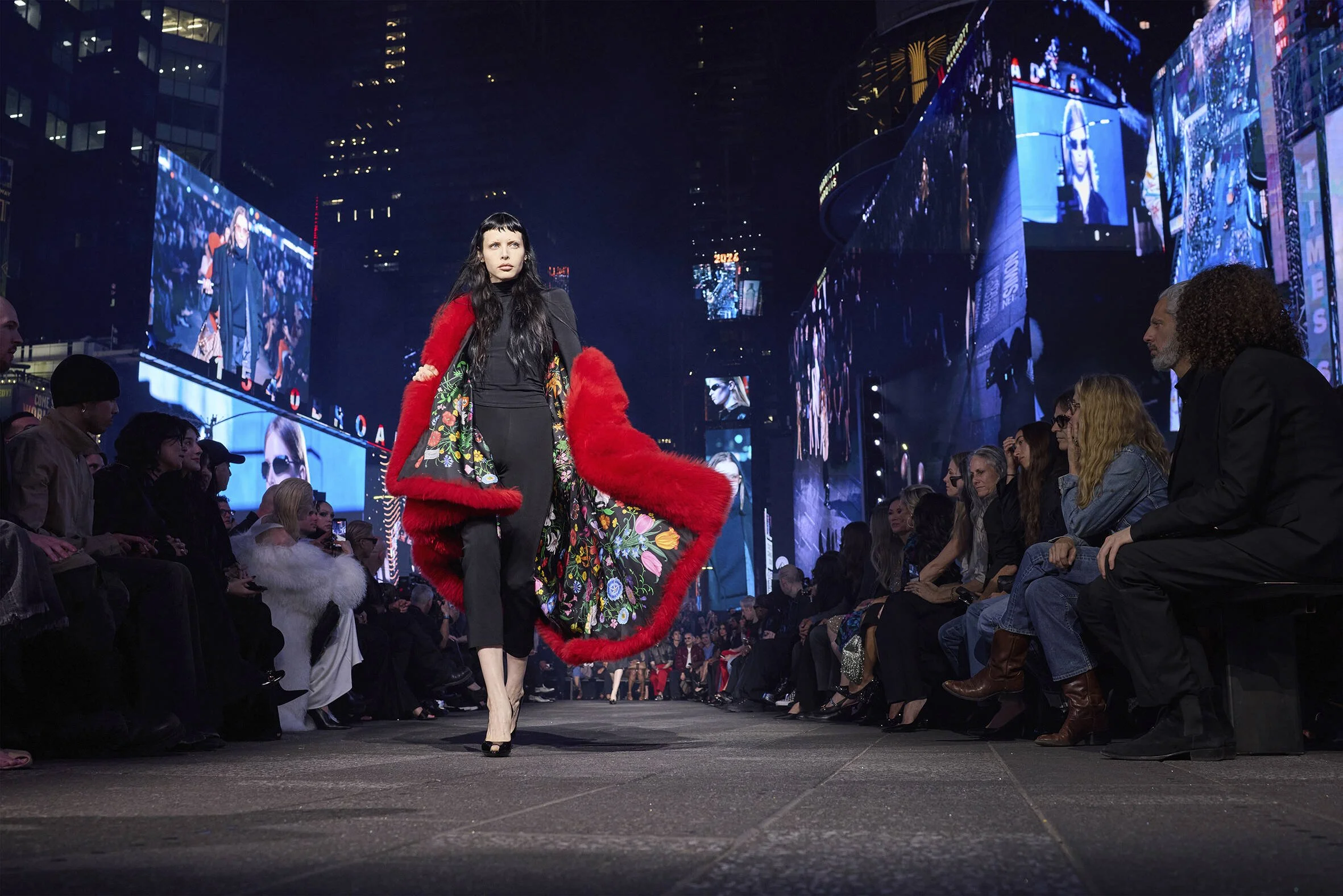
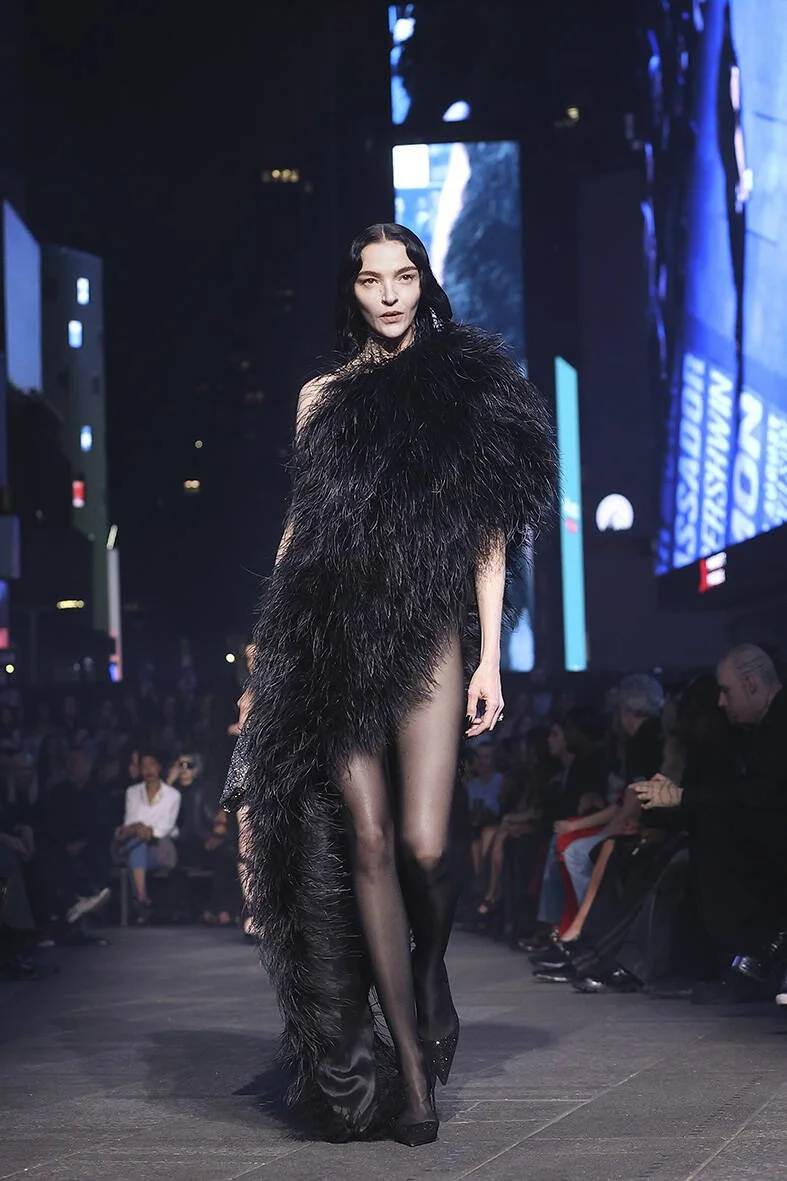
Gucci didn’t just stage a show in New York it shut down Times Square. For one night, the world’s most frenetic crossroads transformed into a cinematic runway, every billboard, every screen, every corner pulsing with the House’s vision. It was a mega‑production of rare scale, the kind of cultural takeover only Gucci can deliver, and a reminder that fashion, when executed with ambition, can still stop a city in its tracks.
In the days leading up to the show, Gucci teased the world with a series of videos on social media featuring personalities like Gabbriette, Shawn Mendes, and Moda Operandi’s visionary founder Lauren Santo Domingo. Lauren’s message which we shared on Luxury Endless ahead of the event hinted at the show’s true direction. She spoke about New York’s real characters: the stockbrokers, the businesspeople, the skaters, the socialites. Her words immediately suggested that Demna Gvasalia would focus not only on garments, but on the people who animate the city, much like he did with his debut Gucci collection, La Famiglia.
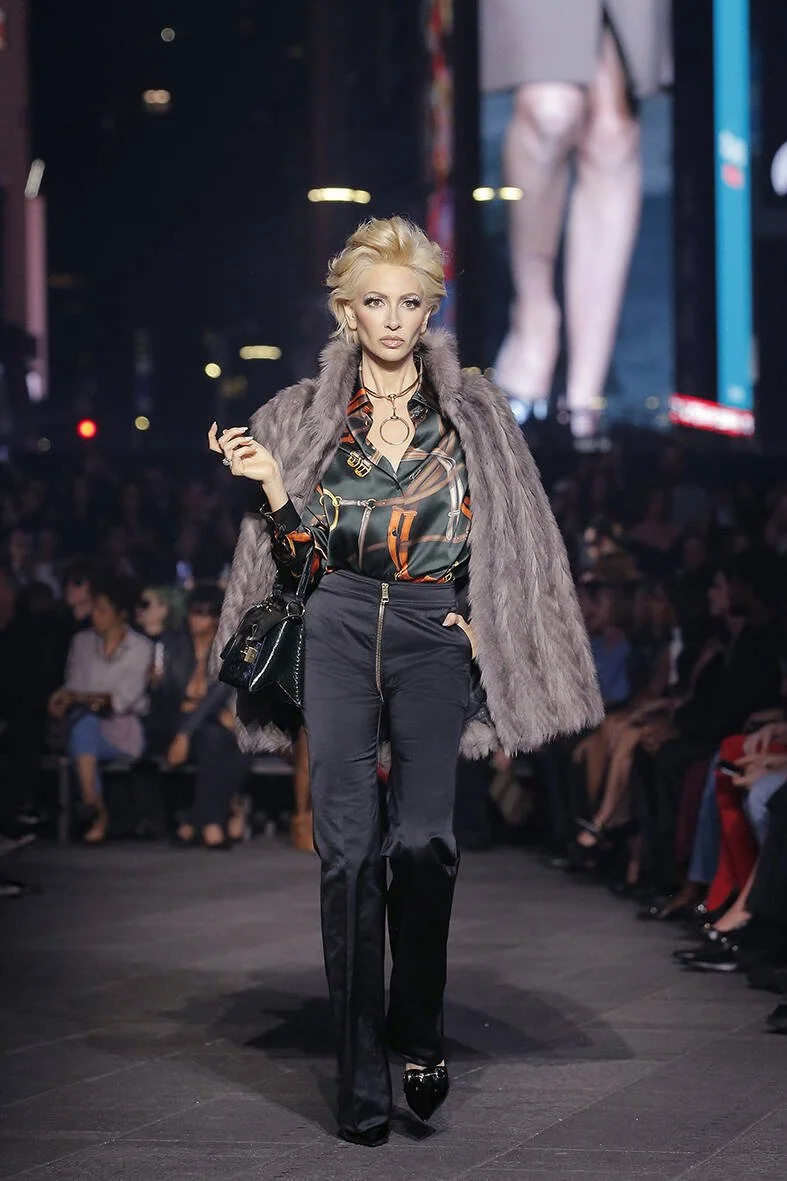
I personally found this approach deeply compelling. Any brand can appeal to a wide audience; what makes the difference is styling, attitude, and the way a look is lived. Fashion becomes powerful when it reflects real people their energy, their contradictions, their rhythm. And Demna understands this better than most.
The scale of the production recalled Alessandro Michele’s Gucci Love Parade, when the House took over Hollywood Boulevard. But this time, the backdrop was New York a city that has held a singular place in Gucci’s history for over 70 years. It was here, in 1953, that Gucci opened its first store outside Italy. Returning to New York for Cruise 2026–27 felt less like a choice and more like a homecoming.
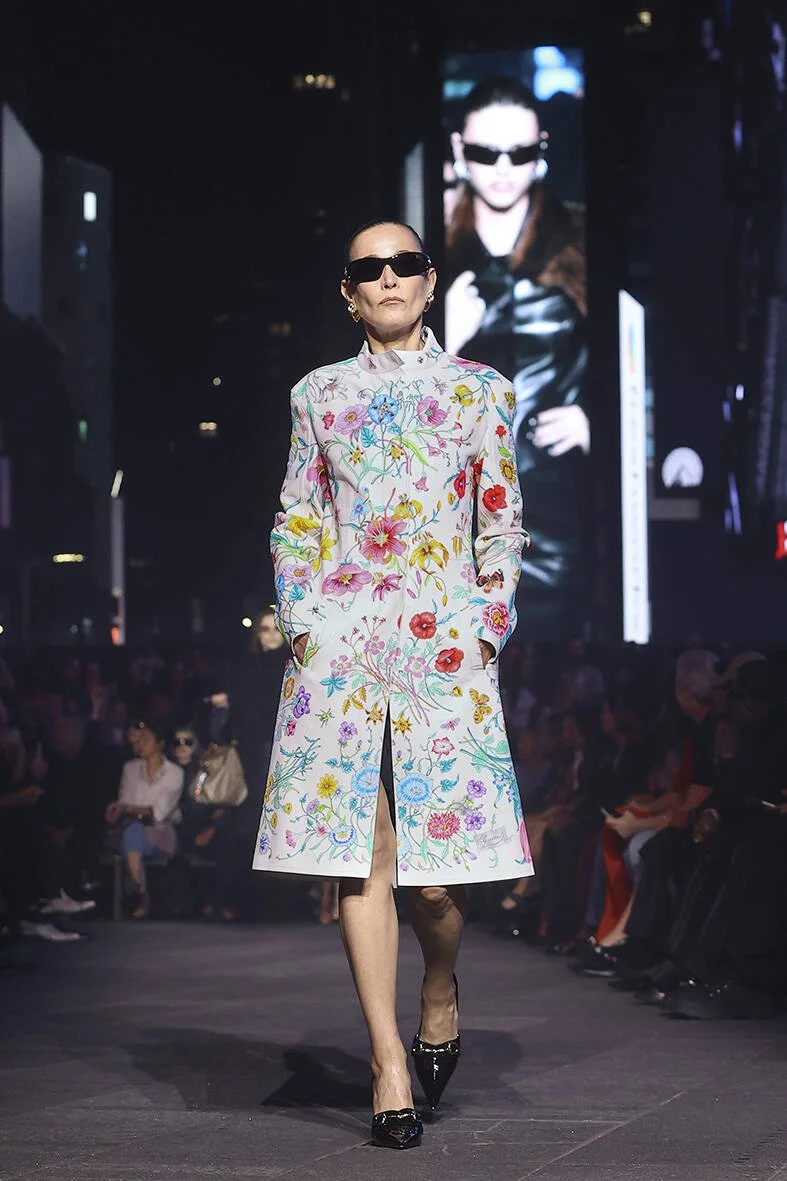
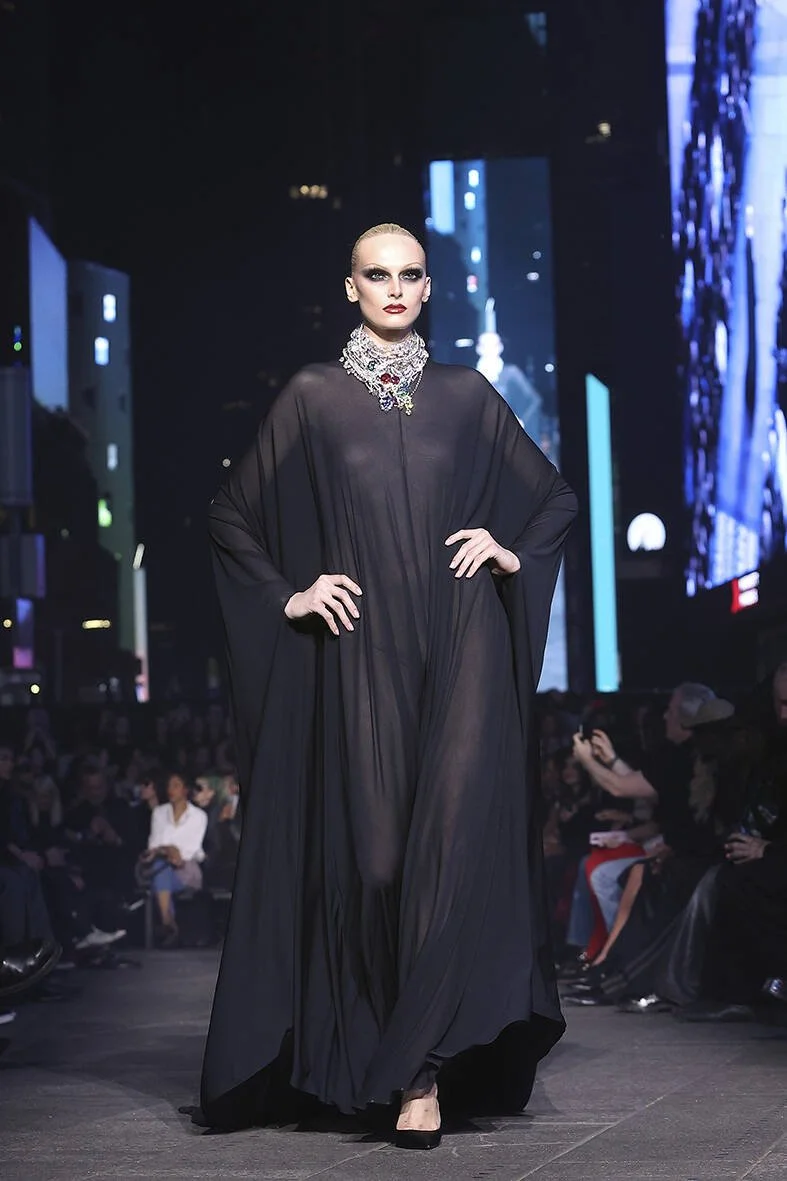
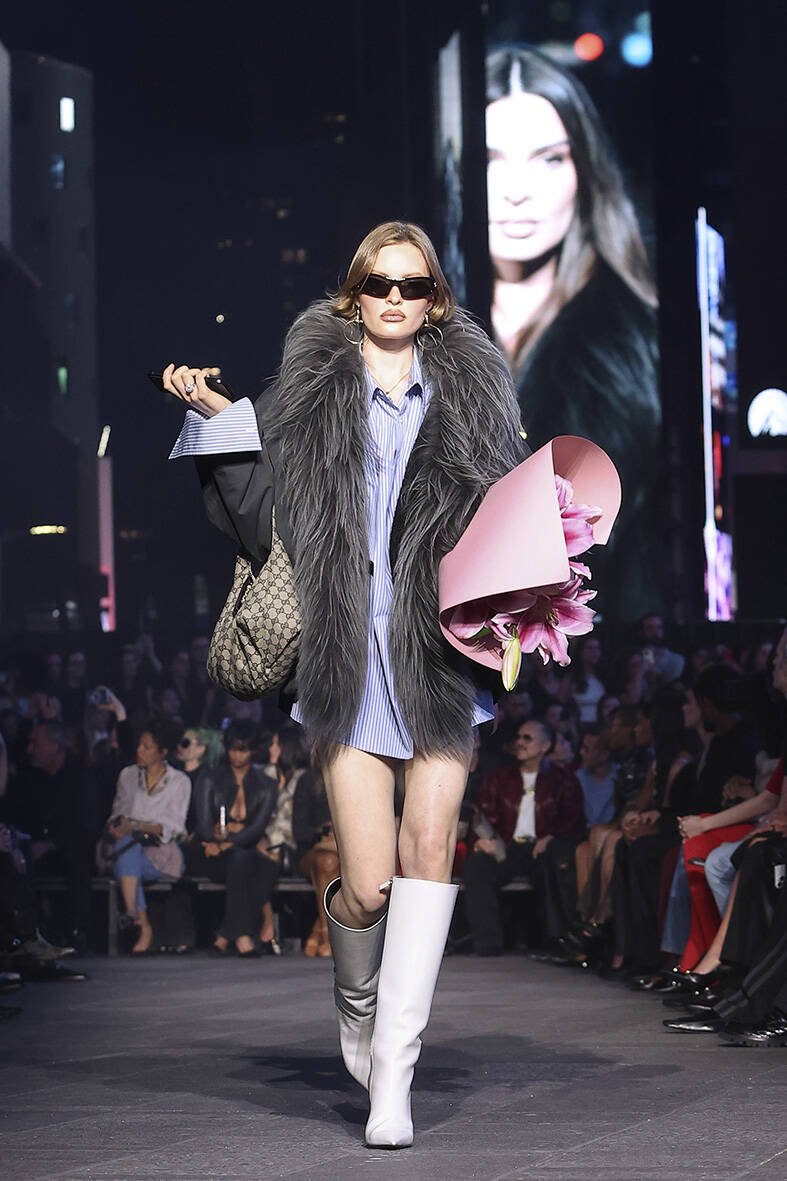
GucciCore: A Portrait of the City
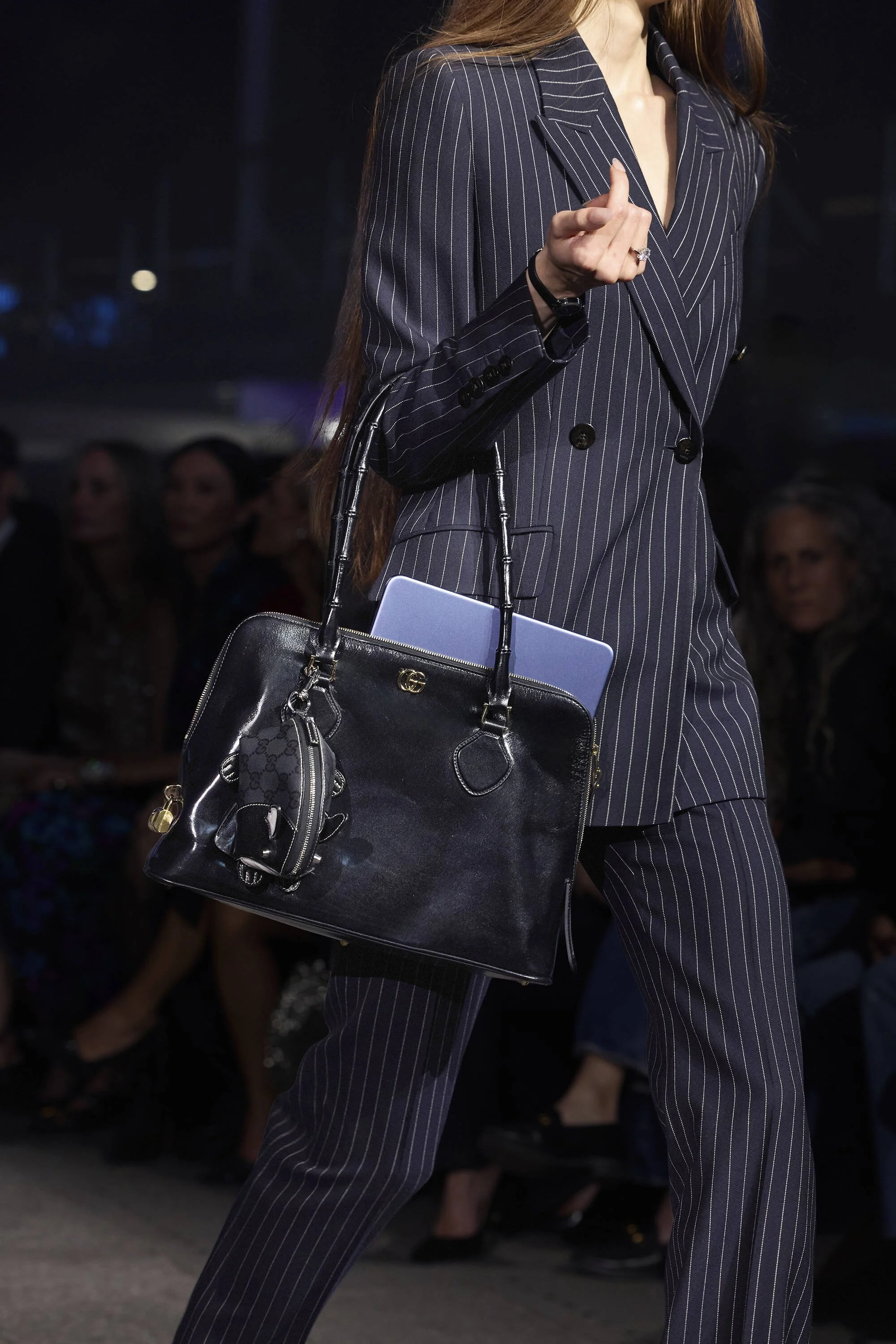
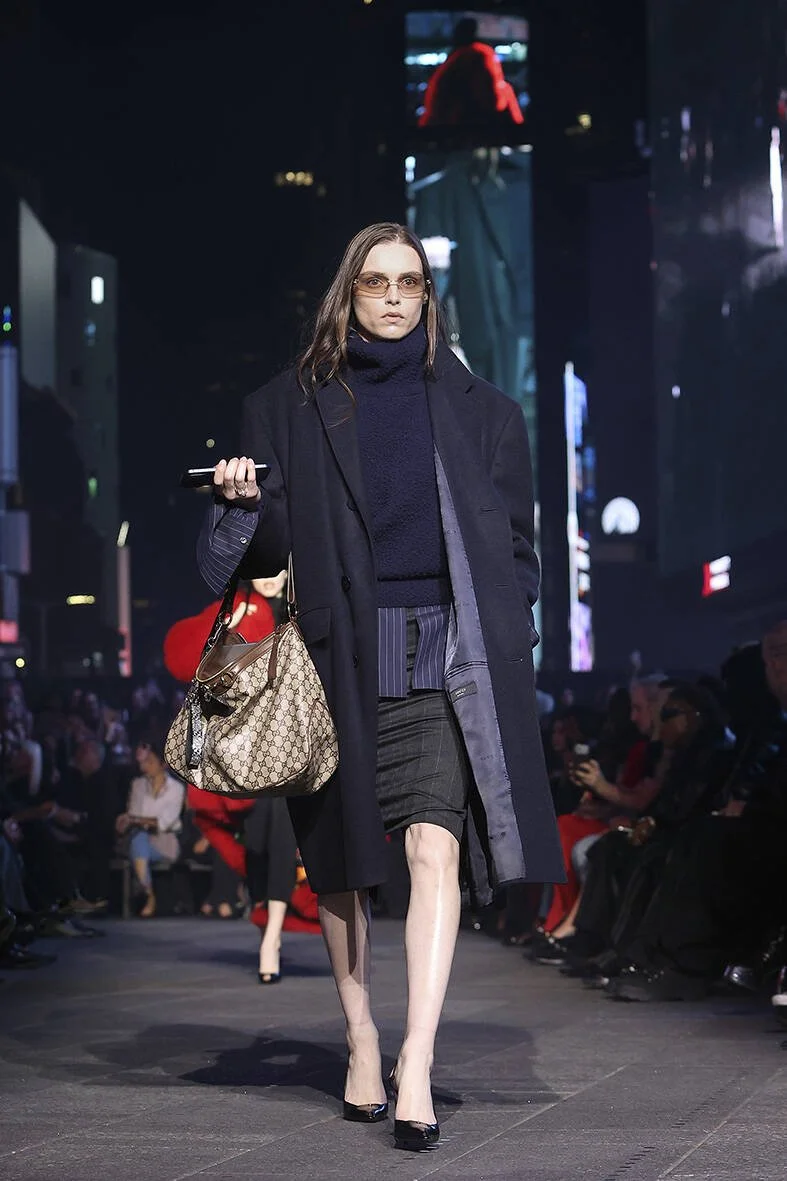
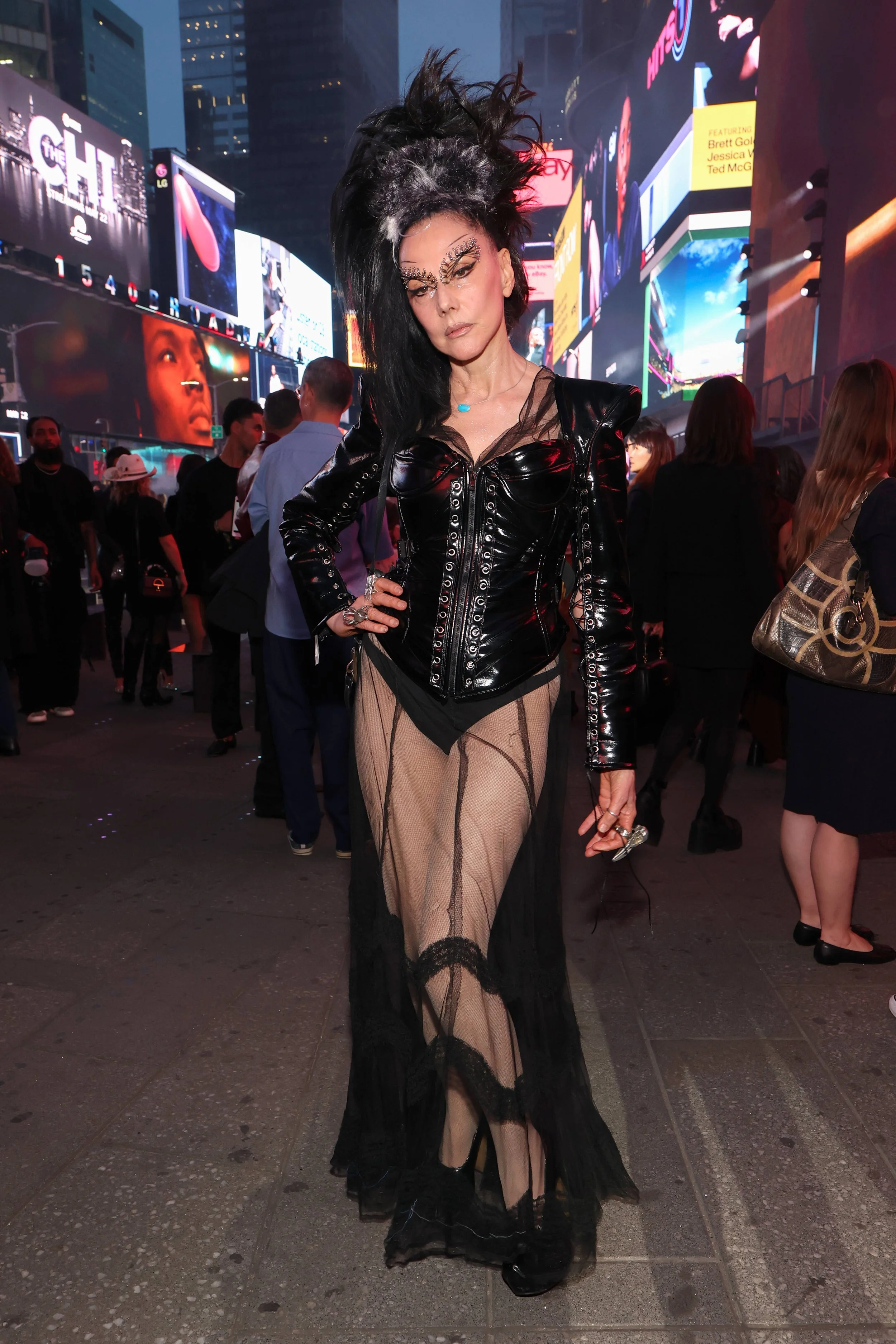
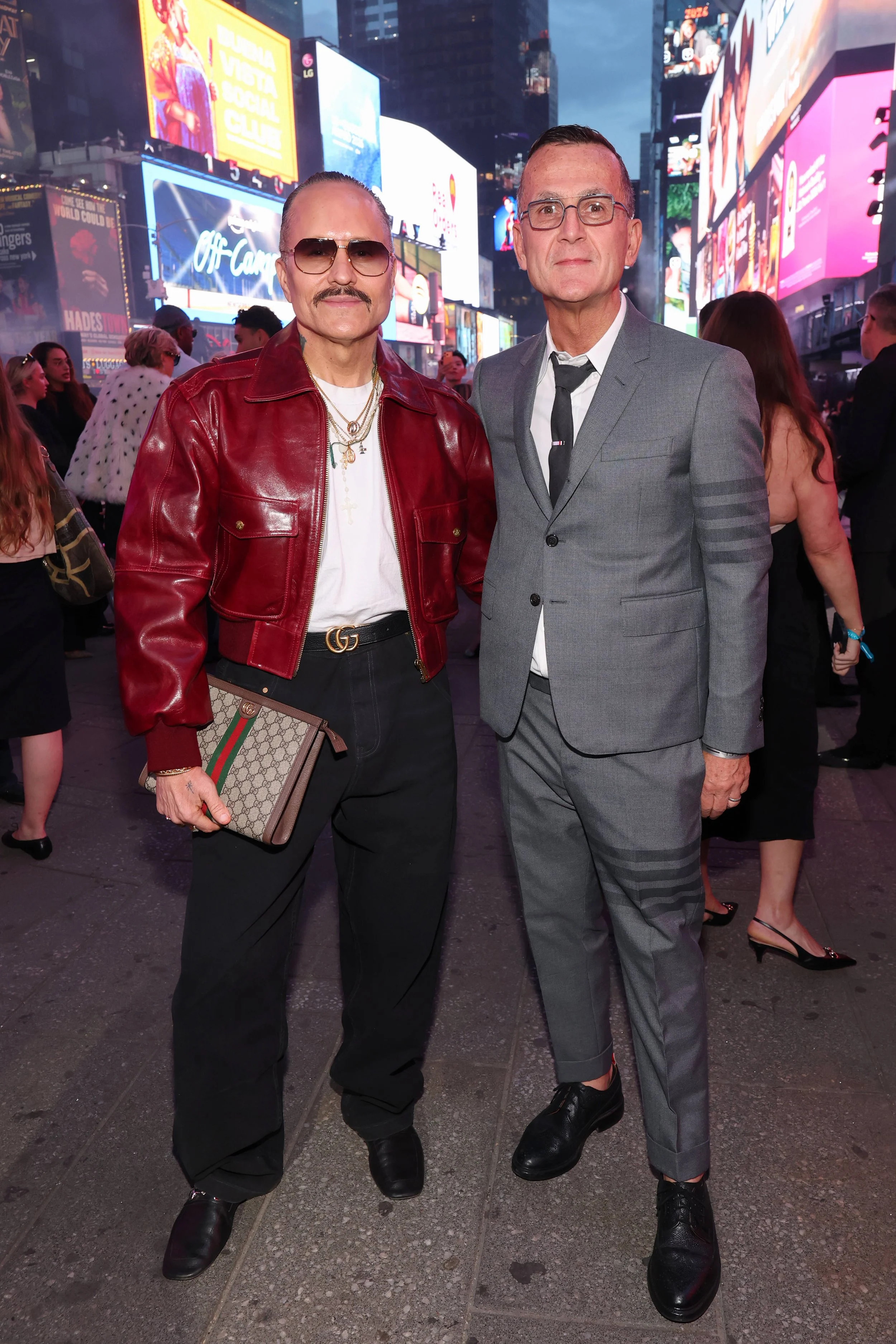
The collection, titled GucciCore, was a stylistic cross‑section of New York itself — from Madison Avenue to Brooklyn, SoHo to Harlem, Fifth Avenue to the Lower East Side. It was a wardrobe built around the kinds of people one might pass on the street: stockbrokers in pinstripes, businesswomen in sharp tailoring, ladies who lunch in shearling coats worn with effortless insouciance, skaters in soft tailoring and slouchy denim, philanthropists and socialites in gowns and pantsuits. A plurality of styles intersecting like the streets of the city.
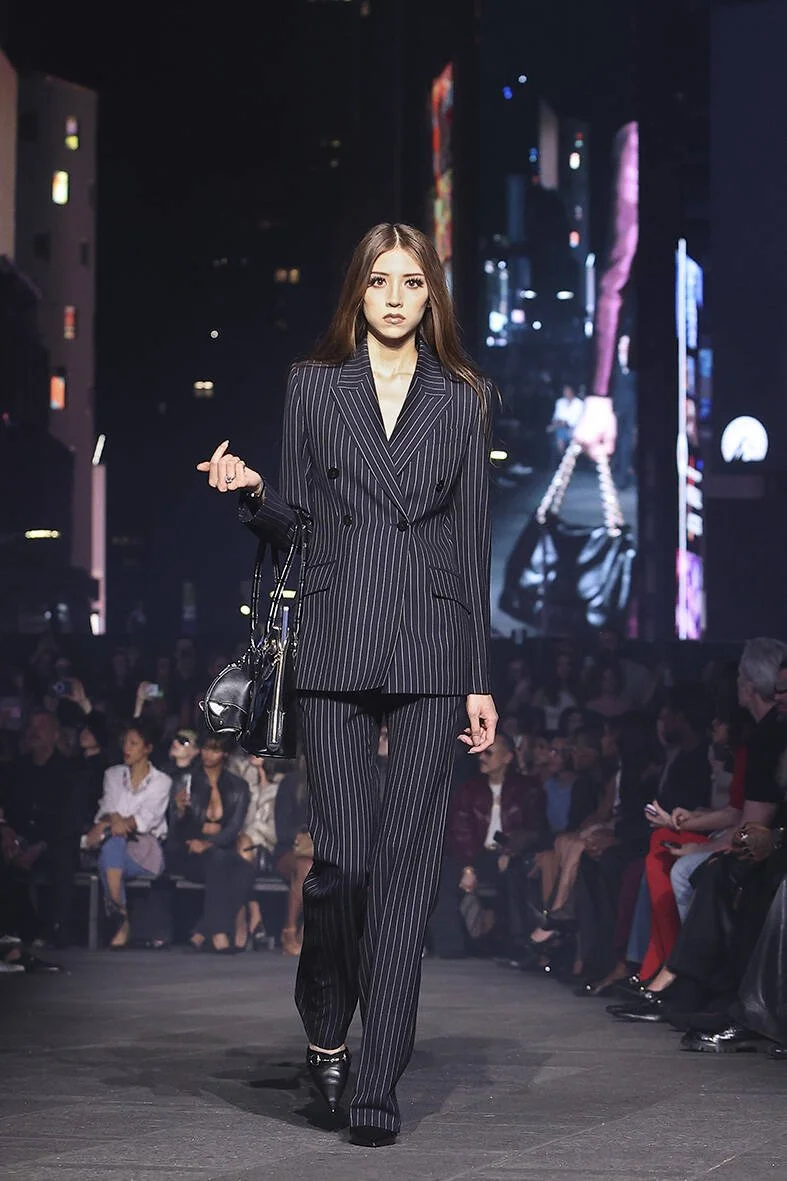
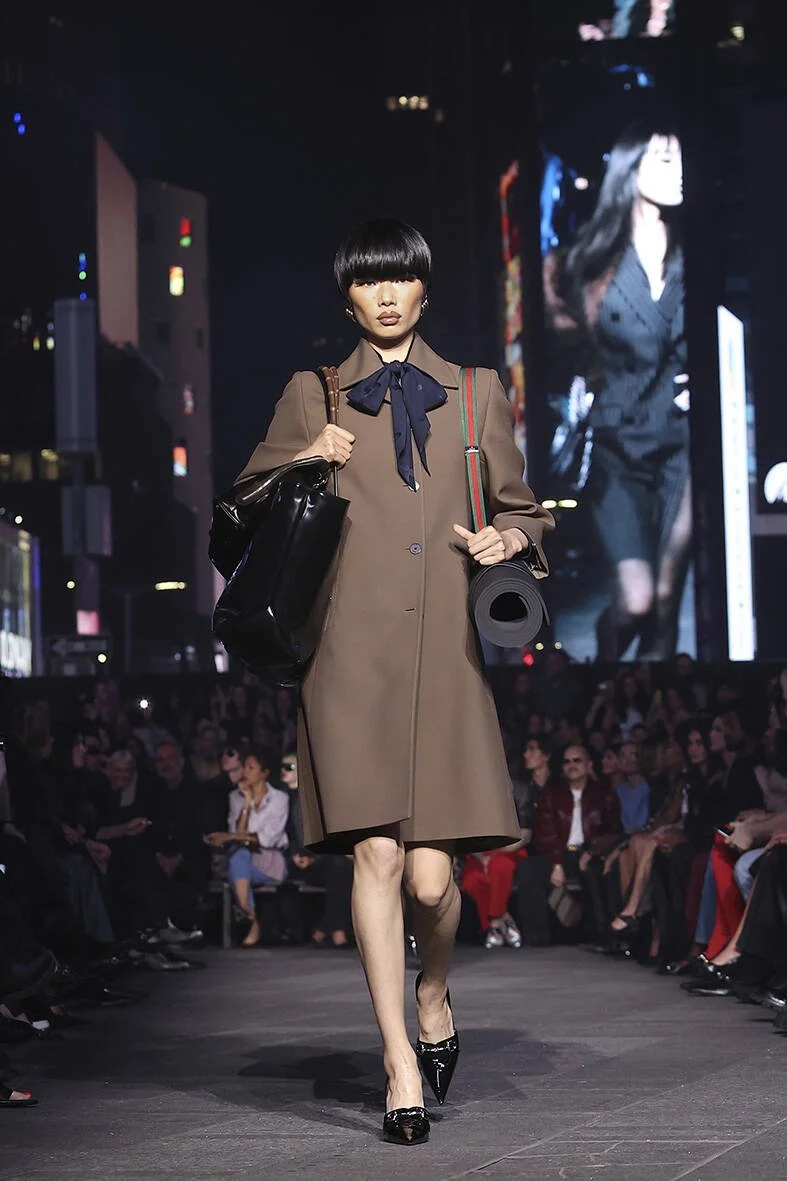
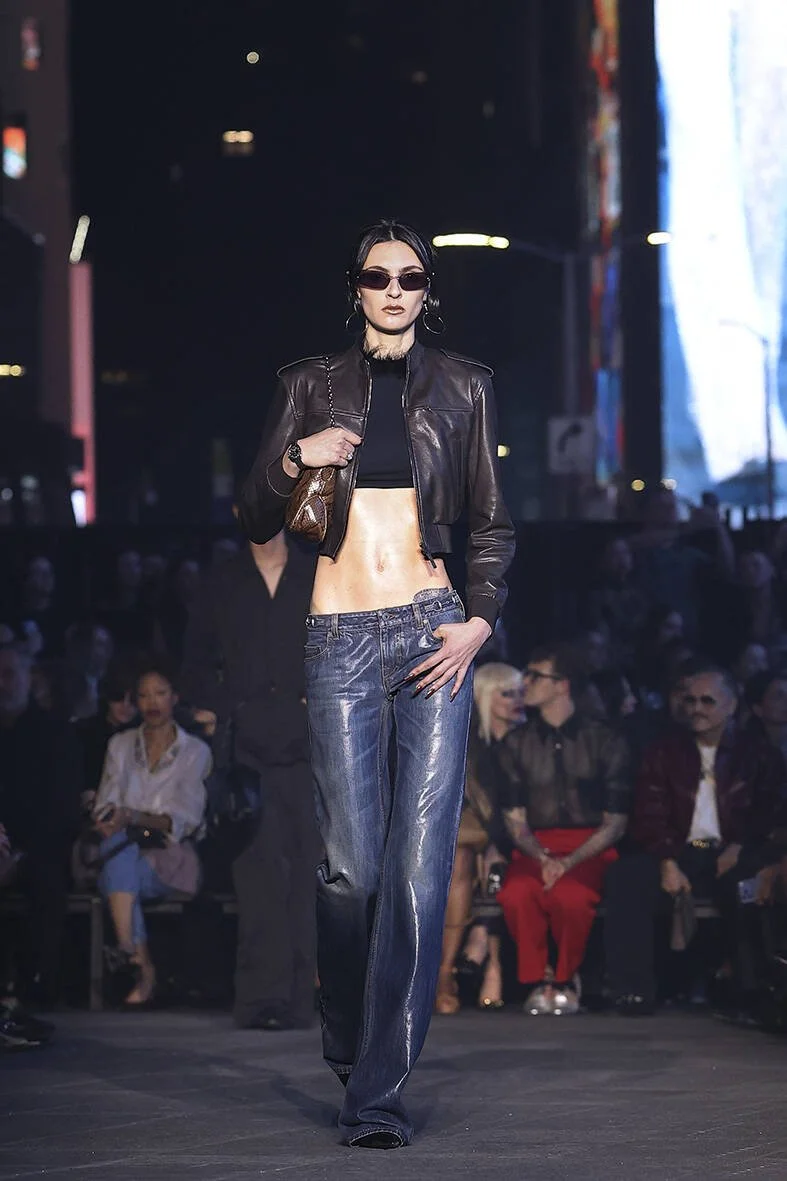
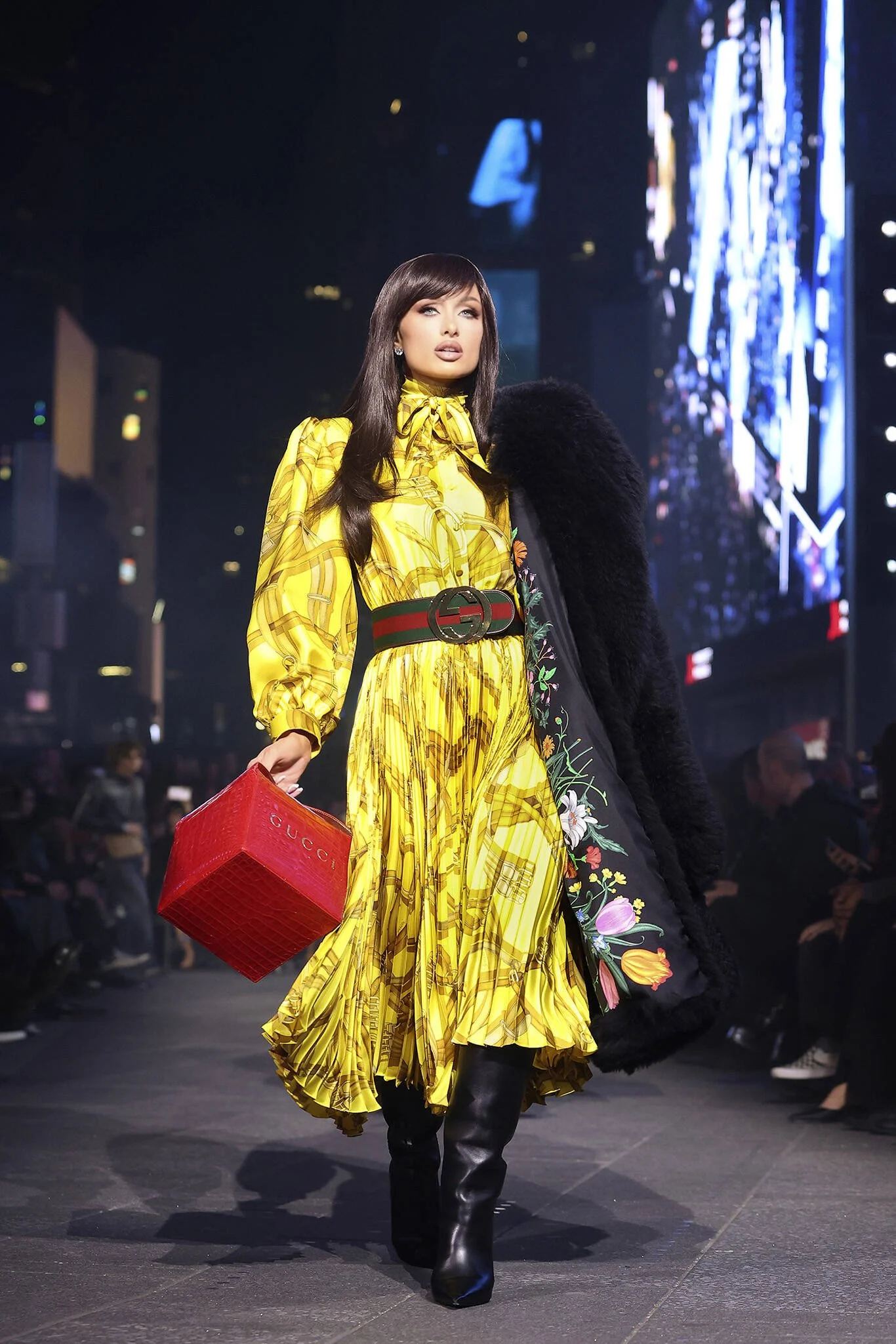
The silhouettes were rich with contrasts. Plush circular duvet stoles in butter‑soft leather and monogrammed fabrics abandoned function in favour of pure form, while reversible technical coats and textured shearling pieces grounded the collection in pragmatic luxury. The iconic Web stripe appeared as a bandeau top a House signature reimagined into a singular garment.
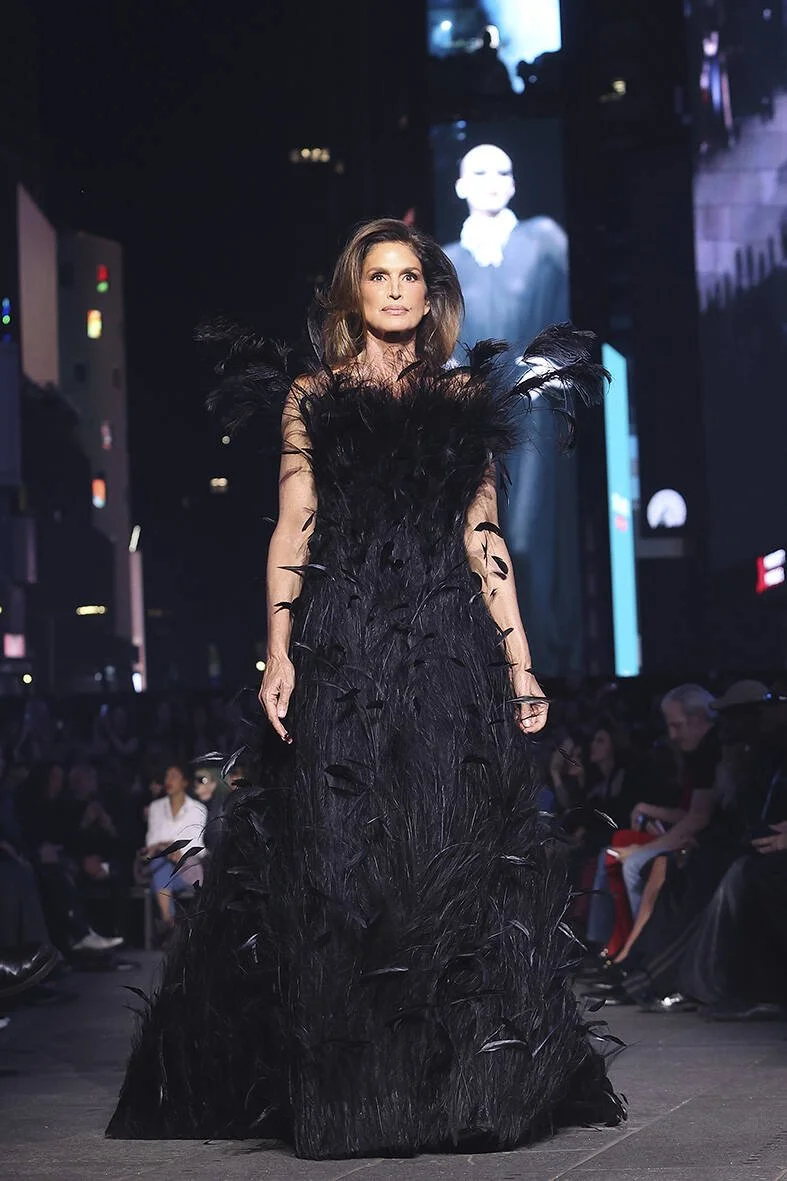
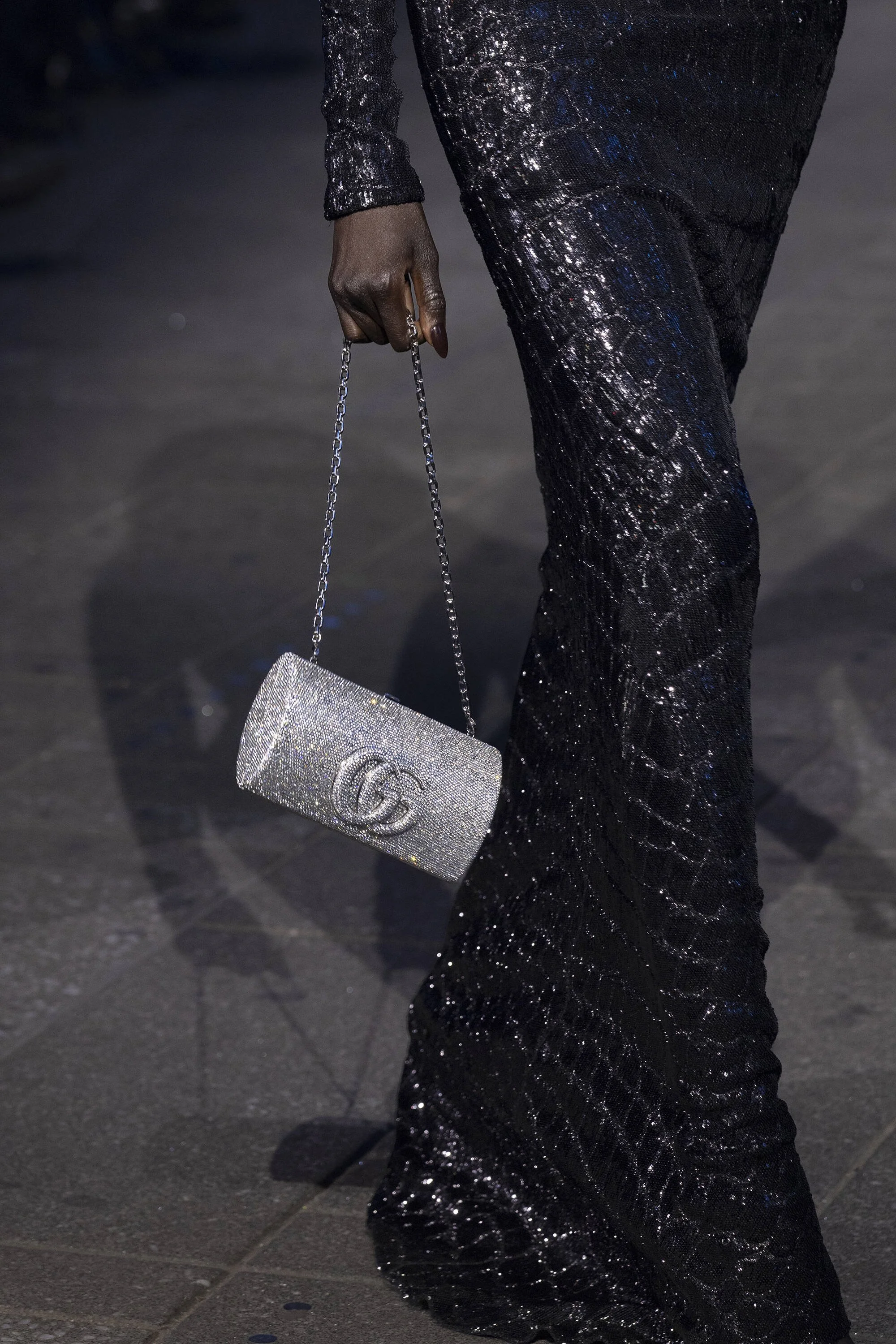
Alta moda craftsmanship surfaced in croc‑scale sequins, beaded fringes, and feather embroideries, extending a sense of preciousness into menswear. Technical outerwear was lined with goat hair and shearling, creating a dialogue between utility and extravagance — a balance that feels distinctly New York.
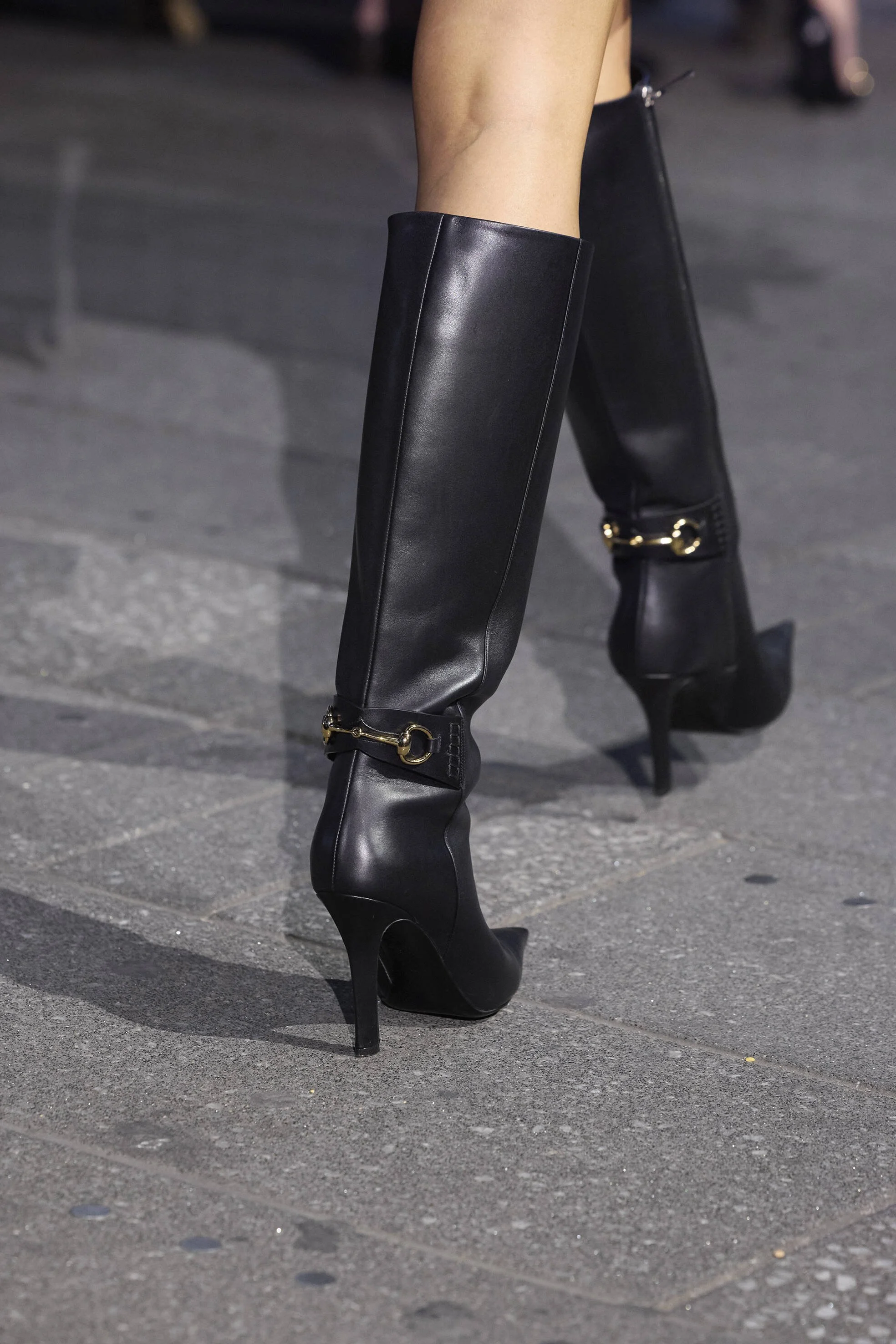
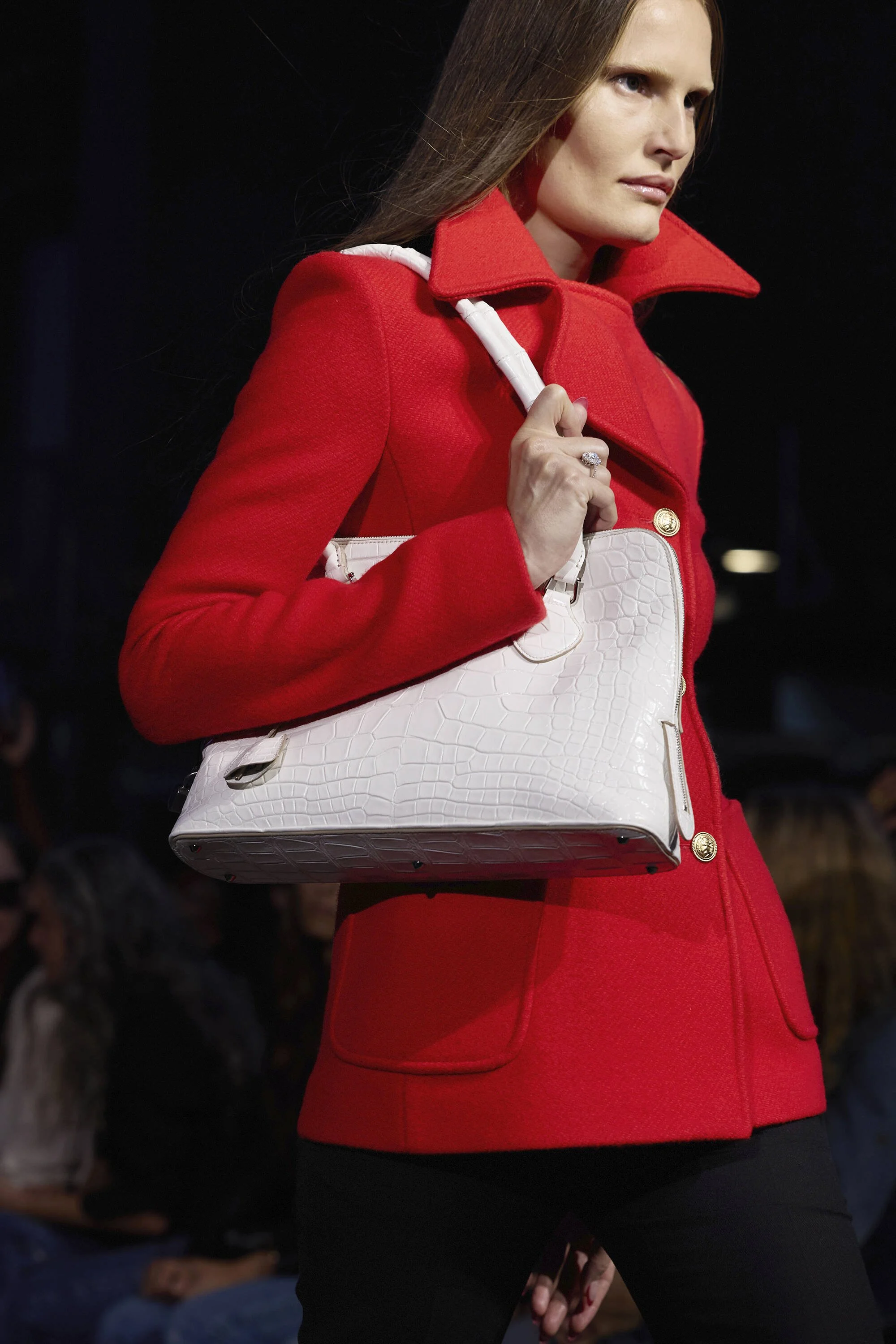
Accessories carried the same duality. The Horsebit, an equestrian emblem of the House, appeared as a stirrup on severe heeled boots, complementing angular stilettos with metal tips. Handbags came in inky tones and jewel‑like patinas, while wristwatch clutches featured timepiece straps. Unstructured sling totes were reimagined in new fabrications, adding a sense of ease to the otherwise sculptural accessories.
A Cast That Defined the Moment
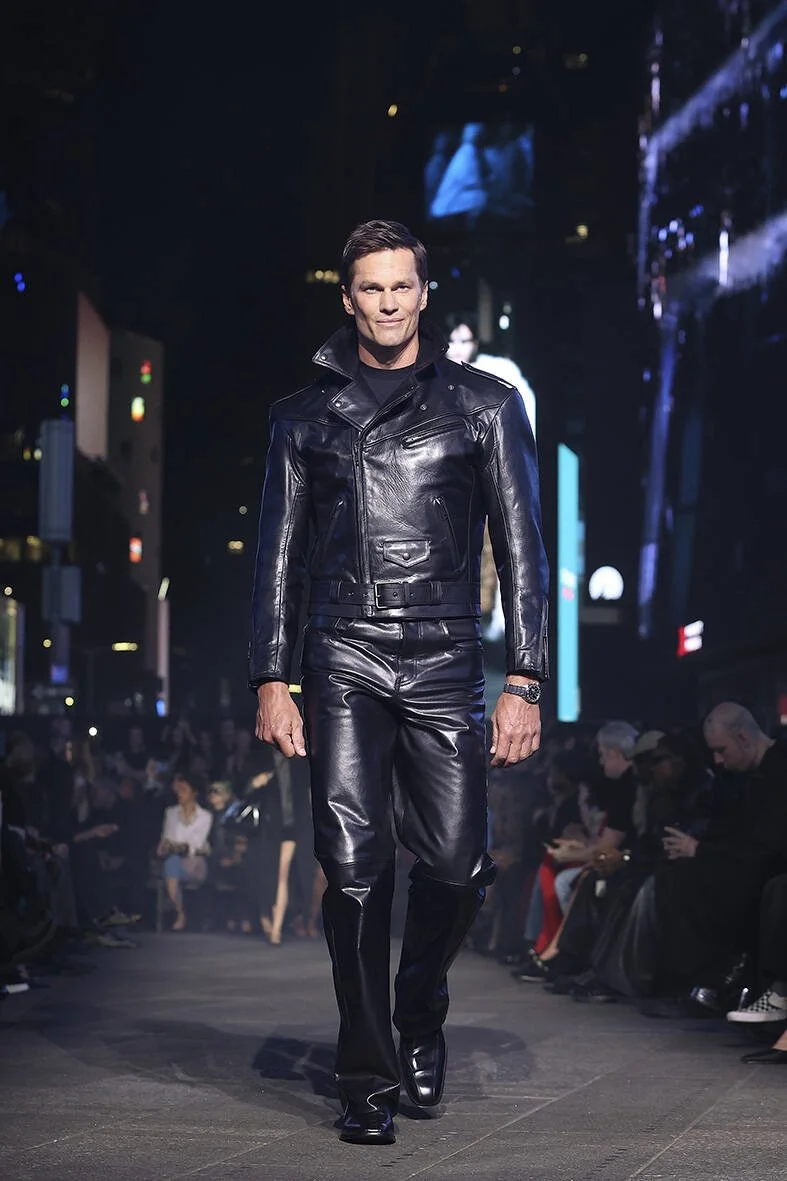
The show opened with Paris Hilton in a yellow dress, carrying a Gucci bag shaped like a classic Chinese take‑away box a playful nod to the city’s cultural mosaic. Tom Brady, the legendary quarterback, walked the runway in an all‑black leather look, a striking departure from his usual public image. Jewellery designer and socialite Sabine Getty, Emily Ratajkowski, and Cindy Crawford — who closed the show added to the star‑studded cast.
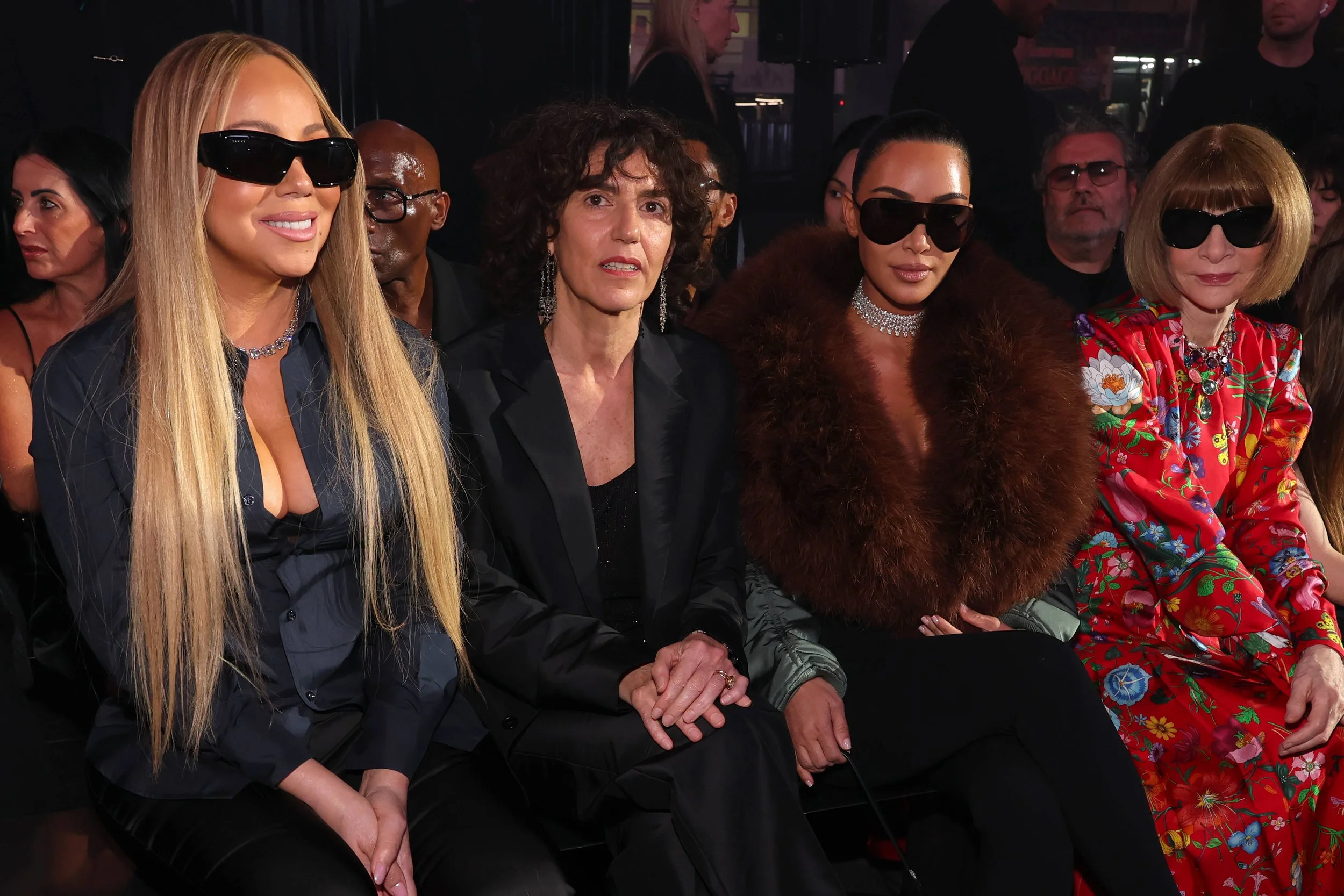
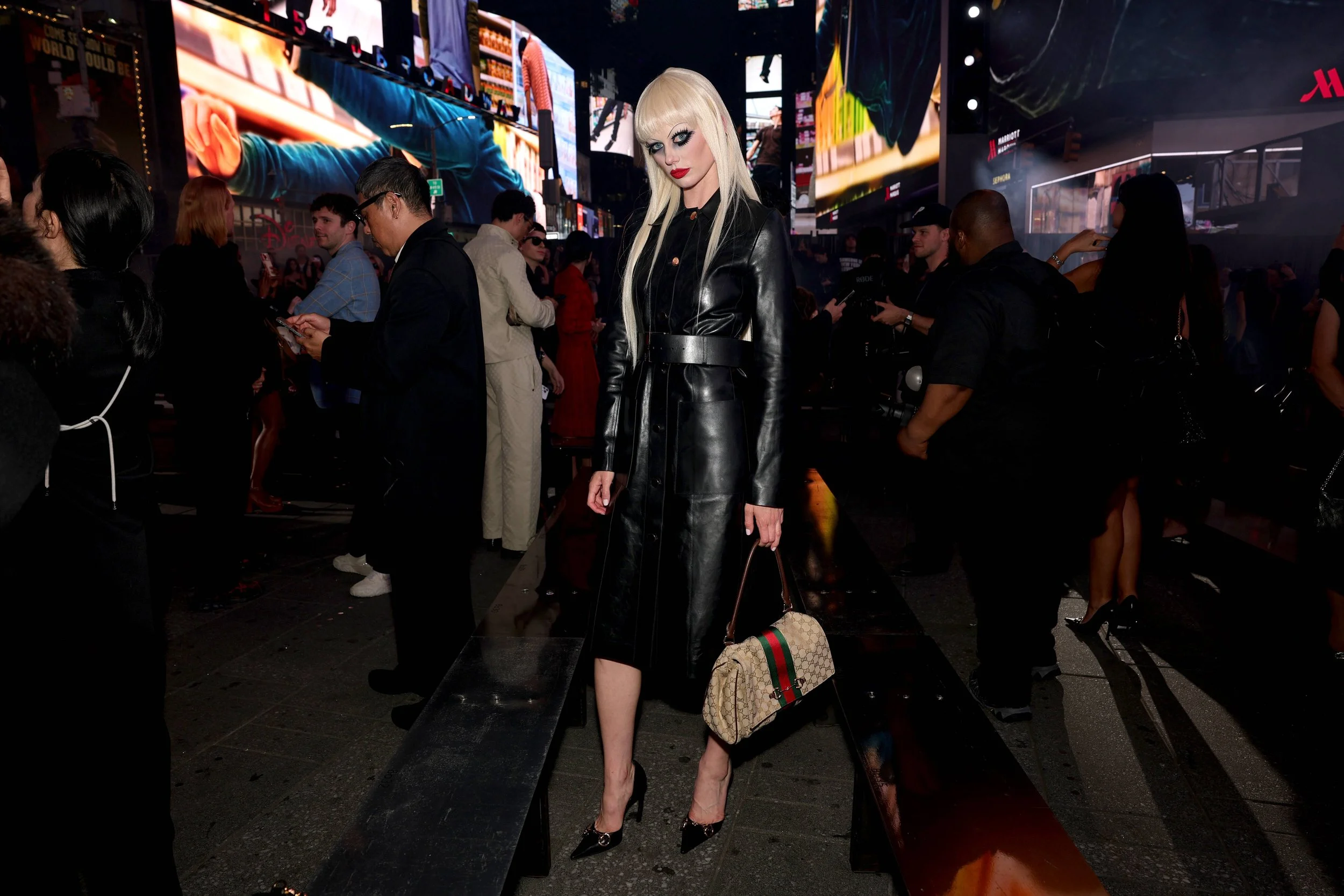
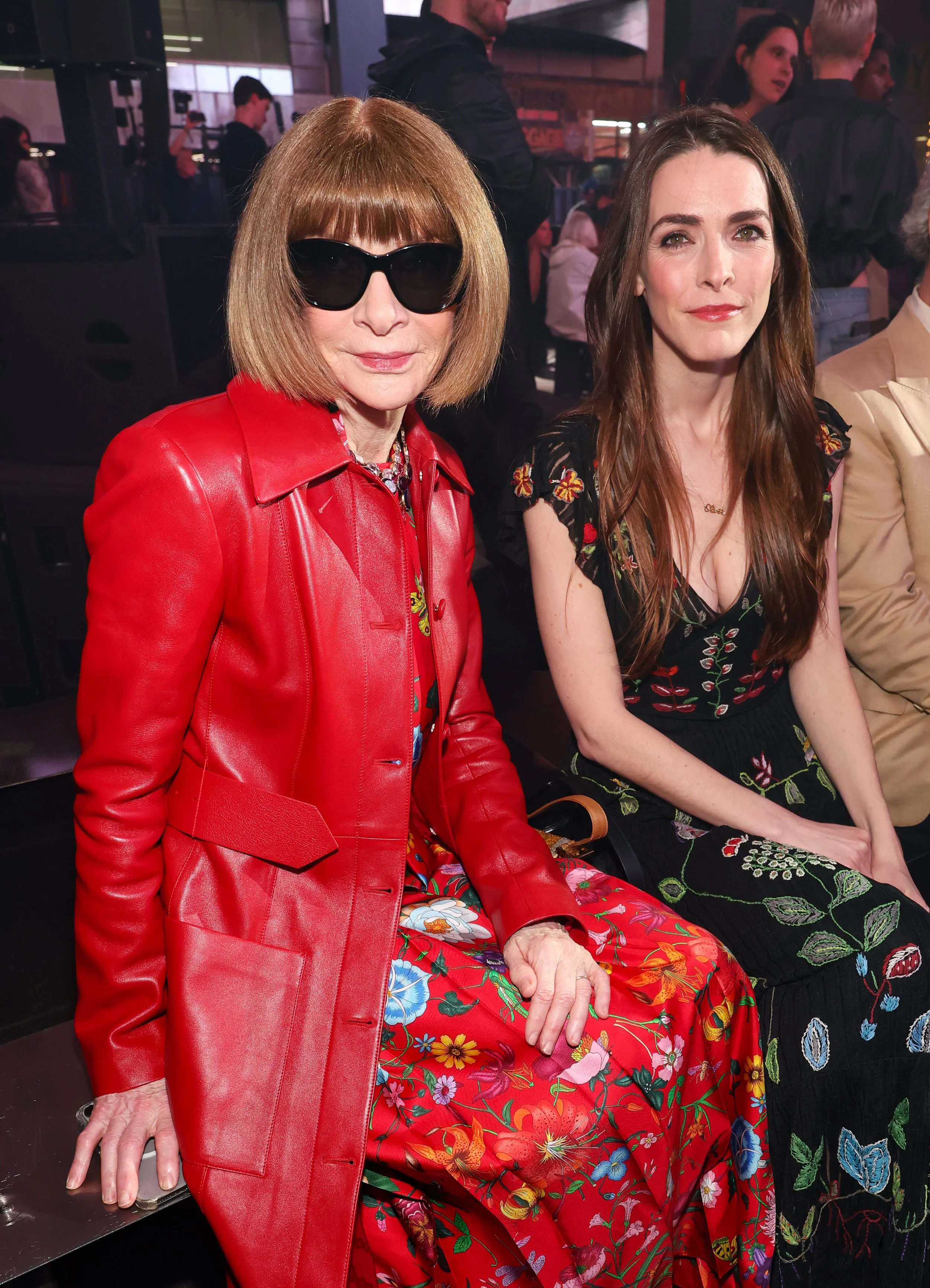
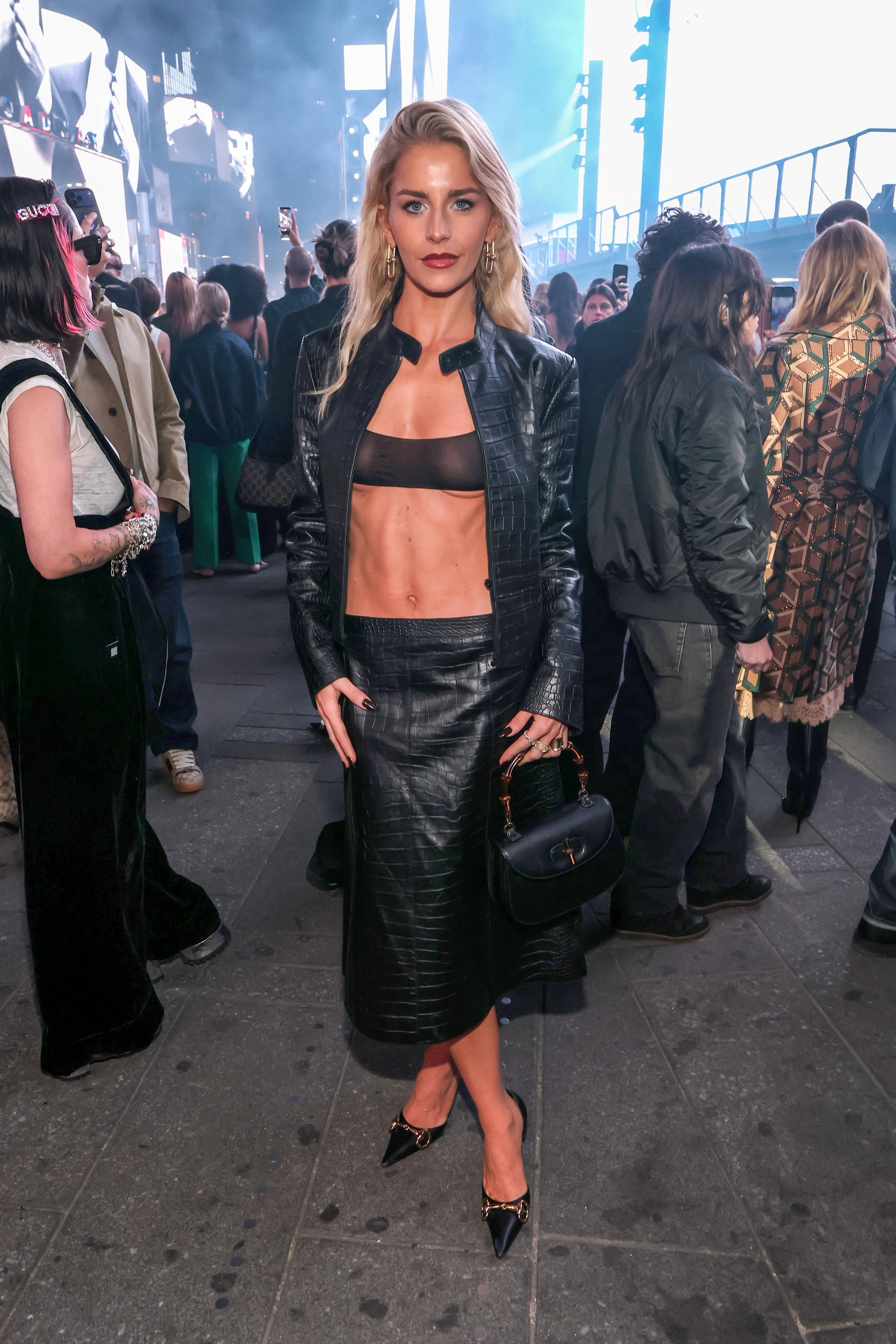
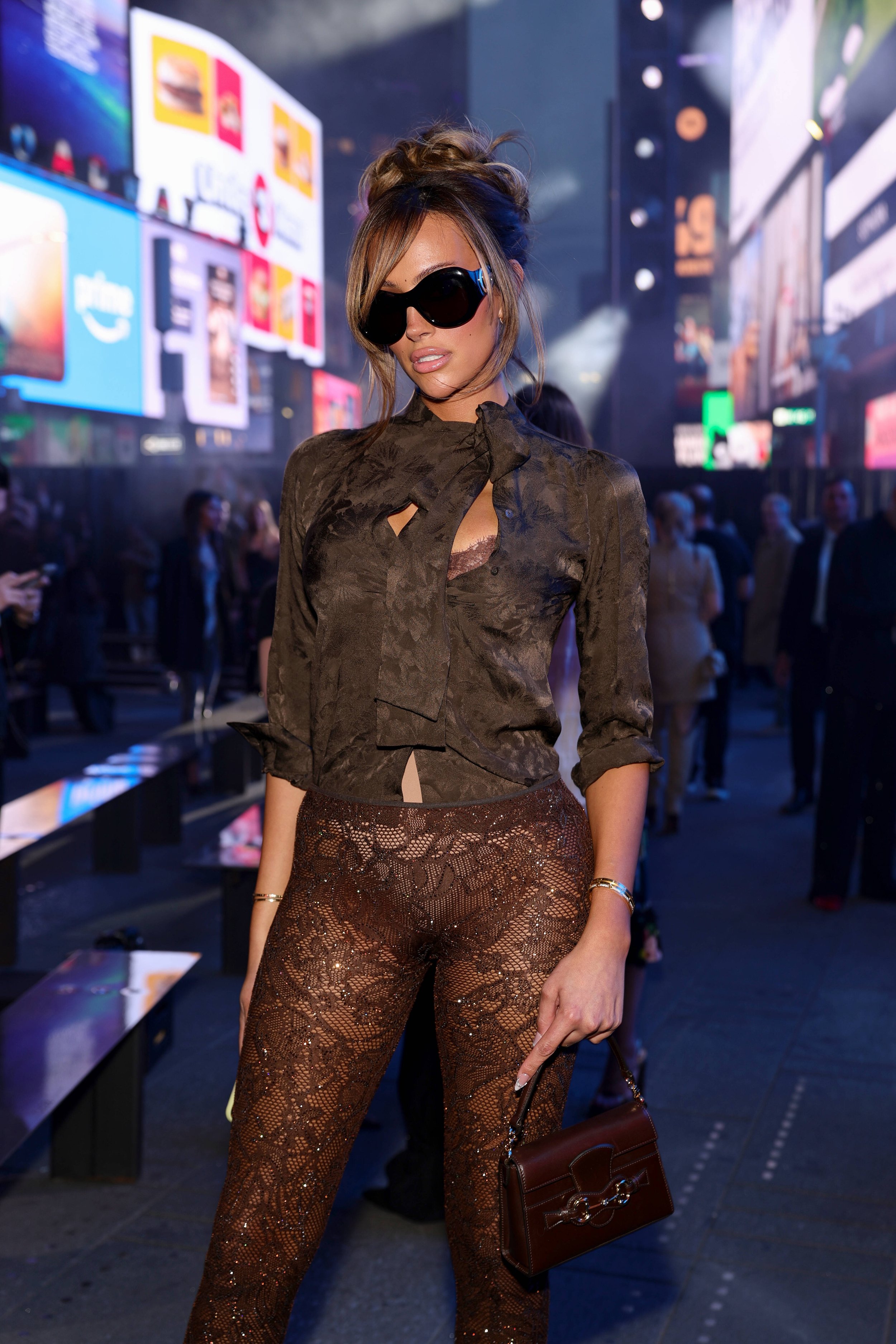
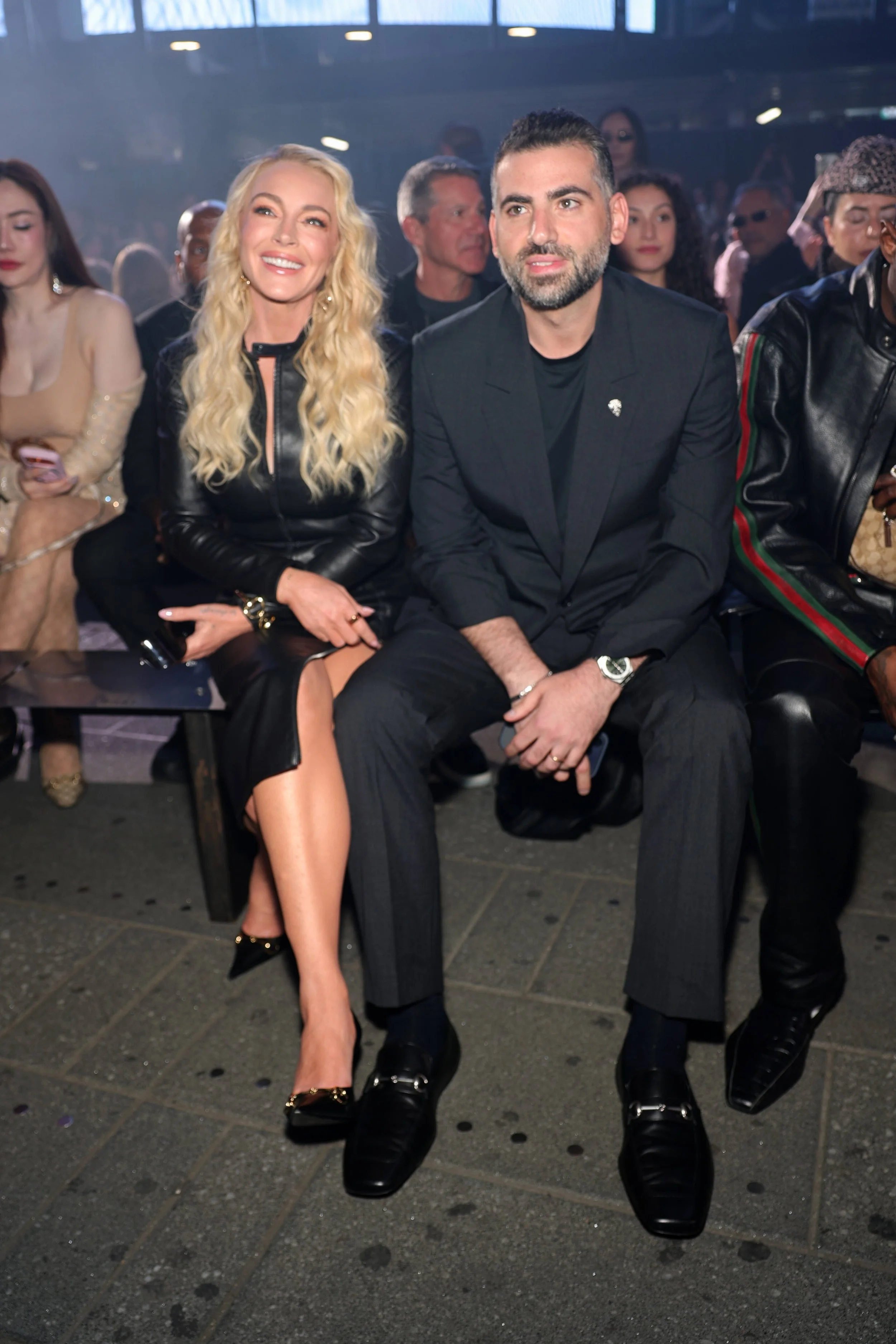
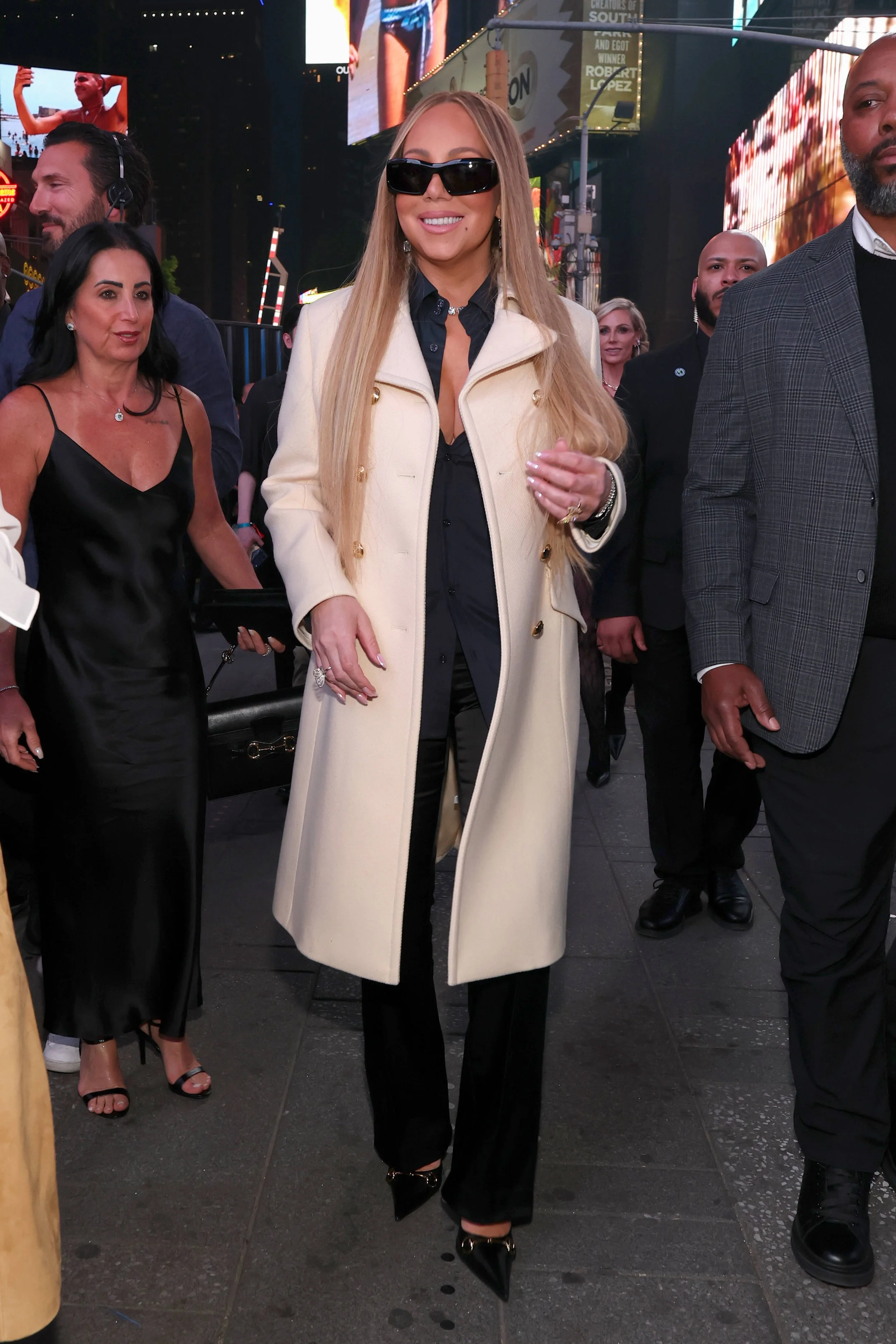
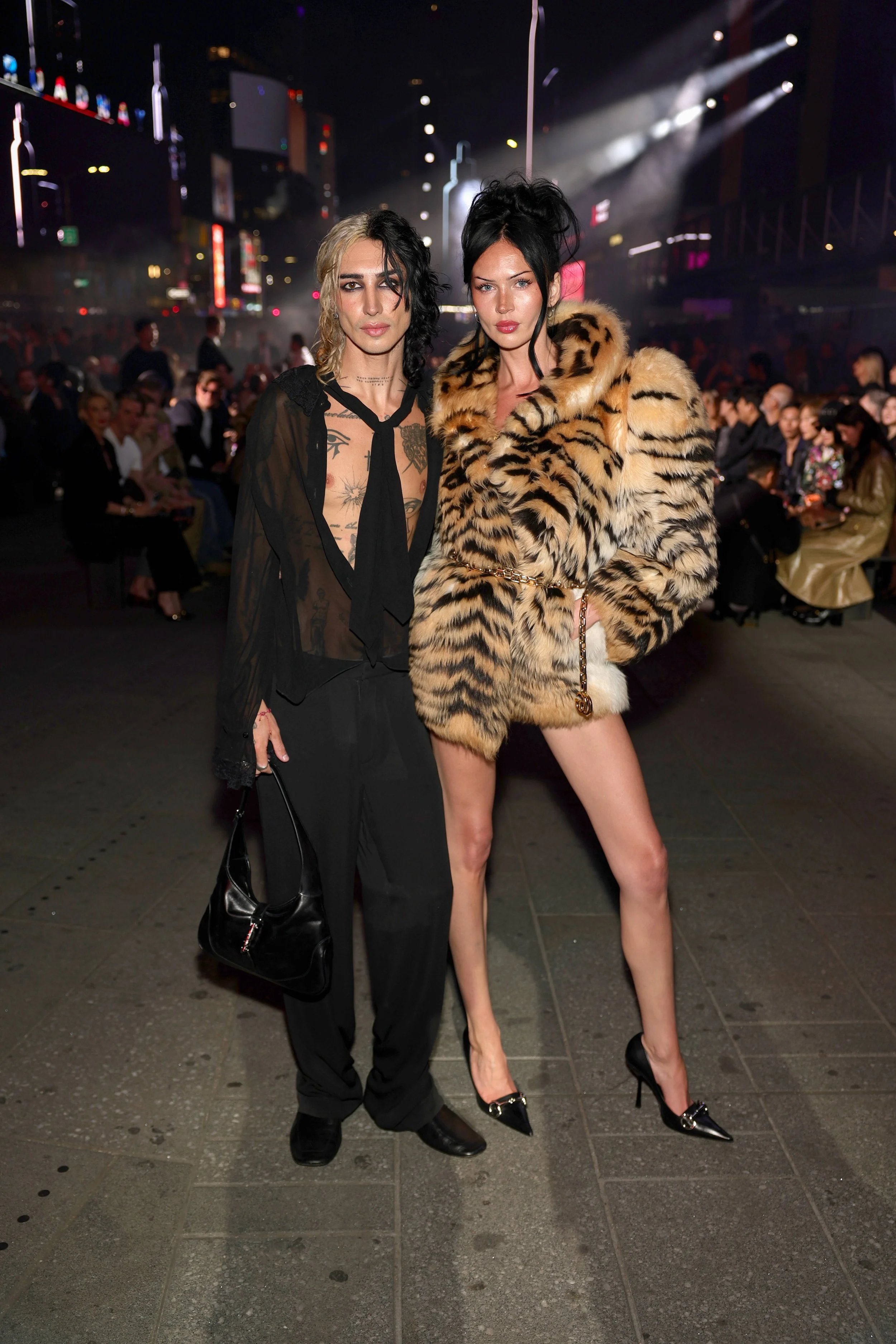
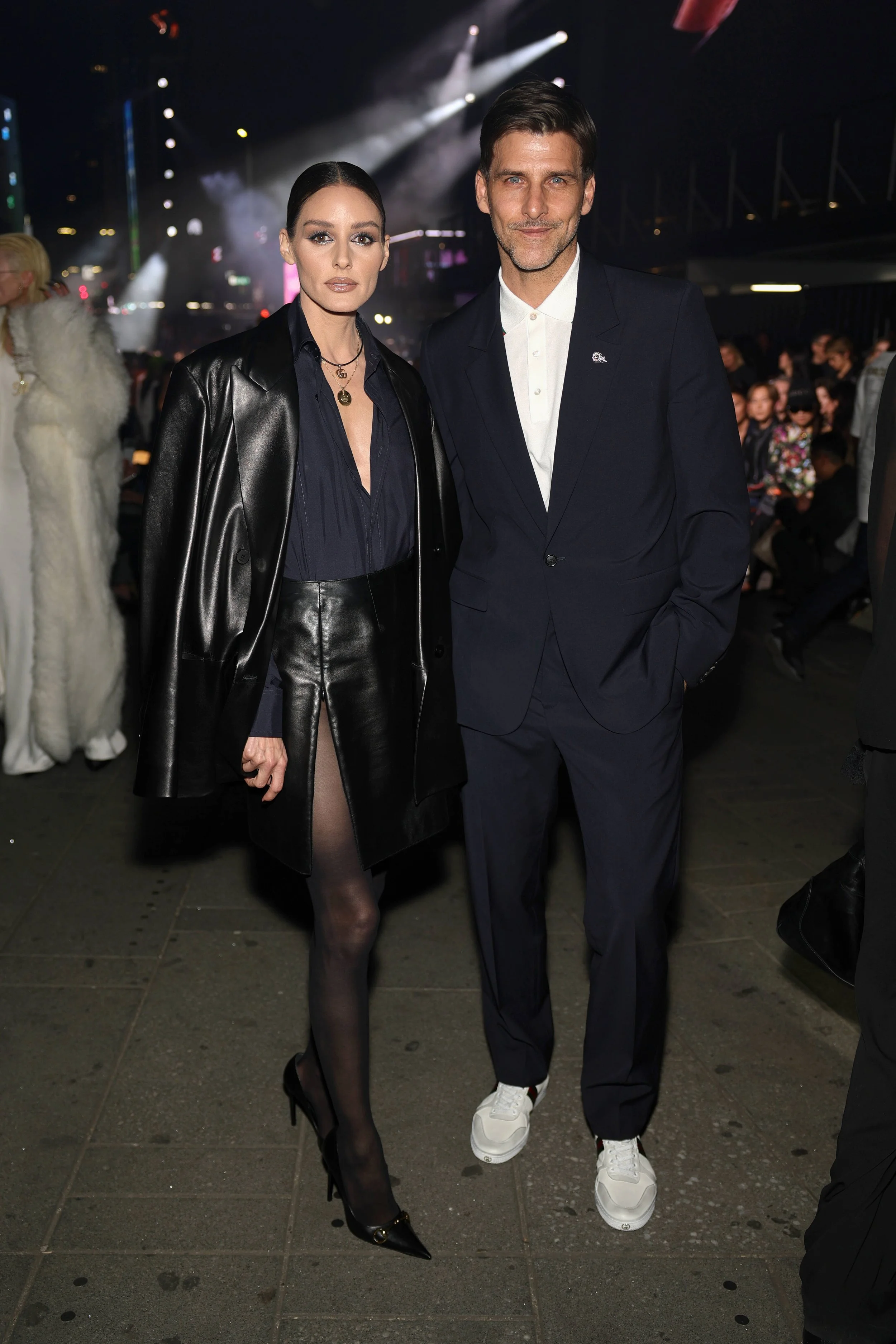
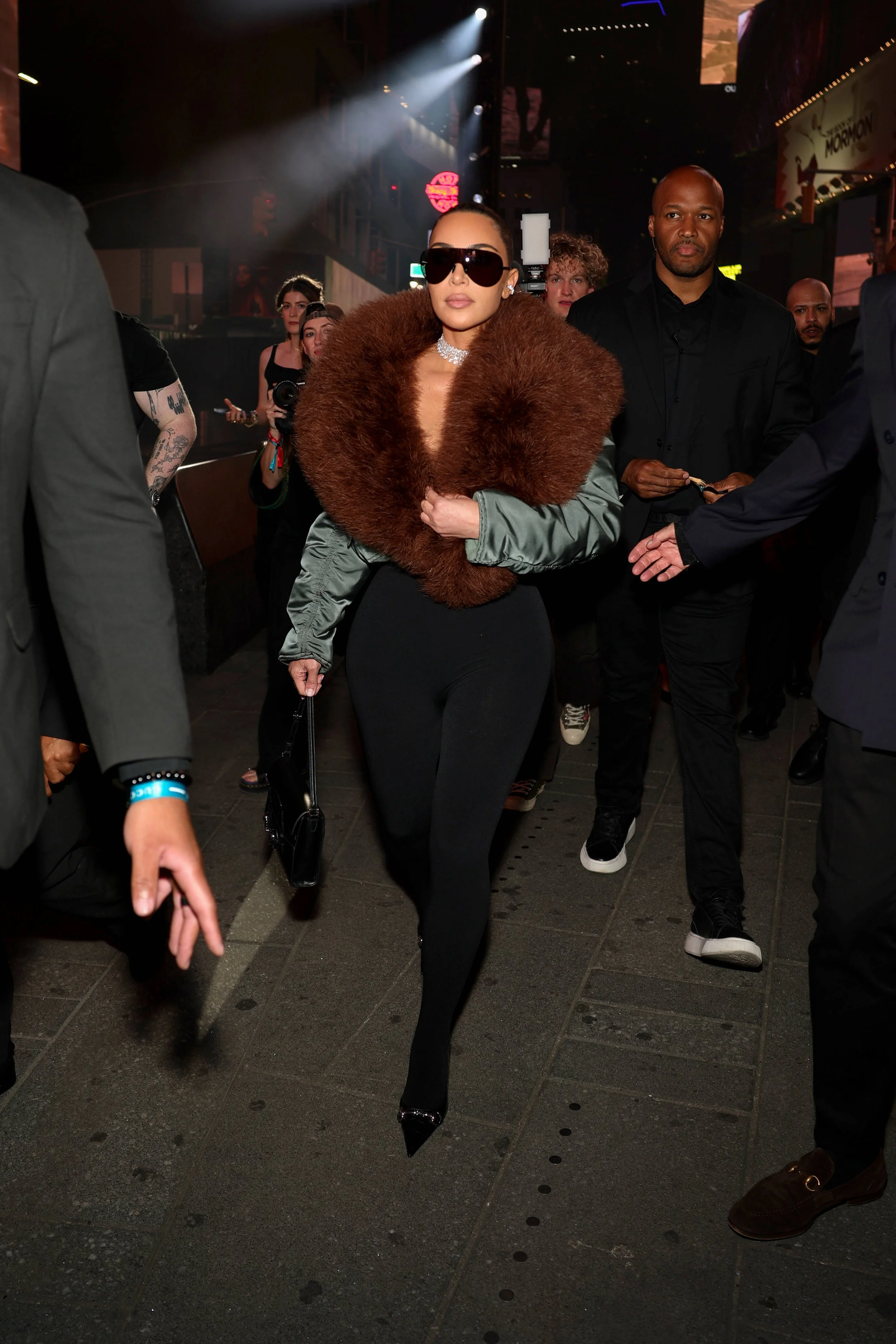
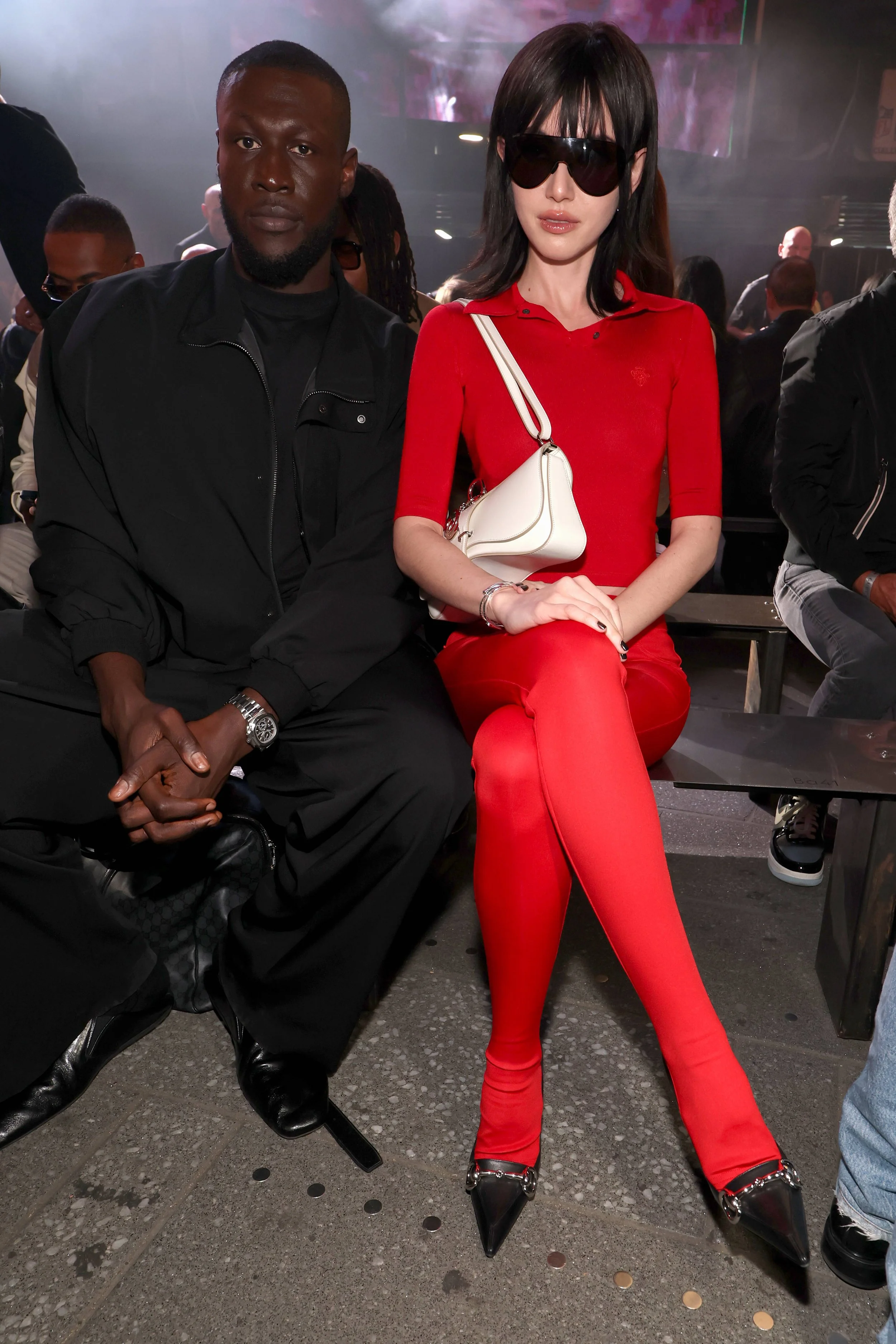
The front row was equally powerful: Mariah Carey, Shawn Mendes, Kim Kardashian who has maintained a strong bond with Demna since his Balenciaga years Lindsay Lohan and her husband Bader Shammas, and Alix Earle, who sparked romance rumours with Brady earlier this year.
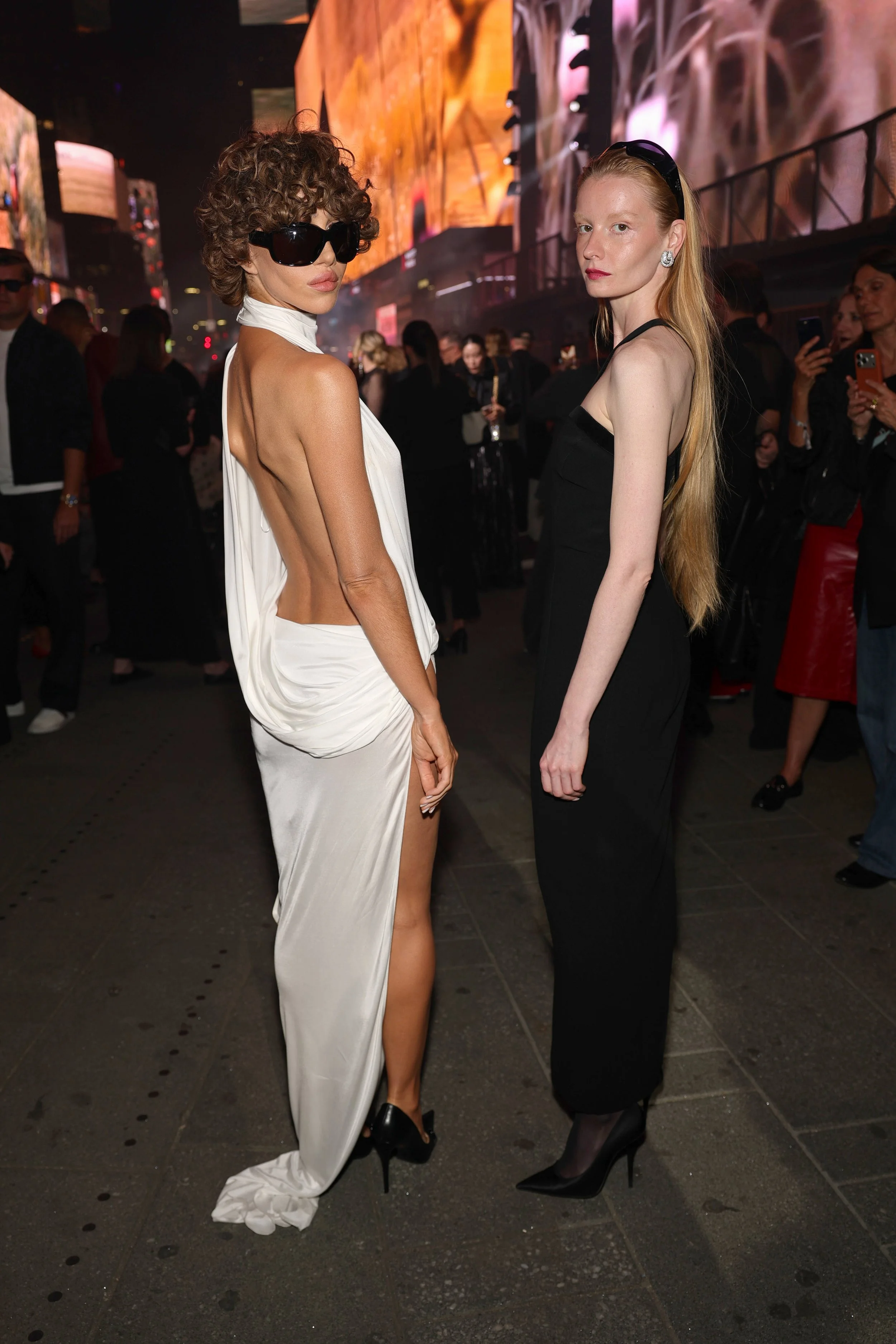
It was a guest list that mirrored the collection itself: eclectic, iconic, unmistakably New York.
Gucci NY: A Love Letter to the City
The show also marked the debut of Gucci NY, a limited‑edition capsule featuring accessories, shoes, jewellery, and handbags inspired by the city’s spirit. The collection launched the same day and is available for a limited time — a tribute to New York’s energy, attitude, and cultural legacy.
A Show About People, Not Just Clothes
What made this Cruise show extraordinary was not only the scale of the production, but the clarity of its message. Demna didn’t present an idealised fantasy of New York; he presented the city as it is layered, contradictory, alive. The garments were important, yes, but the characters wearing them were the true narrative.
This is where Demna excels. He understands that fashion is not just about fabric; it is aboutidentity. It is about the way a look is worn, the walk, the attitude, the story behind the person. In a world where luxury often feels detached, Gucci’s Cruise 2026–27 show felt grounded in humanity.
It was a reminder that style is not created in a studio it is created in the streets.
A Cultural Moment, Not Just a Runway
By shutting down Times Square, Gucci didn’t just present a collection; it created a cultural moment. A moment where fashion, city, and character collided. A moment that celebrated New York’s diversity, its contradictions, its relentless energy. A moment that reminded us why Gucci remains one of the most influential houses in the world.
Cruise 2026–27 was not just a show it was a portrait of a city, a tribute to its people, and a bold statement of where Gucci is heading under Demna’s vision.