
London Fashion Week Winter 2026: New Voices, Bold Ideas, and a City in Motion
London Fashion Week, ever since its post‑lockdown rebirth, has been in a state of constant fast evolution. No other fashion capital reinvents itself with such speed, such audacity, and such emotional depth. Every season, new names enter the schedule with the urgency of fresh ideas, while others brands we once grew attached to, like Kent & Curwen or Dilara Findikoglu quietly disappear from the calendar. This fluidity is not instability; it is London’s identity. The city remains the beating heart of independent fashion, a place where creativity is not only encouraged but expected, and where the boundaries between art, history, and design dissolve into something uniquely British.
Tolu Cocker
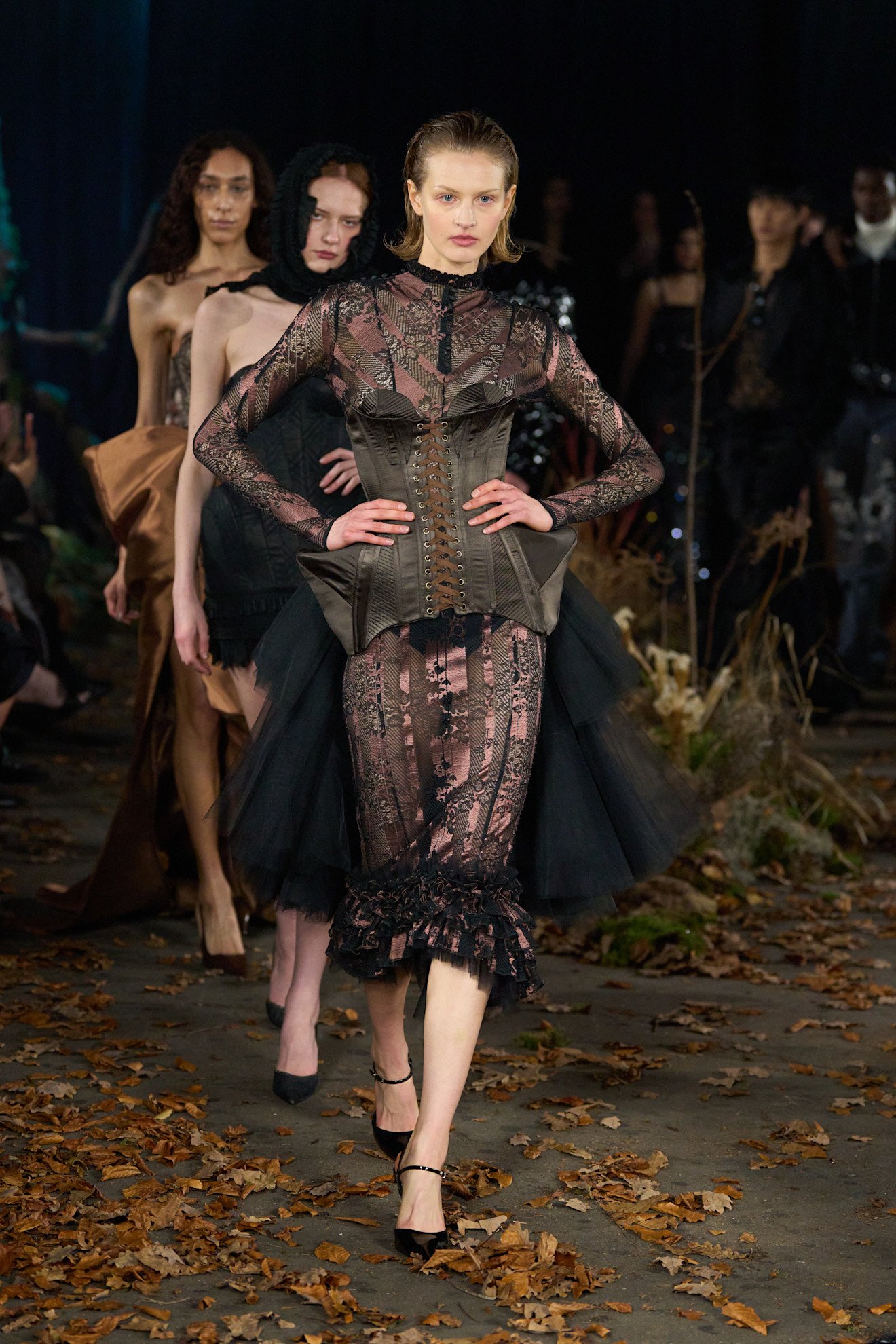
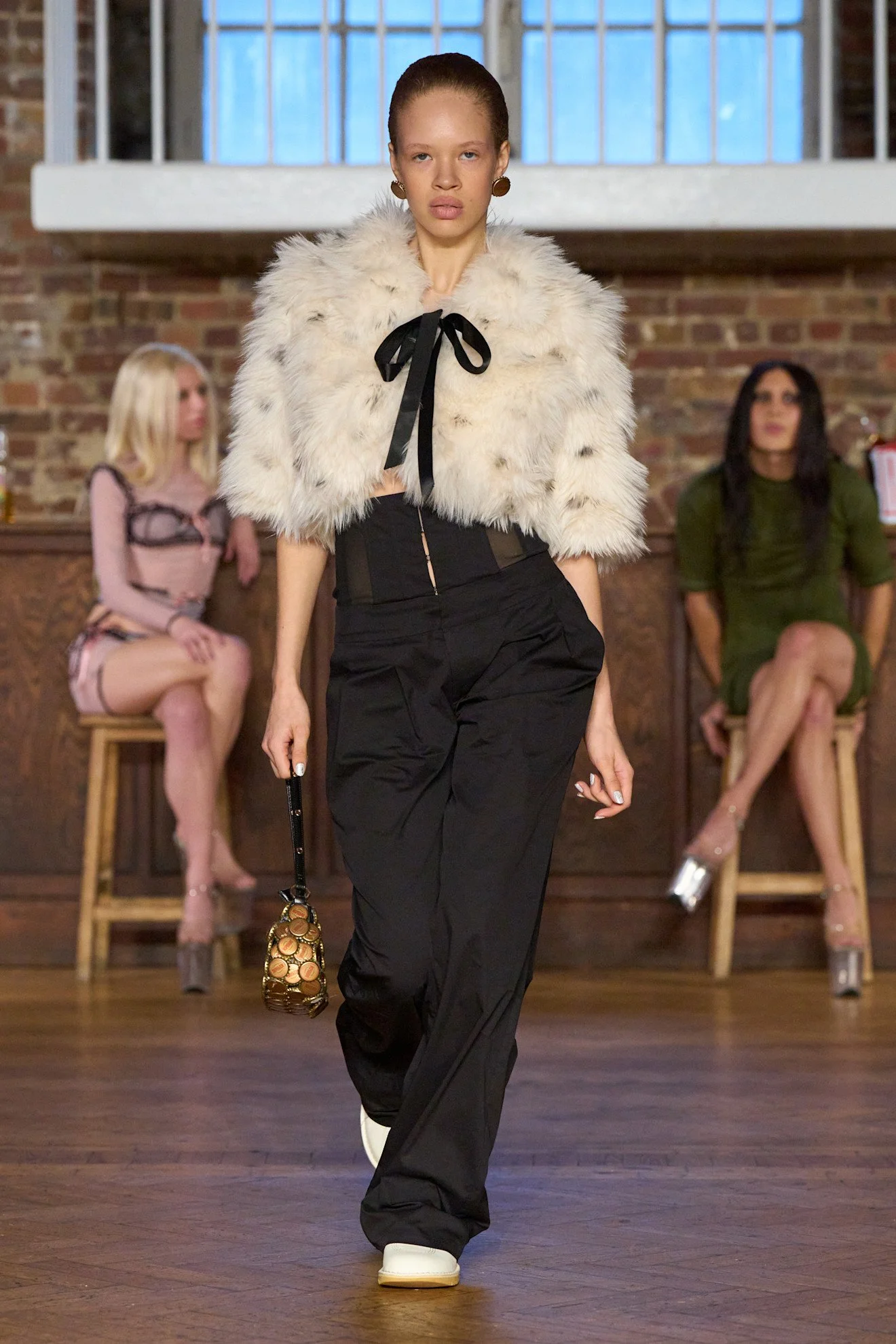
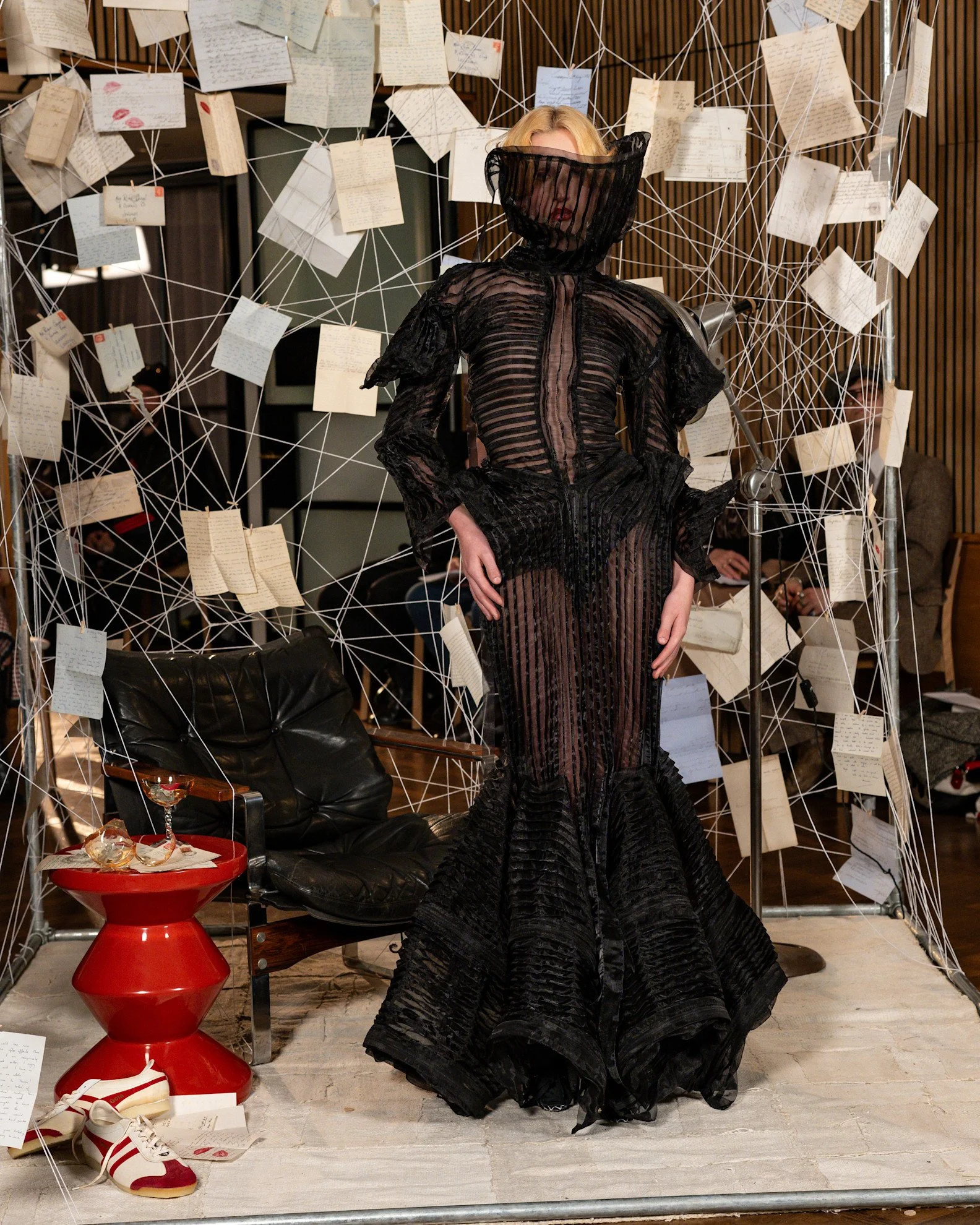
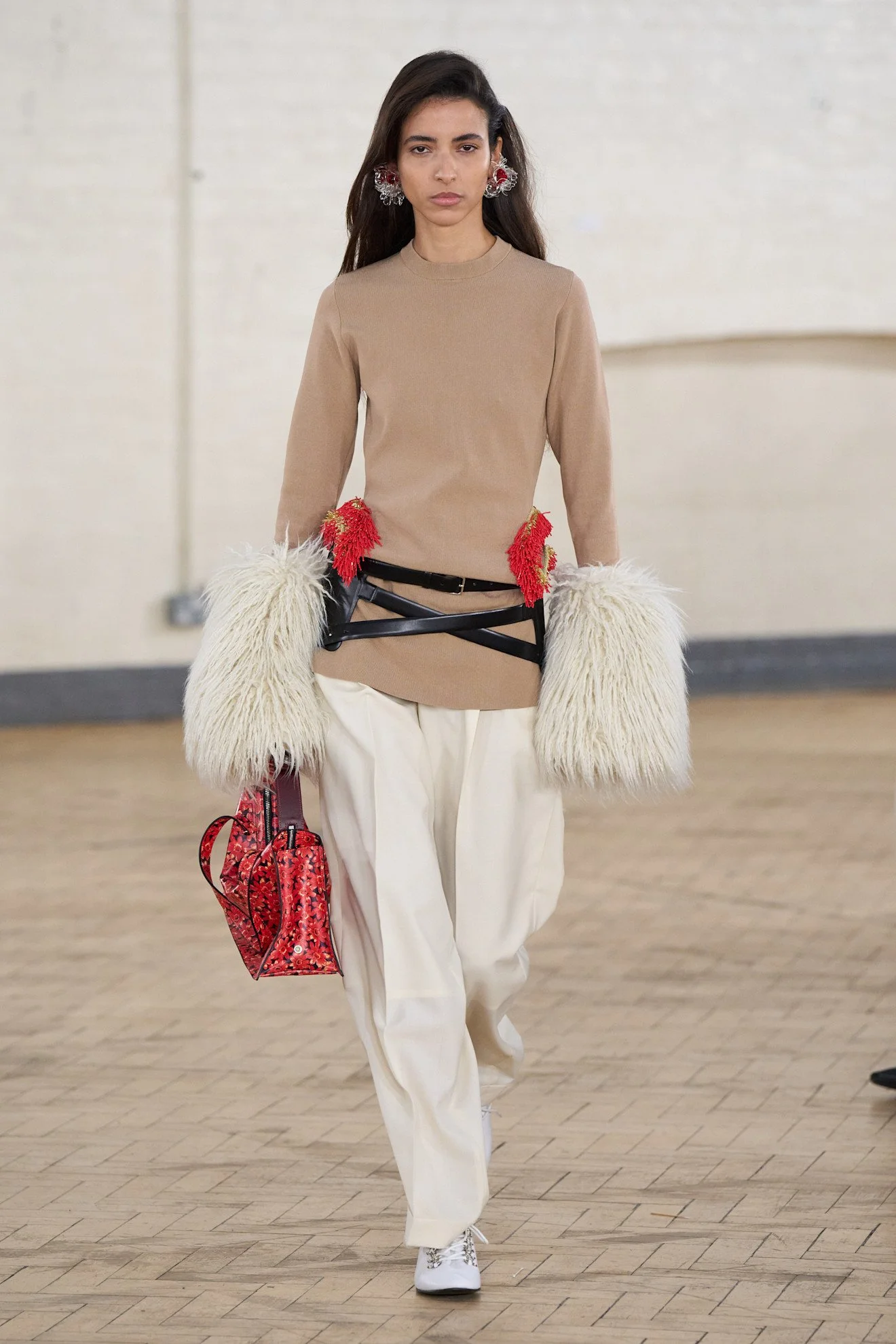
London is not just a runway it is an inspirational container of ideas, a cultural ecosystem where universities, emerging designers, and established houses coexist. Student shows sit alongside major presentations, and the city’s deep relationship with art and historical references continues to shape its fashion language. This season, collaborations and archival inspirations were at the forefront, with one garment dominating the conversation: the corset.
A Royal Opening
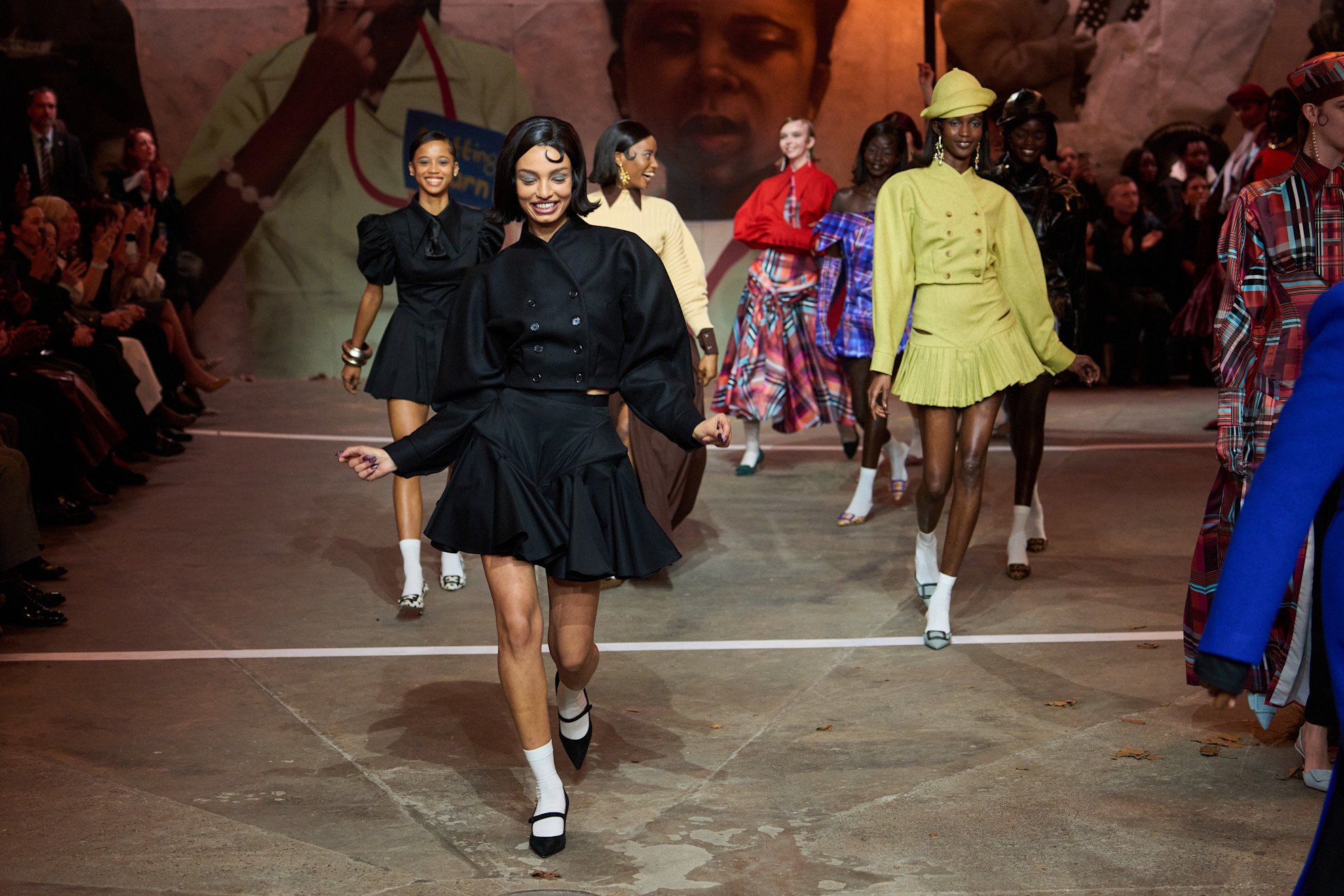
The week began with an unexpected and symbolic moment: His Majesty King Charles attending the show of rising designer Tolu Coker. Seated alongside Stella McCartney, an Ambassador for the Sustainable Markets Initiative, the King’s presence signalled a new chapter for London Fashion Week one where sustainability, craftsmanship, and cultural dialogue take centre stage. It was a front row no one anticipated, yet one that perfectly captured the spirit of a city that thrives on surprise.
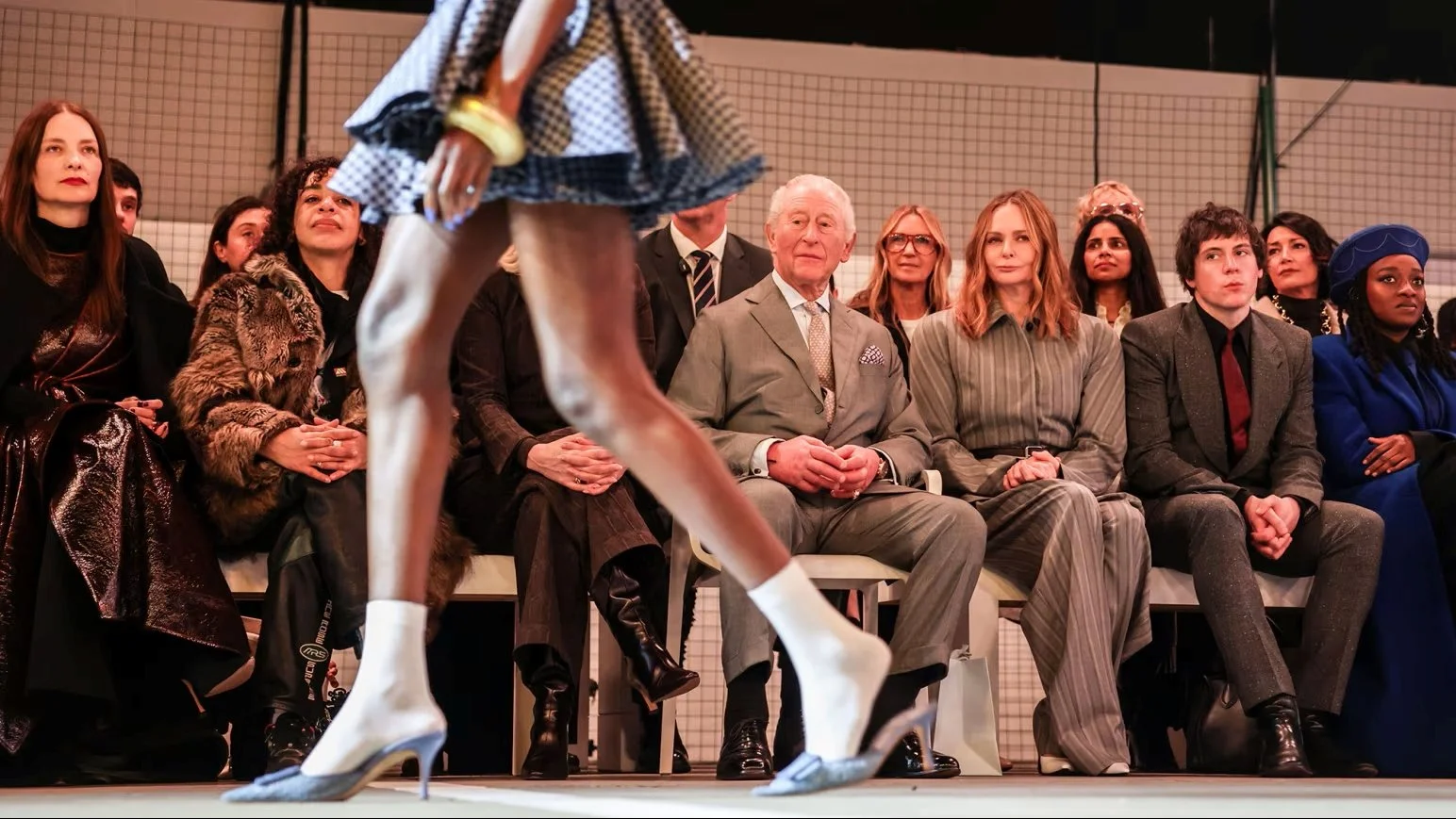
King Charles III attending Tolu Coker show
Erdem: Twenty Years of Poetry and Precision
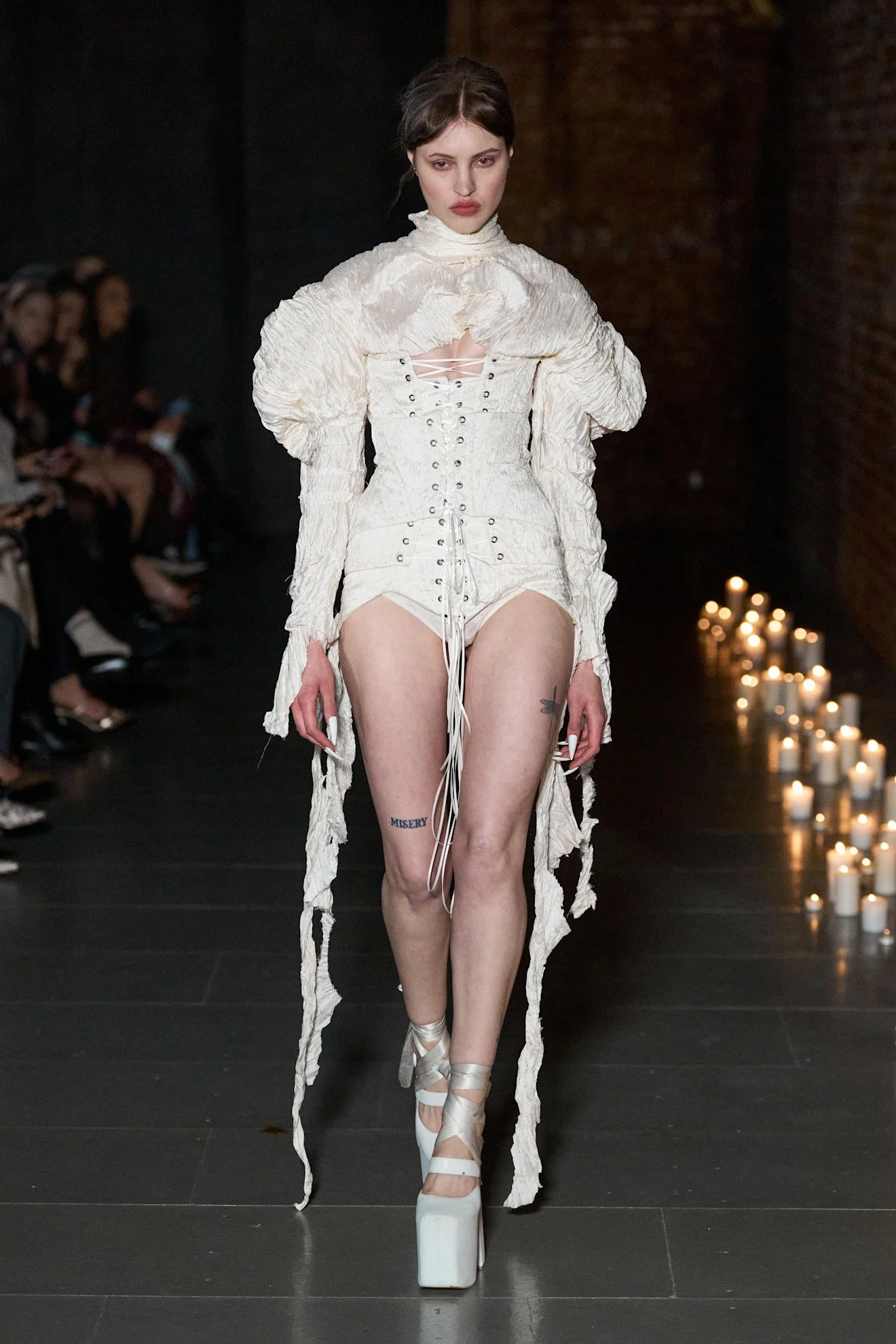
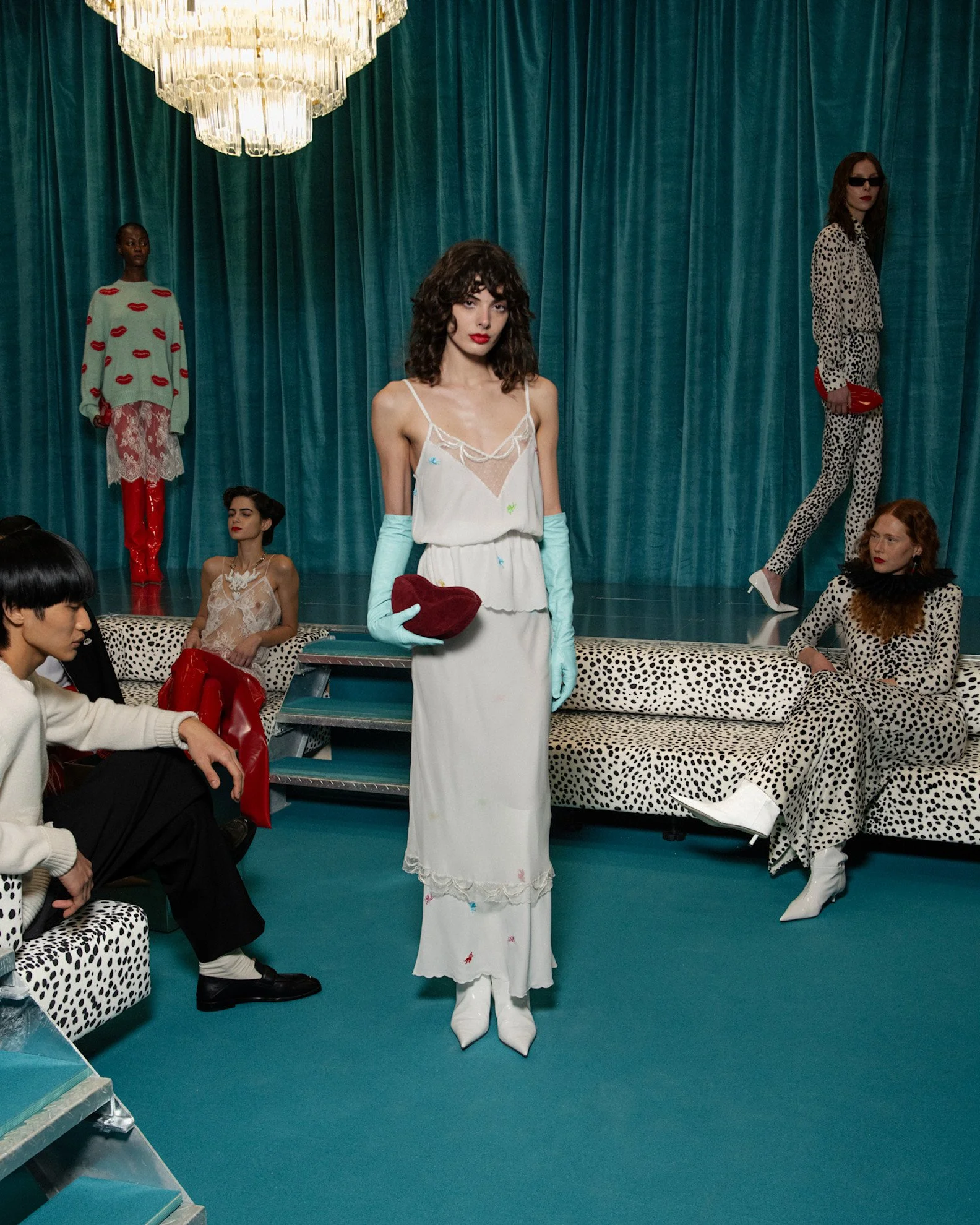
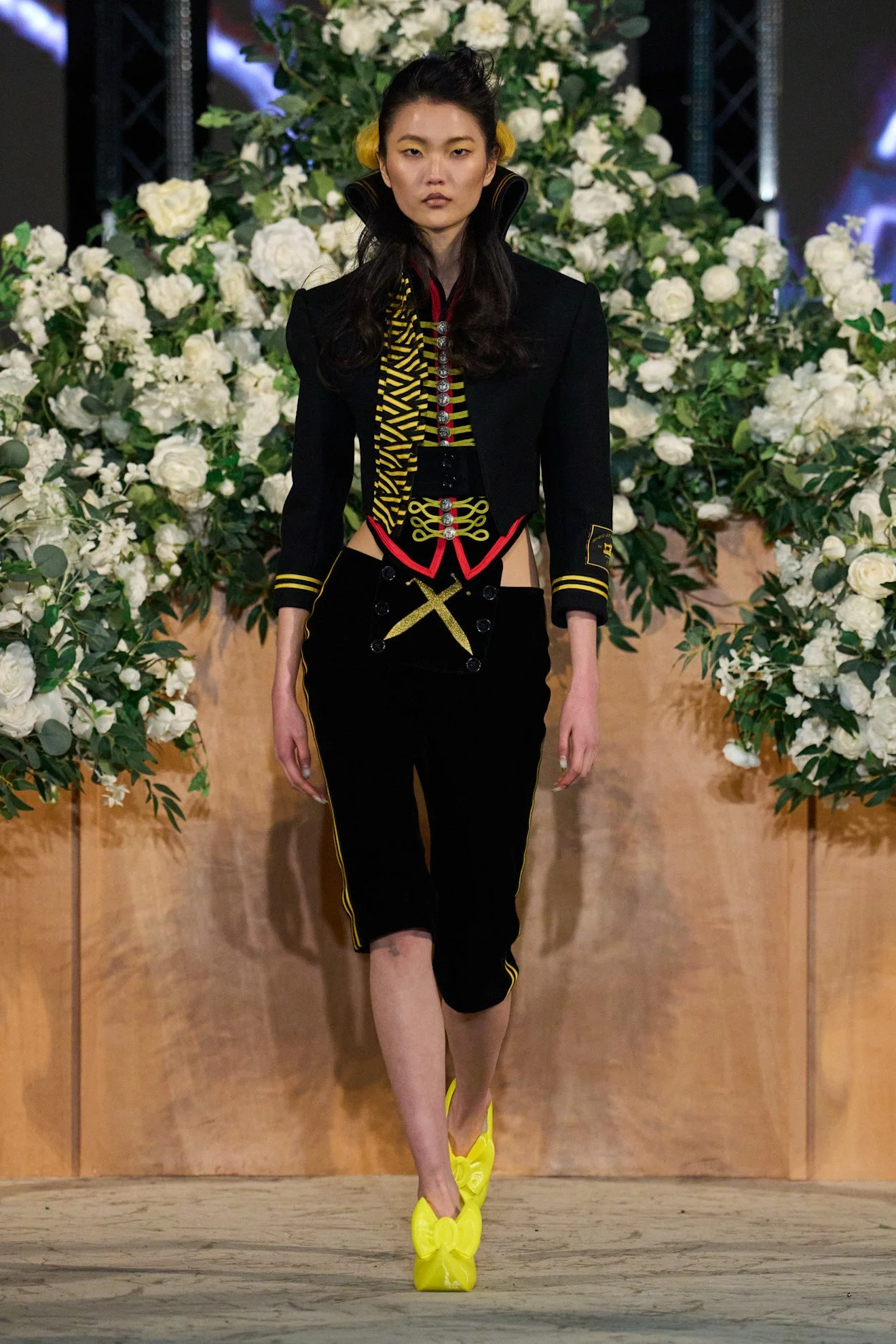
This season also marked a major milestone: Erdem Moralıoğlu’s 20th anniversary. The celebrations began just before the official start of the week with an intimate event at the iconic Dover Street Market, followed by a deeply moving runway show at Tate Britain. Few designers embody London’s intellectual soul as profoundly as Erdem. His work is a dialogue between past and present, between memory and imagination, between the women who inspire him and the worlds he constructs around them.
The Winter 2026 collection, titled “The Imaginary Conversation,” was a masterclass in narrative fashion. Among its highlights was a collaboration with Barbour, where the brand’s utilitarian heritage was transformed into an opera coat printed like a contemporary tapestry. It was a perfect example of Erdem’s ability to elevate the familiar into the fantastical. The collection felt like a whispered exchange across centuries romantic, researched, and unmistakably Erdem.
Chet Lo: Red at Night
At the Mandarin Oriental in Hyde Park, Chet Lo presented Red at Night, a sensory immersion into the emotional infrastructure of Hong Kong’s night markets. Designers, artists, jewelers, and photographers from the Asian diaspora transformed the space into a living bazaar vibrant, chaotic, and full of heart. It was London at its best: multicultural, collaborative, and unafraid to blur the lines between fashion and performance.
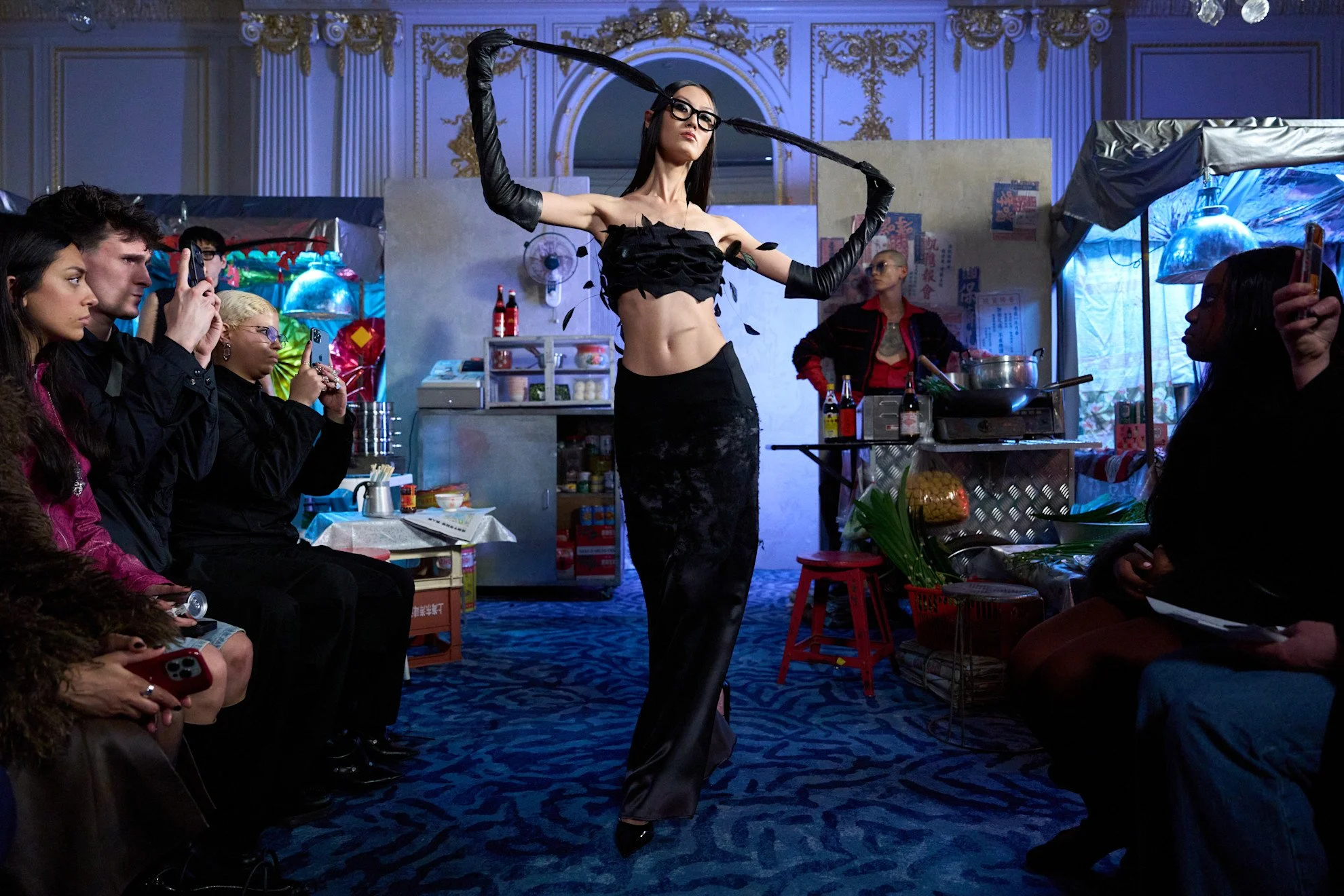
Chet Lo
Masha Popova: The Bedroom as Dreamscape
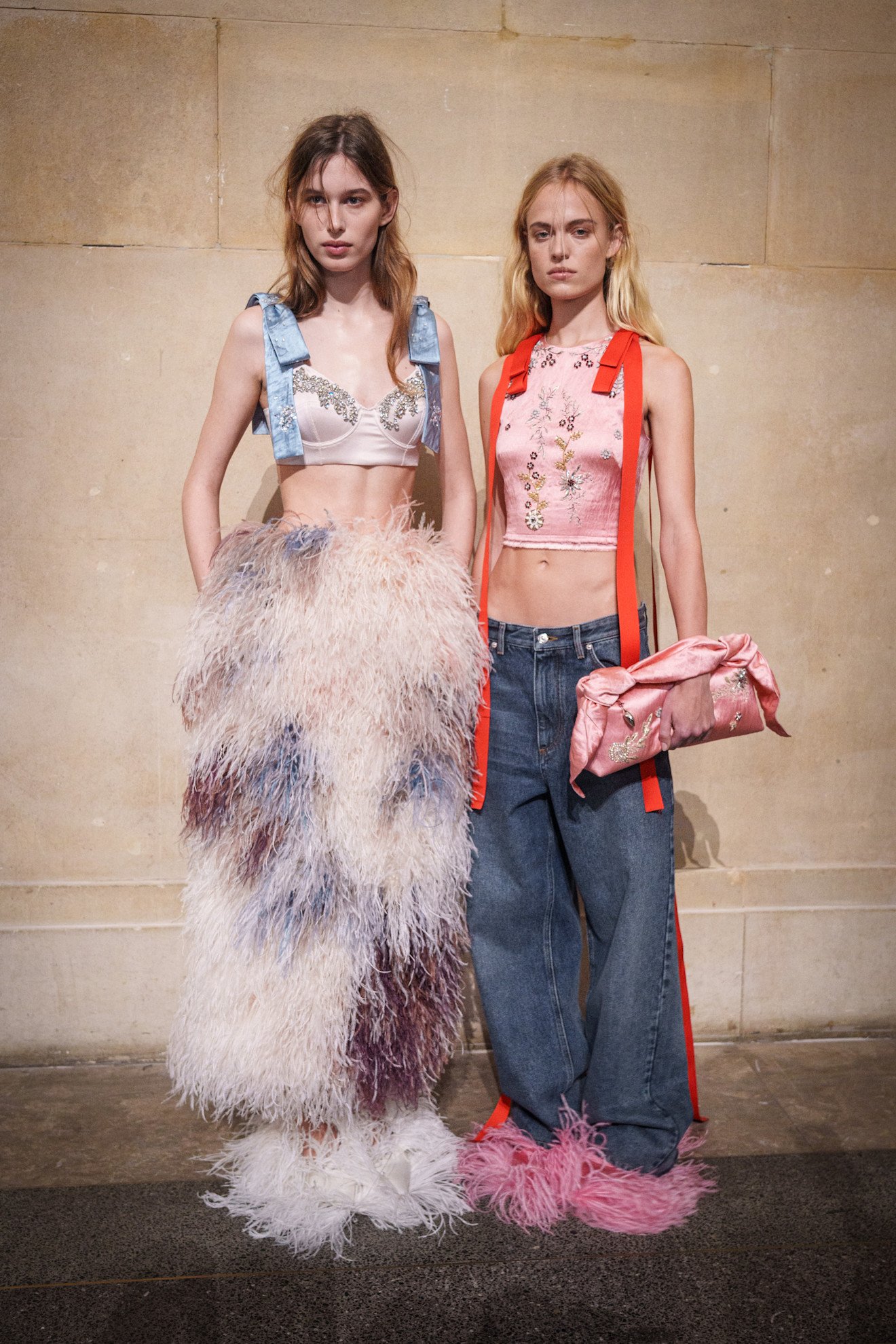
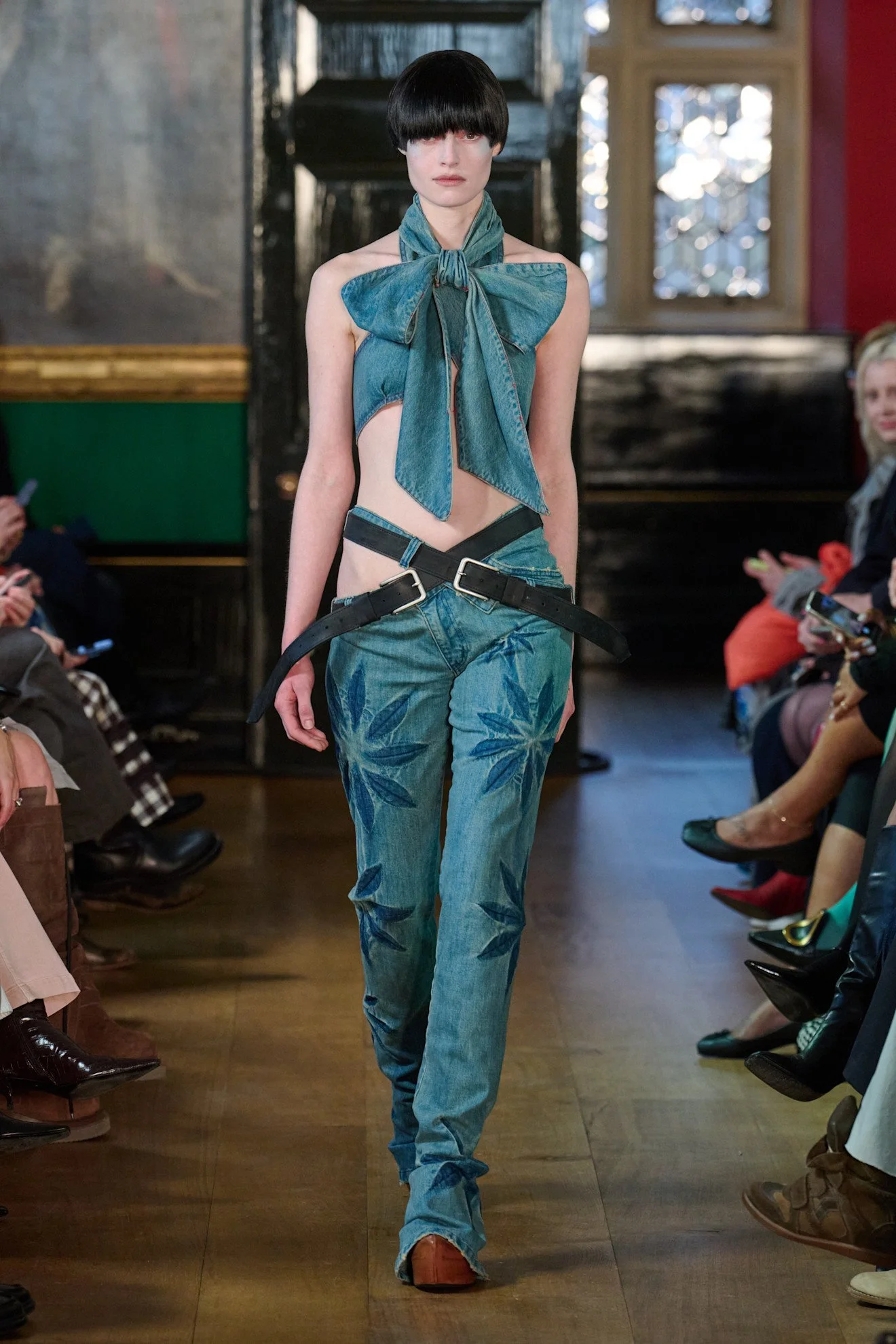
In the atmospheric setting of the former Carthusian monastery of Charterhouse, Masha Popova explored the psychological landscape of bedrooms the intimate, liminal spaces where dreams, fears, and fantasies coexist. Her night owls walked in trippy printed robes, sugary silk pajamas paired with culottes, and immense coat‑bathrobes worn with soft boots. Denim, a signature of her work, appeared in 1980s‑inspired blousons and bow‑tied tops. Fresh from her first commercial collaboration with Desigual, Popova proved once again that she is one of London’s most imaginative young voices.
Natasha Zinko: Chaos, Humor, and Subculture Energy
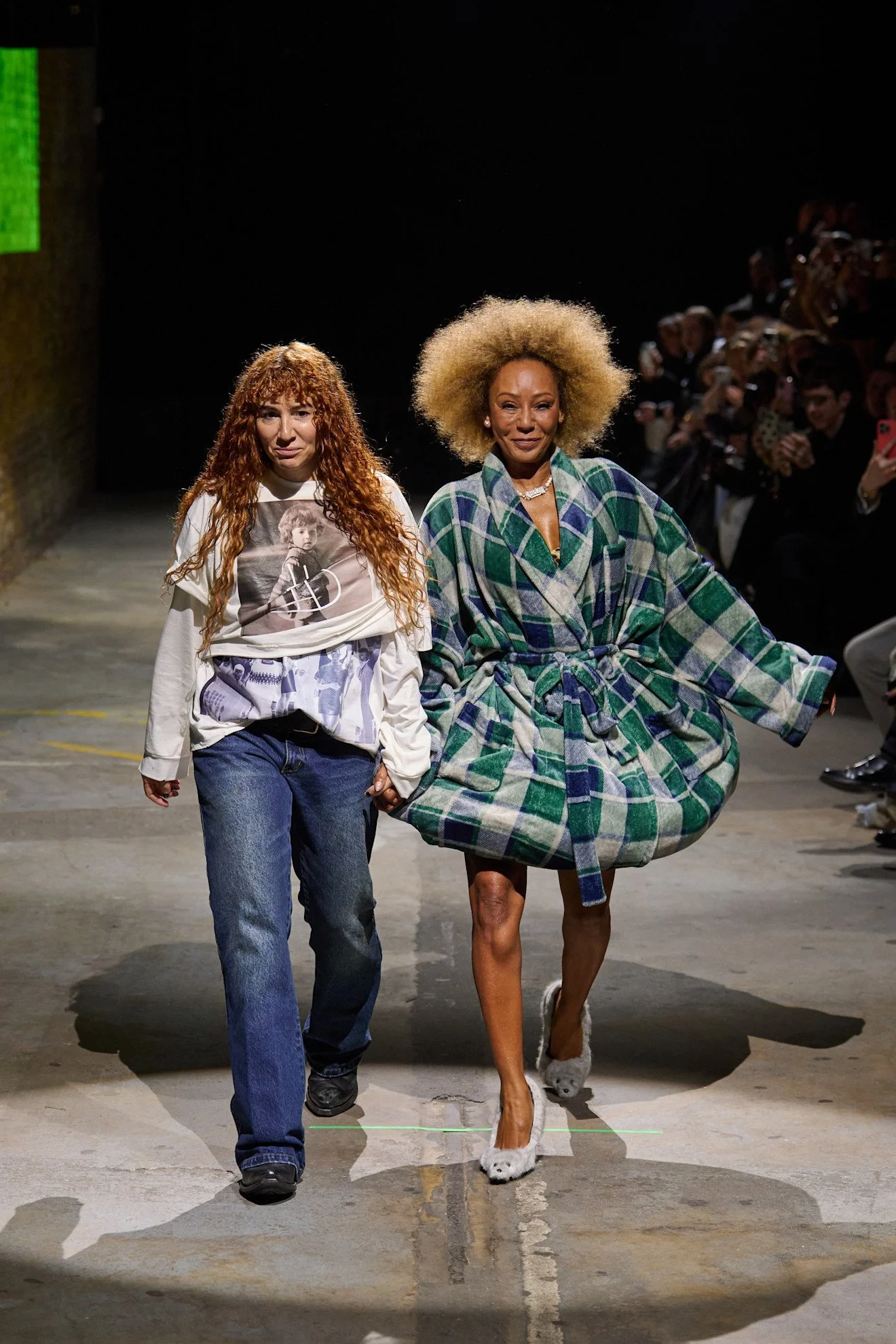
Under the graffiti‑covered arches of Leake Street, Natasha Zinko delivered a show that captured the raw, youthful energy of London’s underground. Exposed lingerie crudely attached to polo shirts, tailoring worn upside down, dishcloth scraps transformed into matching sets, lace dresses cinched with duct‑tape belts Zinko’s world is one of playful rebellion. The finale brought pure joy: Mel B, Sporty Spice herself, stepping out in a tartan chemise bathrobe, a moment that felt both nostalgic and defiantly modern.
Simone Rocha x Adidas: Sporty Couture
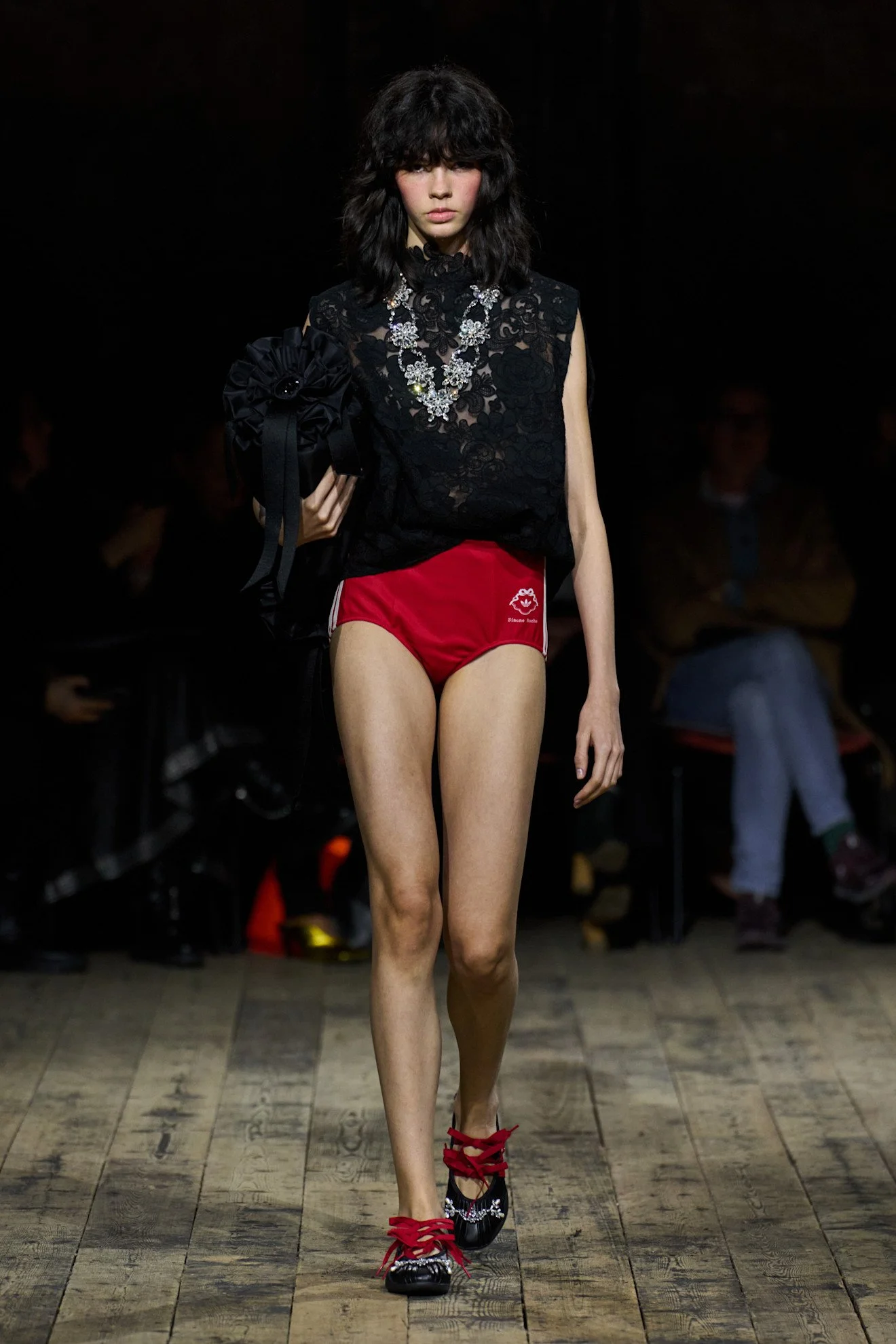
Simone Rocha continued her exploration of romantic subversion with a collection that merged couture sensibilities with athletic codes. Triacetate culottes under lace tops, tracksuits with puffed sleeves, ruffle‑trimmed T‑shirts, and zip‑up jackets layered beneath crinoline‑stiffened dresses all in true Simone Rocha style. Her collaboration with Adidas added a fresh dimension, proving that sportswear can be poetic without losing its edge.
Agro Studio: The New London Vanguard
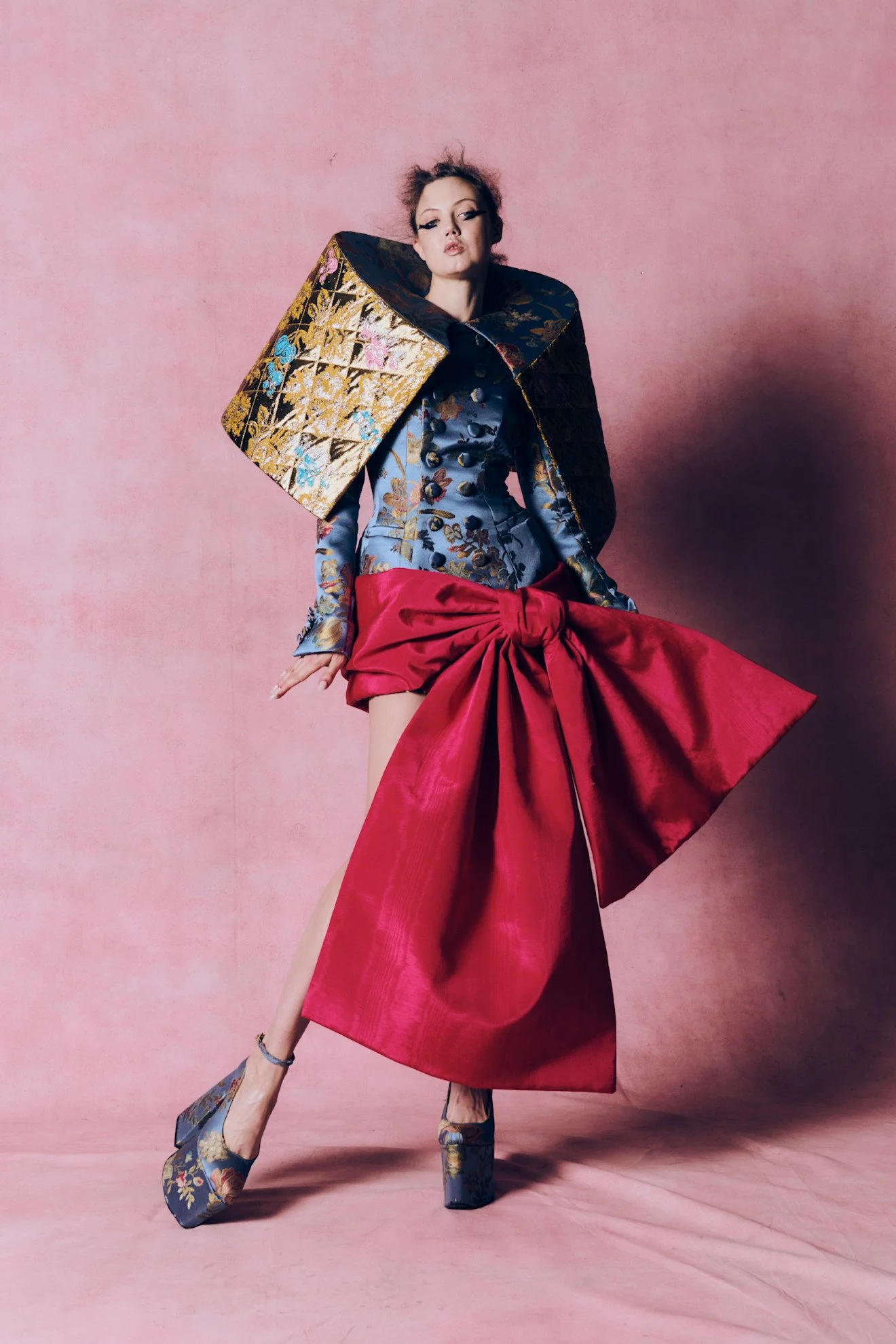
With their second official presentation at London Fashion Week, AGRO Studio confirmed their place among the city’s most exciting emerging brands. Known for high‑impact bespoke garments and co‑ed collections, each piece is made‑to‑order in small quantities in their East London studio. Their growing celebrity following—including Charli XCX—is a testament to their bold, sculptural aesthetic and commitment to craftsmanship.
Richard Quinn: A Surprising Shift
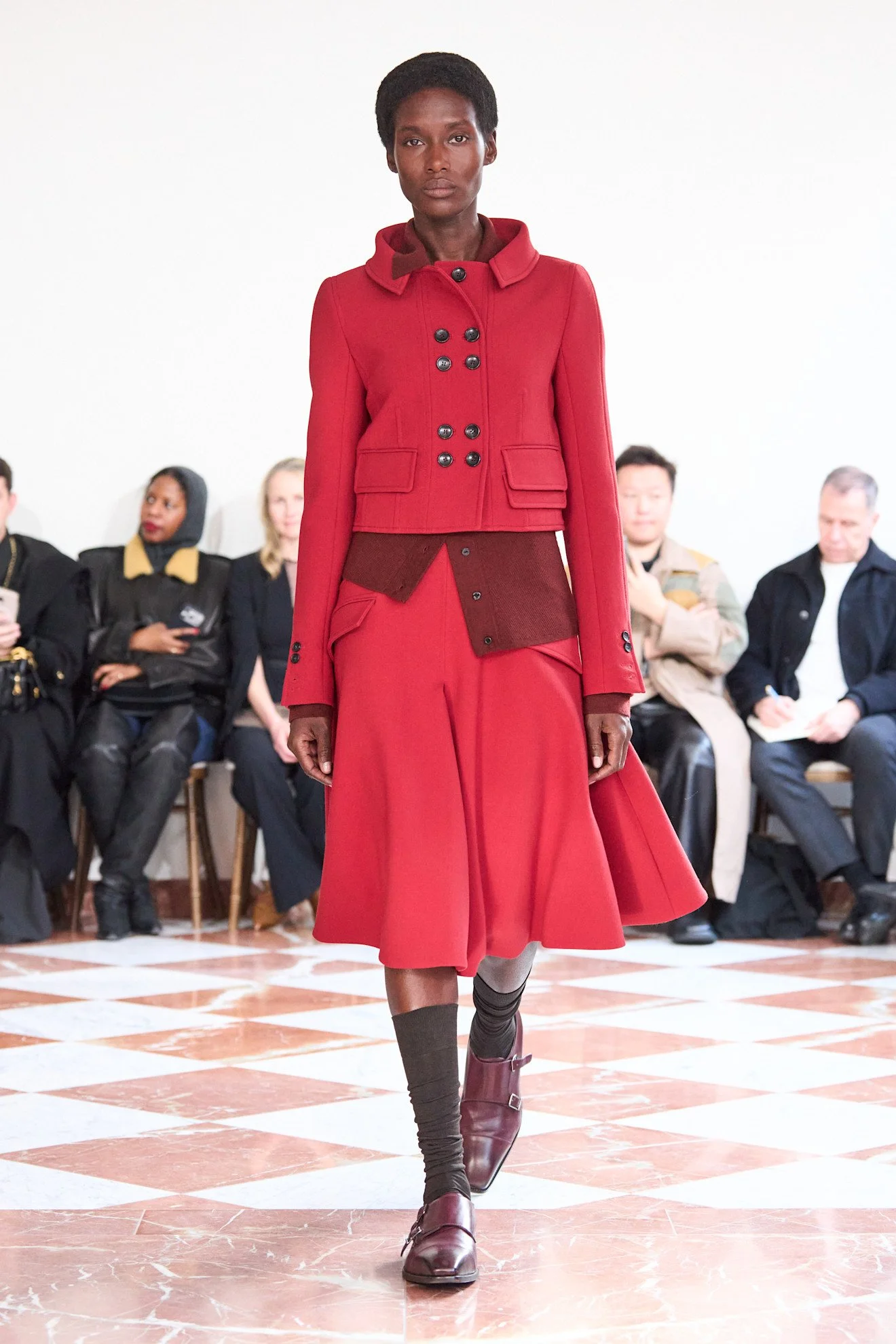
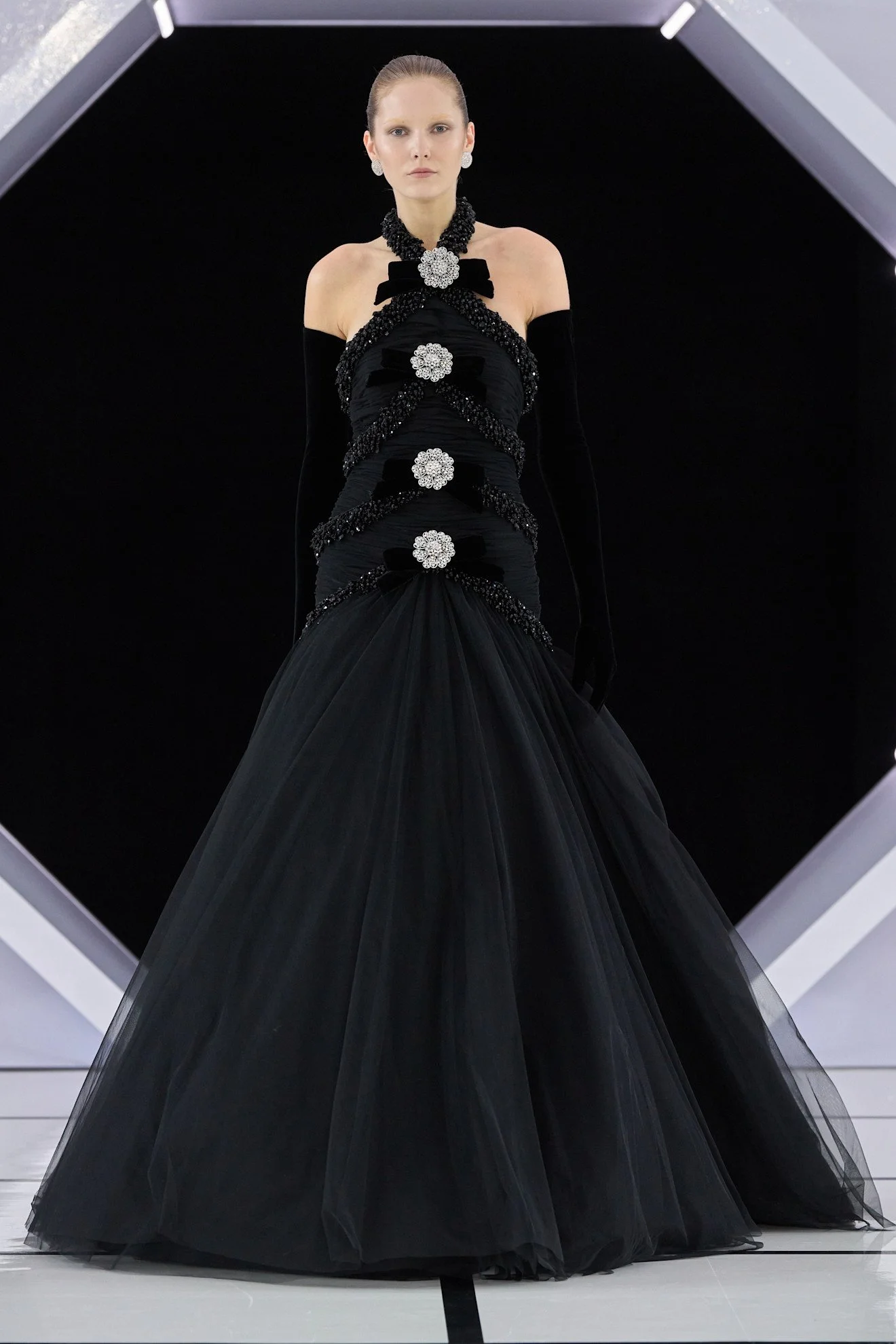
Richard Quinn, once celebrated for his explosive prints and romantic maximalism (and famously launched with the presence of Queen Elizabeth II), surprised the industry with a collection that was almost entirely print‑free. Gone were the florals and theatrical sets; in their place, a refined, vintage‑Chanel‑inspired silhouette. It was a bold departure, one that signaled a designer unafraid to challenge his own identity.
Daniel Del Valle: Wearable Sculpture
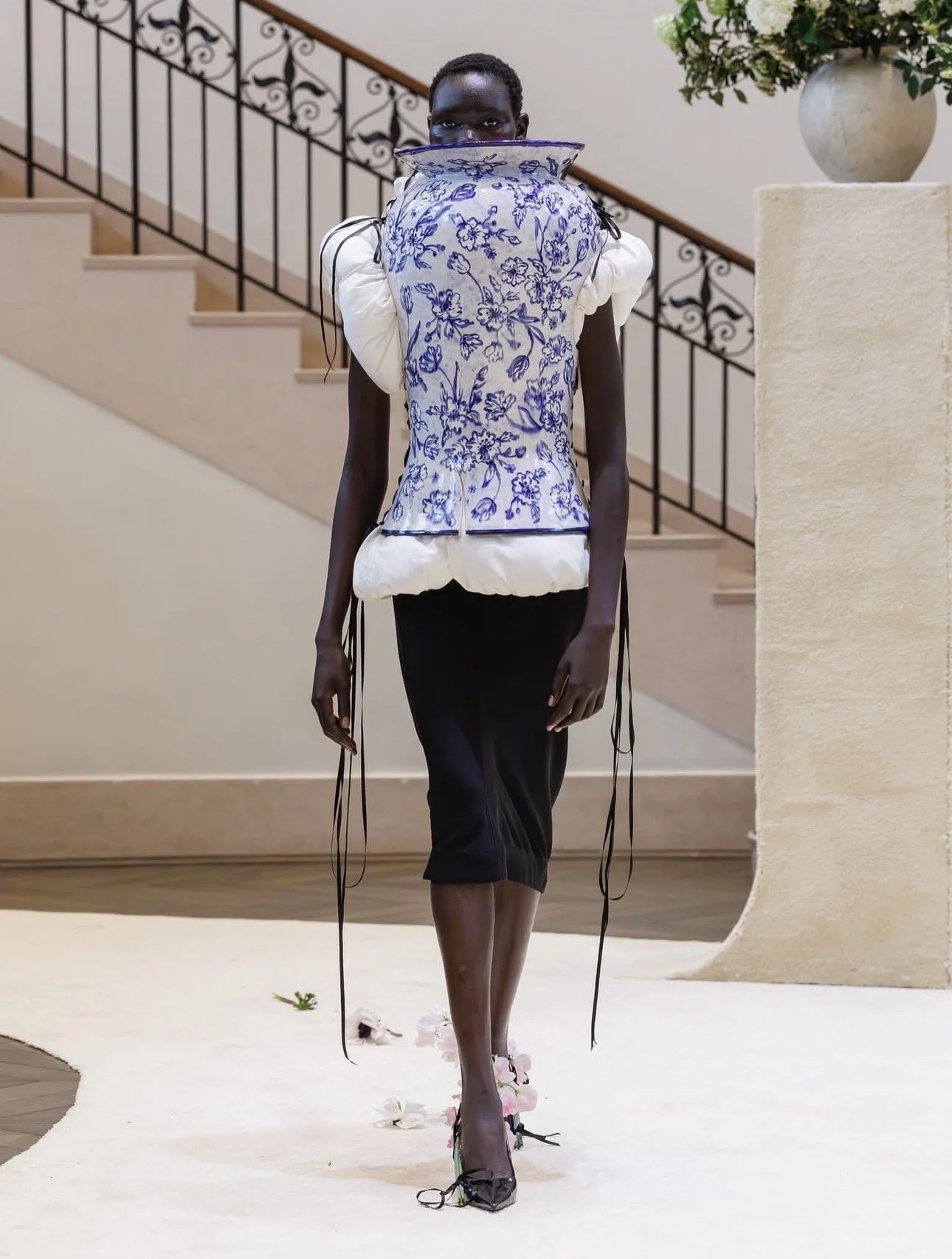
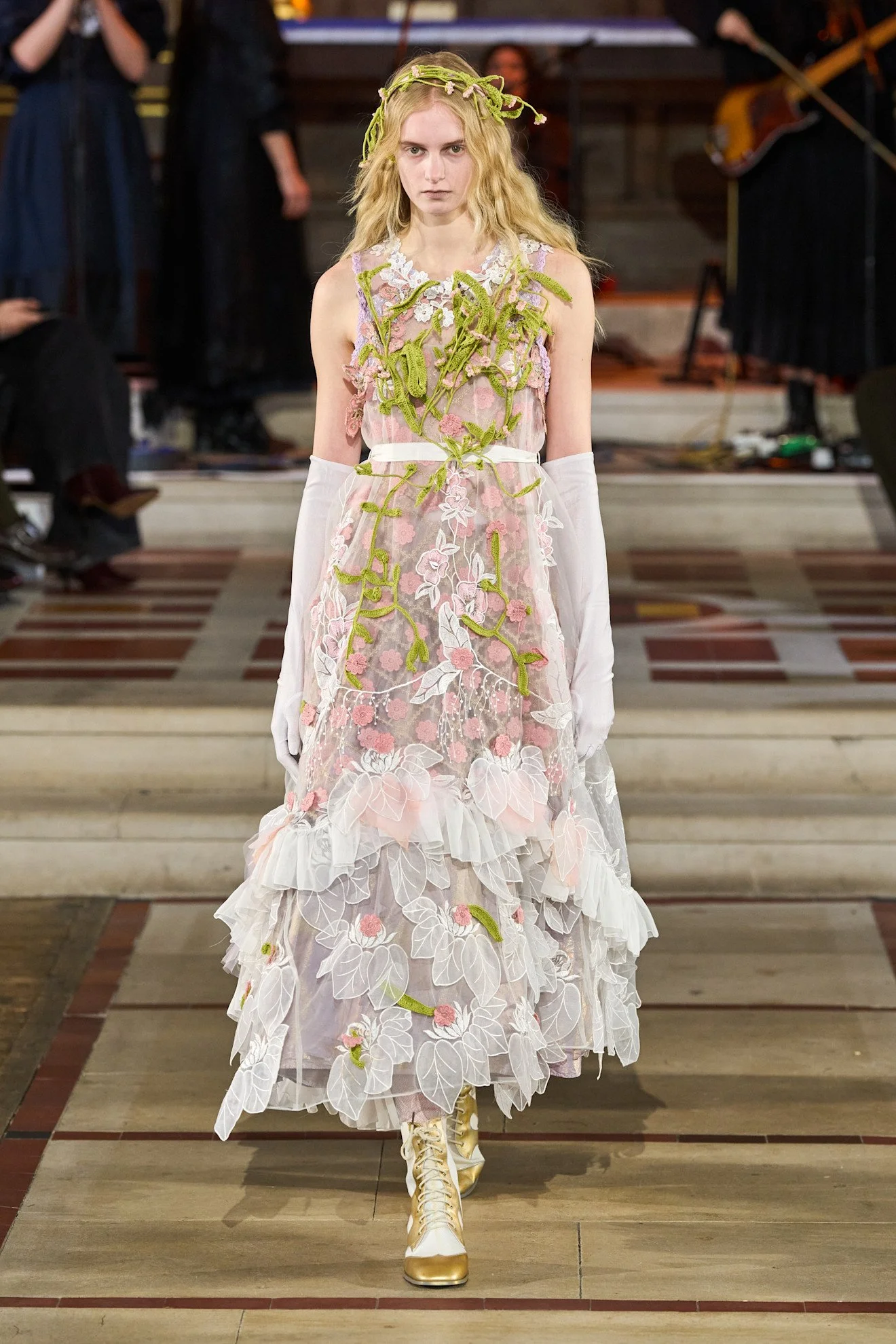
Among the new names that captured attention was Daniel Del Valle @TheVxlley, who presented what he described as “a collection of wearable sculptures.” Tops made of bread, vases worn as shirts, flowers emerging from shoes, mosaic bouquets, cascades of fabric shaped into dresses the runway became an exhibition space. Every look was extraordinary, and it is only a matter of time before these pieces appear on the red carpet.
Jonathan Anderson: A New Chapter for His Namesake Label
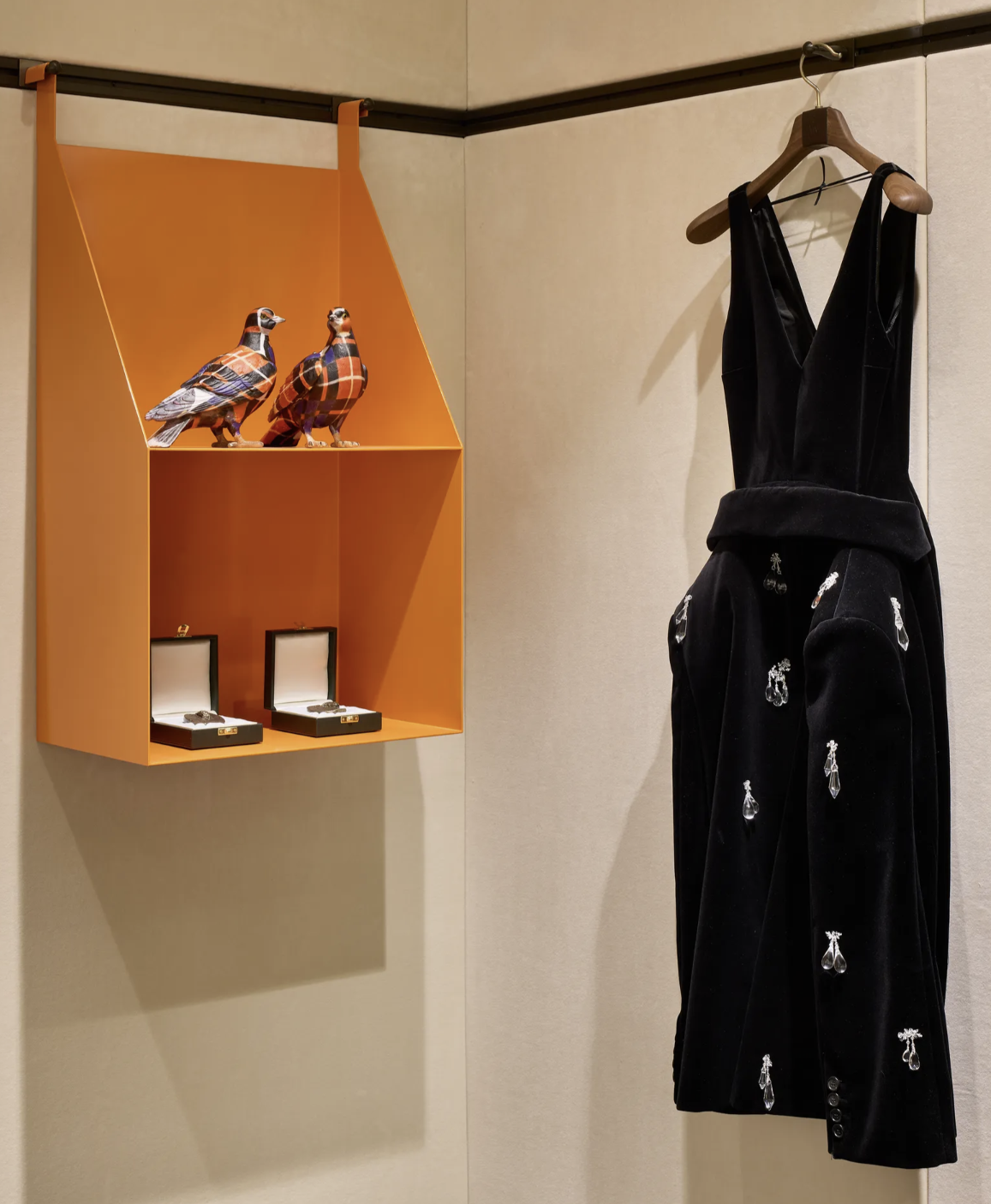
Despite his demanding schedule for Dior Jonathan Anderson found the time to unveil a refreshed vision for his own label. The new Sanchez Benton‑designed store on Pimlico Road encapsulates his passions and influences, offering a physical space where his ideas converge. It is a reminder that London remains the foundation of his creative universe.
London: The City of Independent Vision
What makes London Fashion Week so compelling is not just the clothes it is the ideas. London is a city that champions independence, nurtures experimentation, and celebrates the unconventional. It is eclectic, restless, and endlessly creative. Even as the schedule shifts and brands come and go, the spirit of London remains unchanged: bold, intellectual, and fiercely original.
In a fashion world increasingly dominated by global conglomerates, London stands as a reminder that creativity still thrives in the margins, in the studios of young designers, in the arches of Leake Street, in the halls of Tate Britain, and in the unexpected front row where royalty sits beside sustainability ambassadors.
London Fashion Week is not just a showcase it is a cultural force. And this season, more than ever, it proved why London remains one of the most influential fashion capitals in the world.