
Maison Margiela in Shanghai: Inside the Brand’s First Show Outside Paris
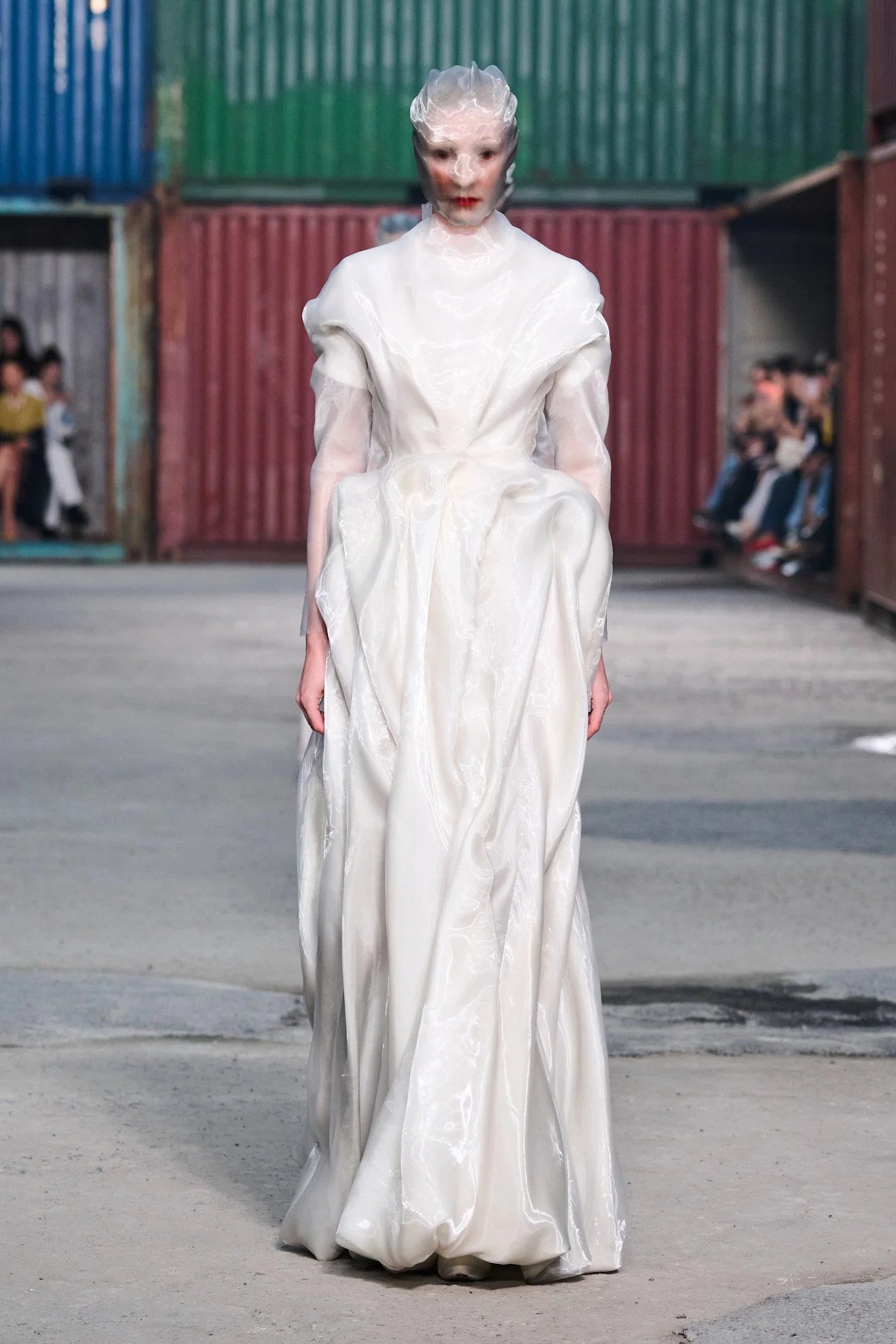
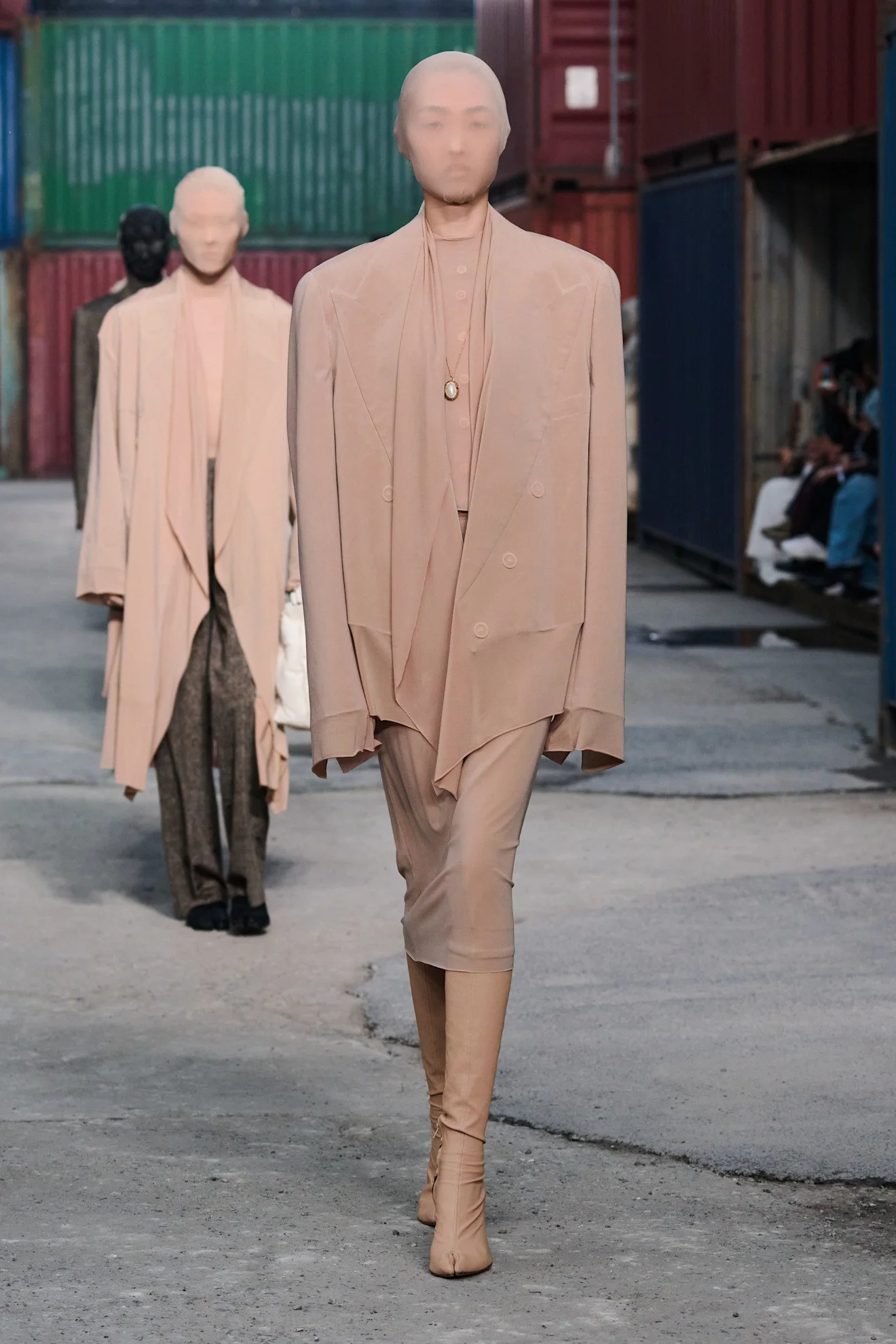
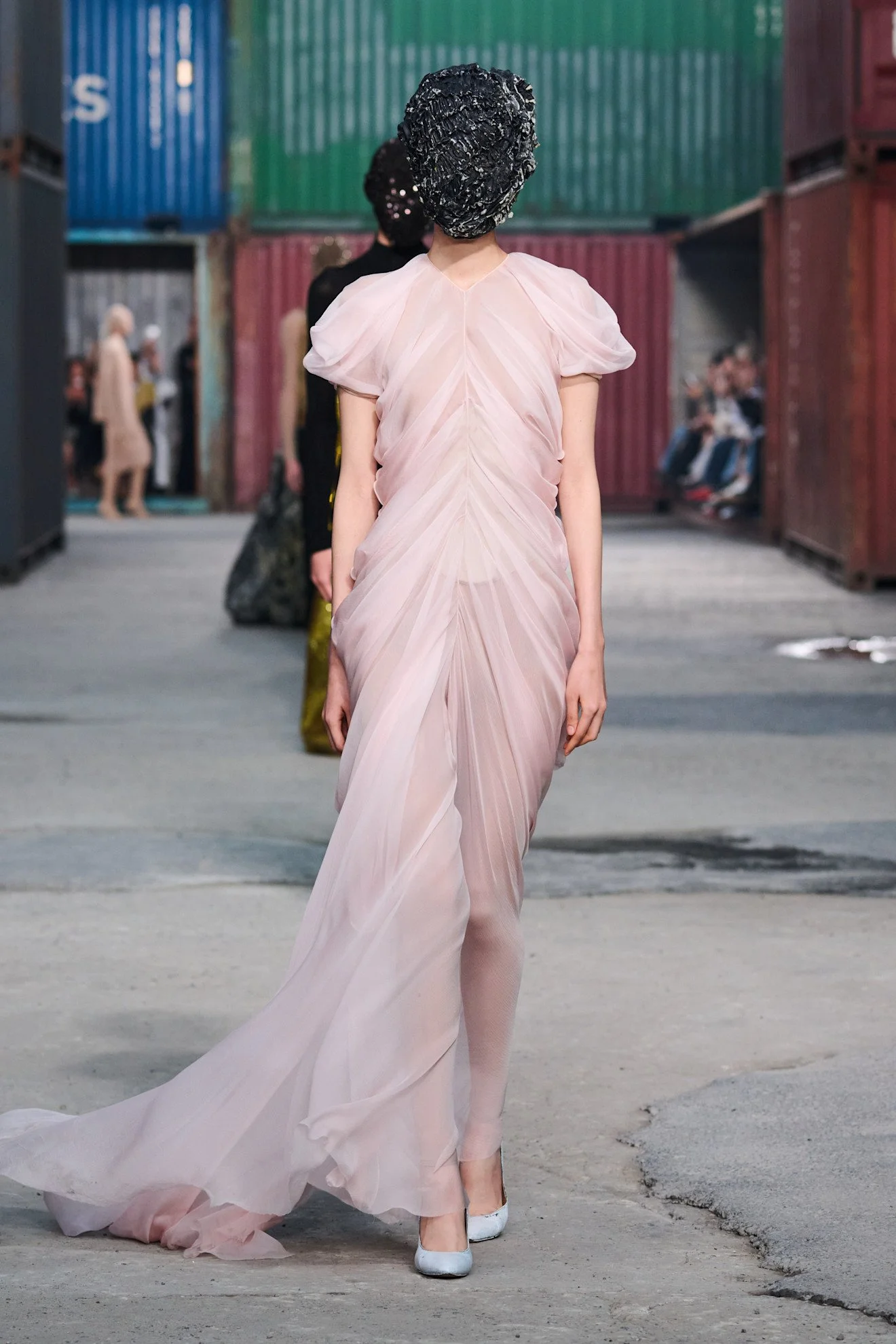
For the first time since its founding in 1988, Maison Margiela stepped outside Paris to unveil a collection and the choice of destination was as symbolic as it was strategic. Shanghai, a city defined by exchange, reinvention, and cultural velocity, became the stage for a historic moment in the house’s evolution. Under the creative direction of Glenn Martens, the French Maison presented its Autumn/Winter 2026–2027 collection in a setting that felt both industrial and poetic: a shipping‑container dock transformed into a theatrical, golden‑lit arena.
This was no ordinary runway. Martens merged Artisanal couture and ready‑to‑wear into a single narrative a first for the house reaffirming Margiela’s long‑standing fascination with process, transformation, and the beauty of the unexpected. The show unfolded under a golden moon, accompanied by percussive rhythms and a haunting reinterpretation of Where the Wild Roses Grow, as masked models advanced in measured, ritualistic steps. Their garments emitted soft rustles and metallic clinks, the result of unconventional materials embedded within them beeswax, porcelain fragments, gold leaf, and reconstructed tapestries.
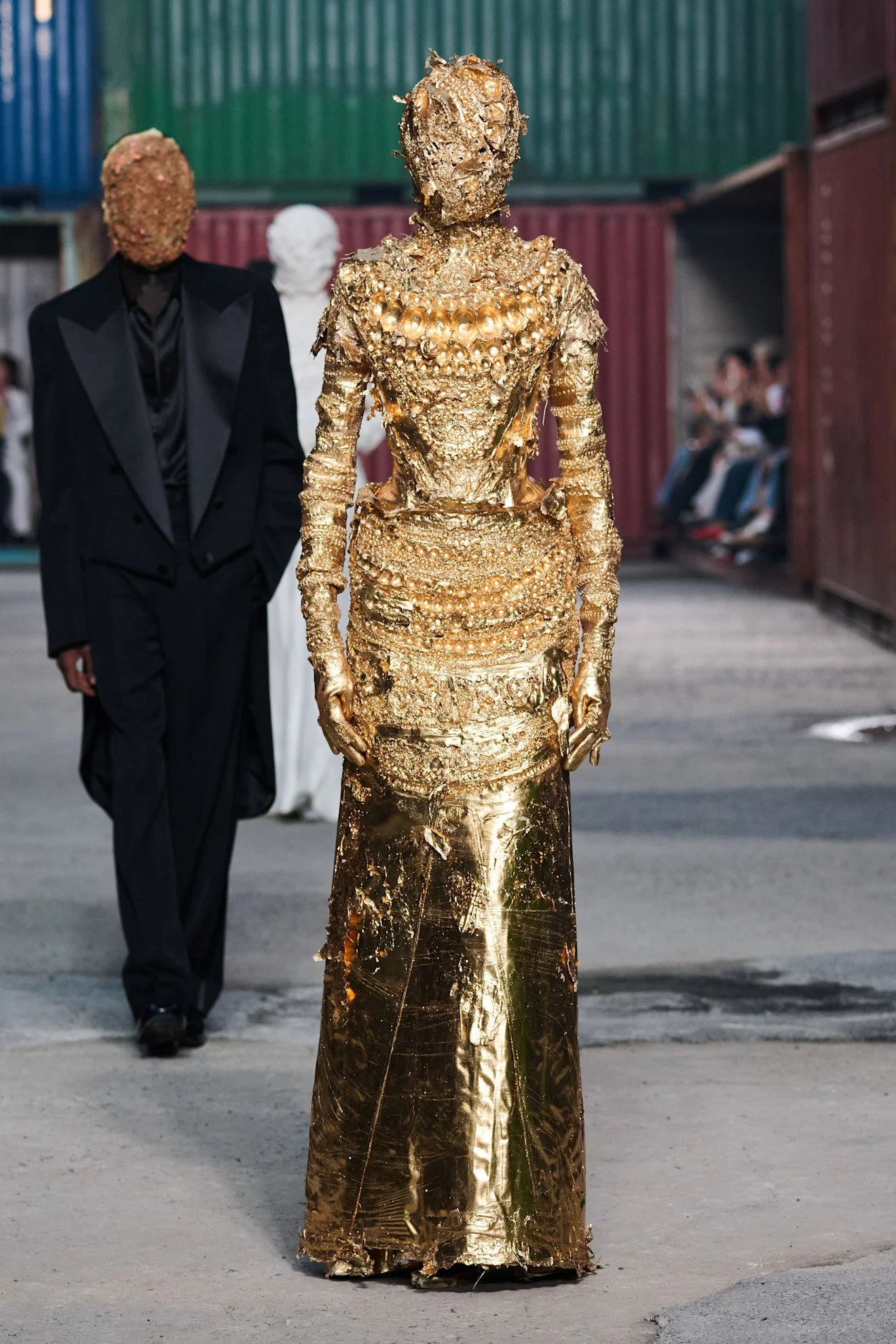
Material experimentation formed the intellectual core of the collection. Beeswax, historically used as a binding agent, coated masks and garments, creating cracked, fossil‑like surfaces that blurred the line between past and present. A Victorian mourning dress dipped in wax became one of the show’s most arresting pieces a tactile distortion of history. Porcelain, another recurring motif, appeared both as sculptural assemblage in couture looks and as airbrushed illusions in ready‑to‑wear, echoing the house’s fascination with perception and transformation.
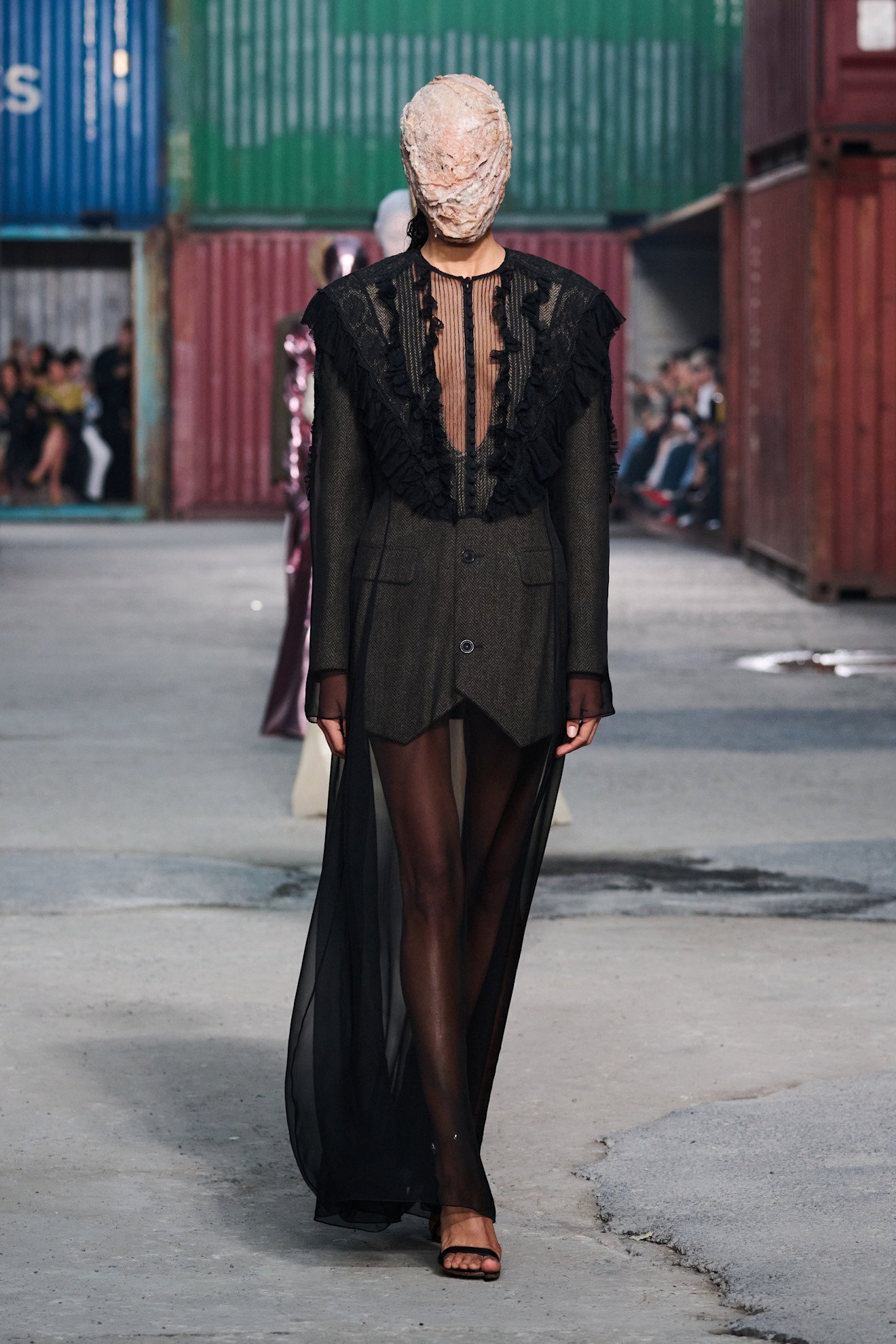
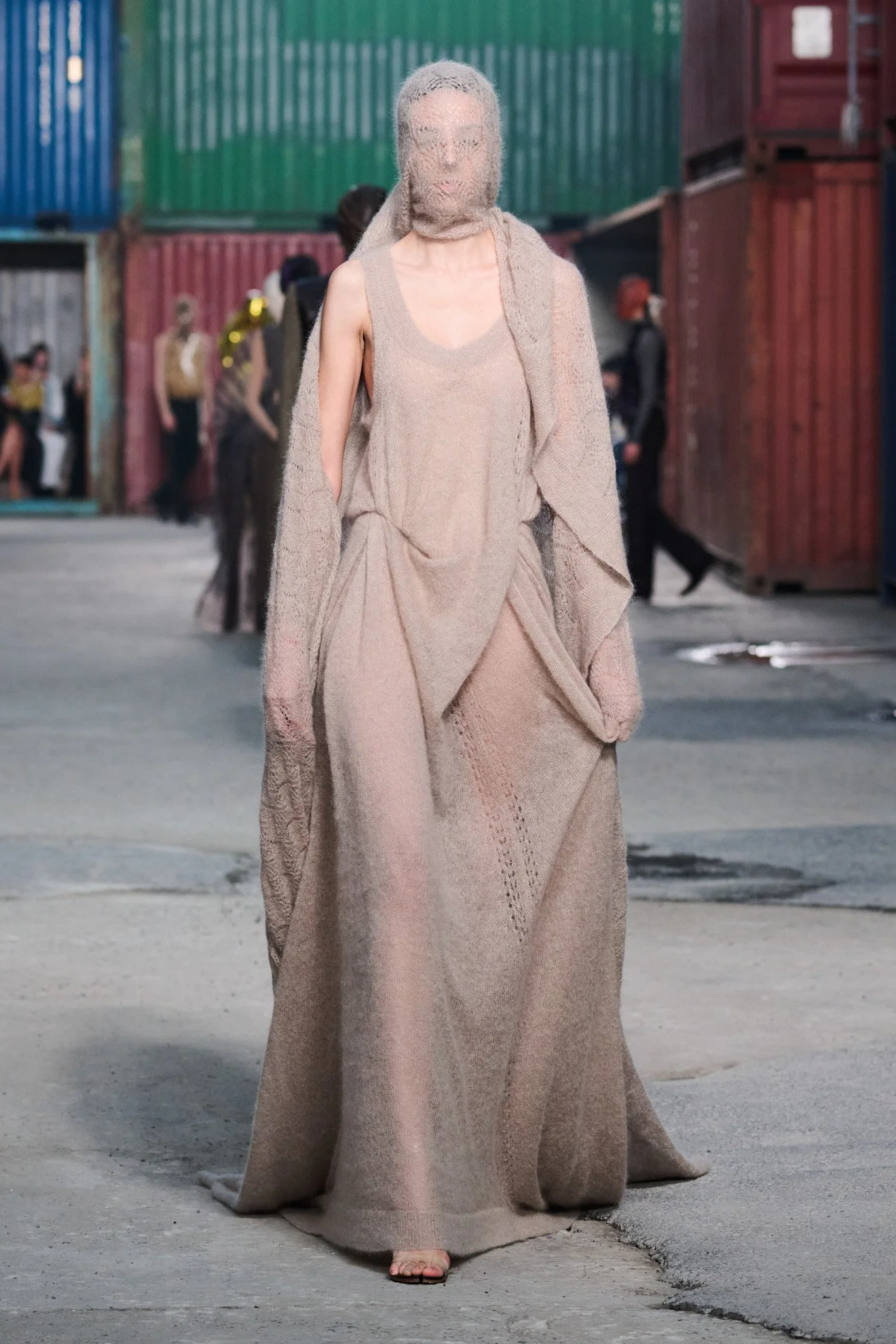
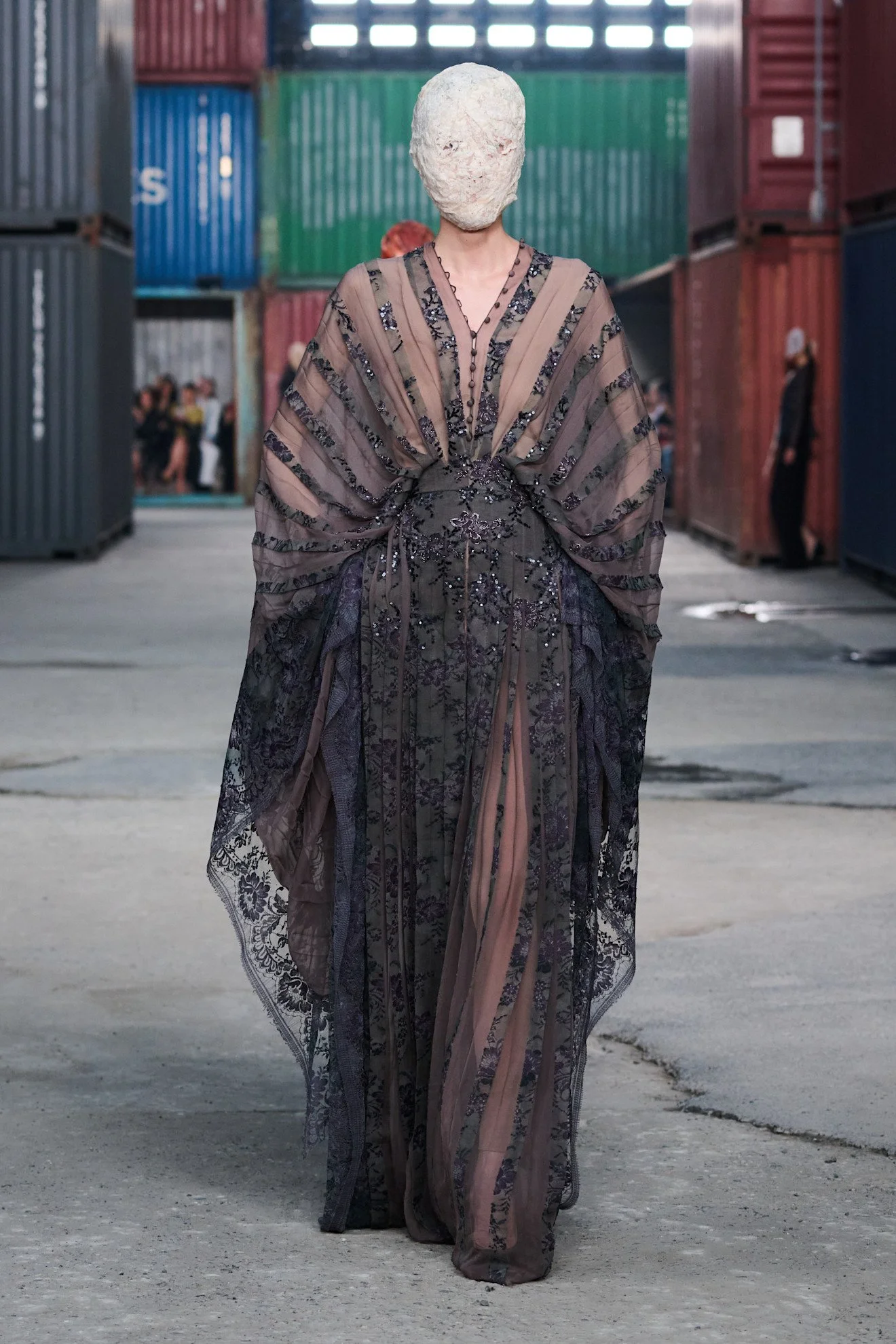
The Artisanal segment delivered the collection’s most radical gestures: a gown composed of 150,000 miniature star elements; a gold‑leaf dress that fragmented with movement; and a column gown reconstructed from a five‑meter painting sourced in a Parisian market. These pieces embodied the ethos that has defined Margiela since its earliest days elevating the discarded, the overlooked, and the forgotten into objects of couture reverence.
Meanwhile, the ready‑to‑wear offered a more grounded articulation of the house’s codes. Tailoring leaned retro, with structured jackets and leather outerwear anchoring the silhouettes. Second‑skin garments a Martens signature stretched across the body in monochrome hues, while Edwardian‑inspired crinolines and subverted tailcoats added historical tension. Masks, of course, remained central: anonymity as a form of liberation, a shedding of identity as models walked into the Shanghai night with a distinctly Parisian sensibility.
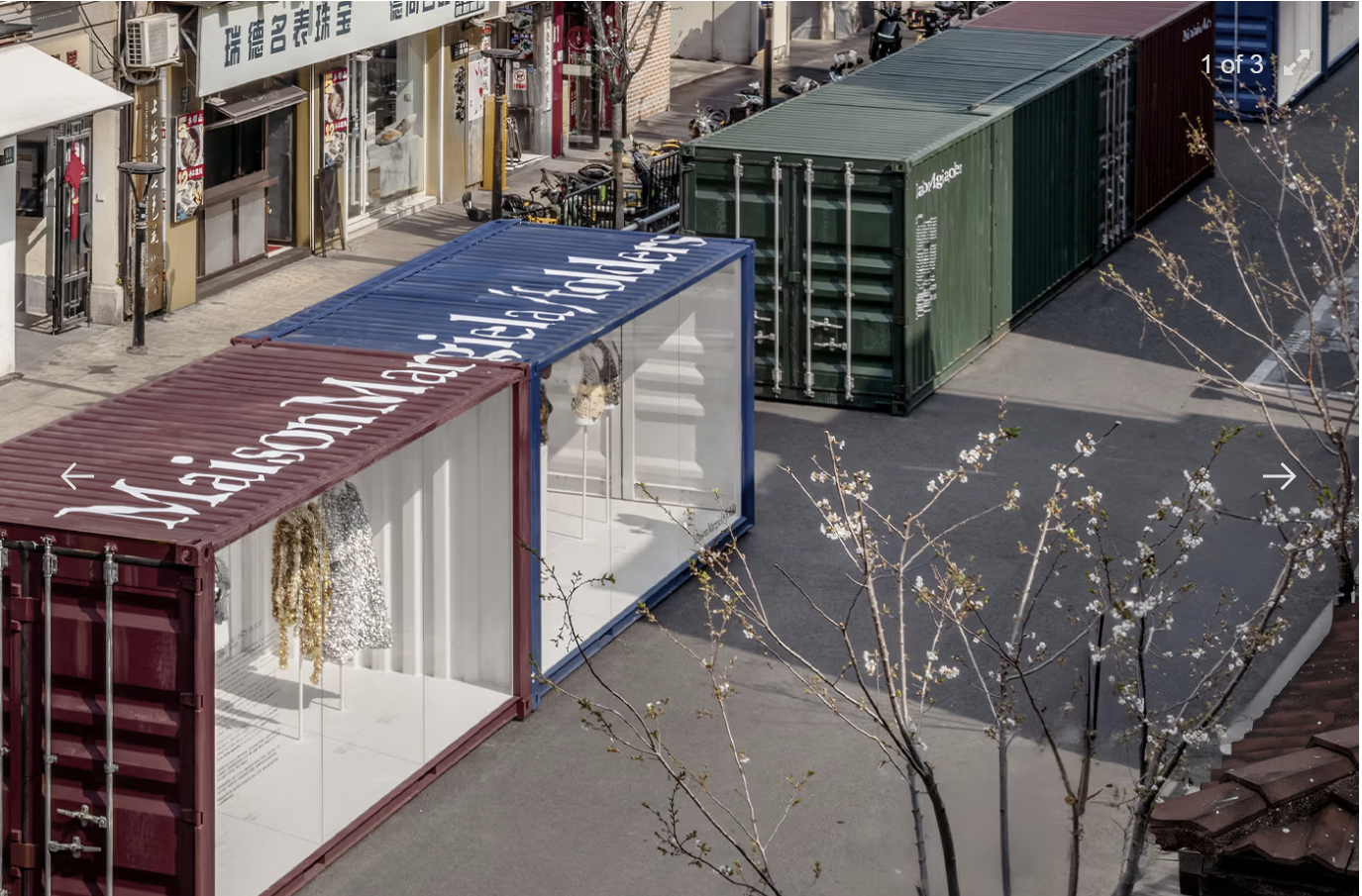
MaisonMargiela/folders: A Four‑City Cultural Activation
The Shanghai show marked only the beginning. Maison Margiela simultaneously launched MaisonMargiela/folders, a multi‑city exhibition tour across China Shanghai, Beijing, Chengdu, and Shenzhen designed to bring the house’s codes directly to the public.
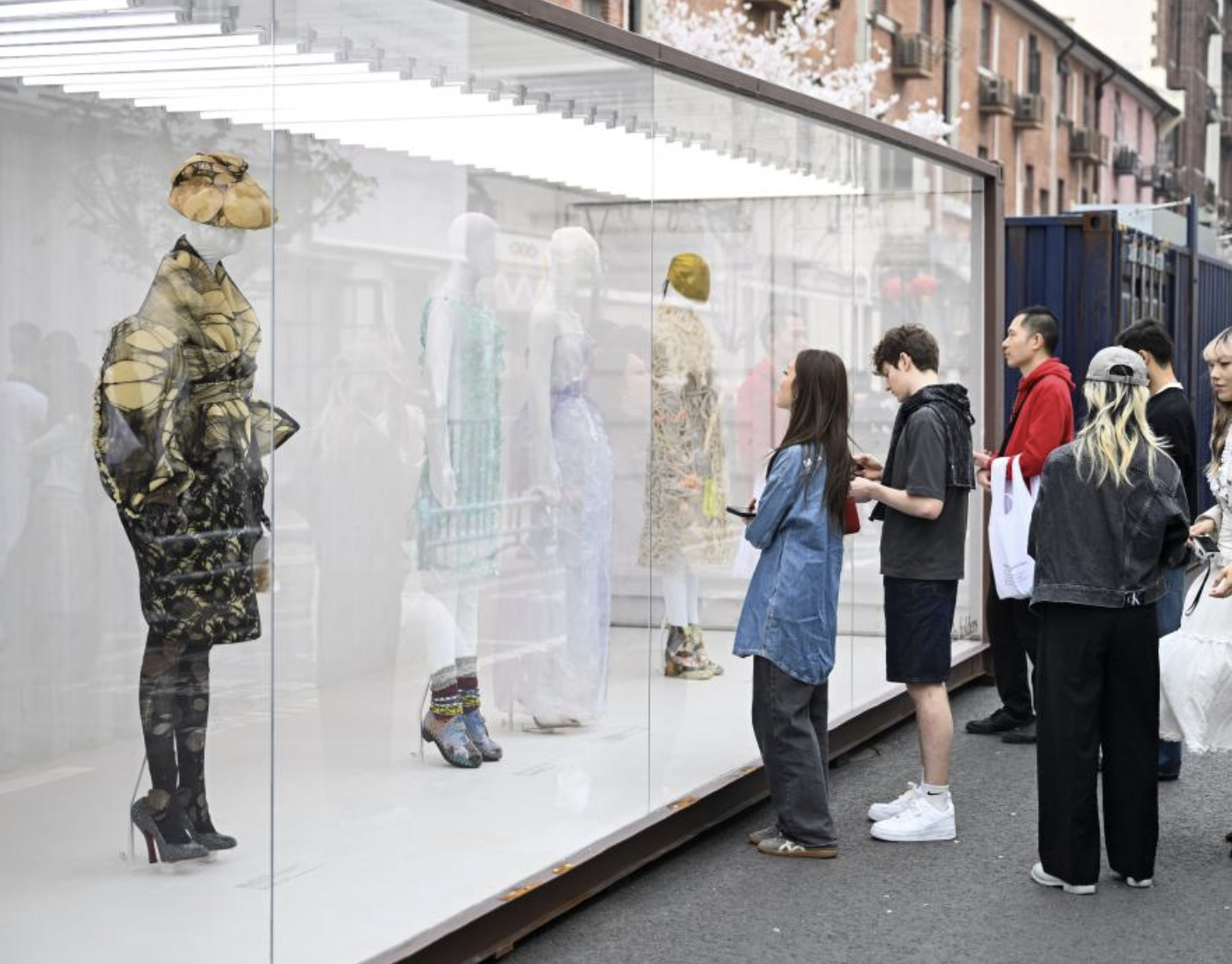
The first chapter opened on Shanghai’s pedestrianised Yan Dang Road, where 58 Artisanal looks from 1989 to 2025 were displayed inside industrial shipping containers a nod to the brand’s fascination with repurposed spaces and the raw poetry of the everyday. This open‑air installation blurred the boundaries between fashion, archive, and public art, echoing Martin Margiela’s early commitment to accessibility and free‑market spontaneity.
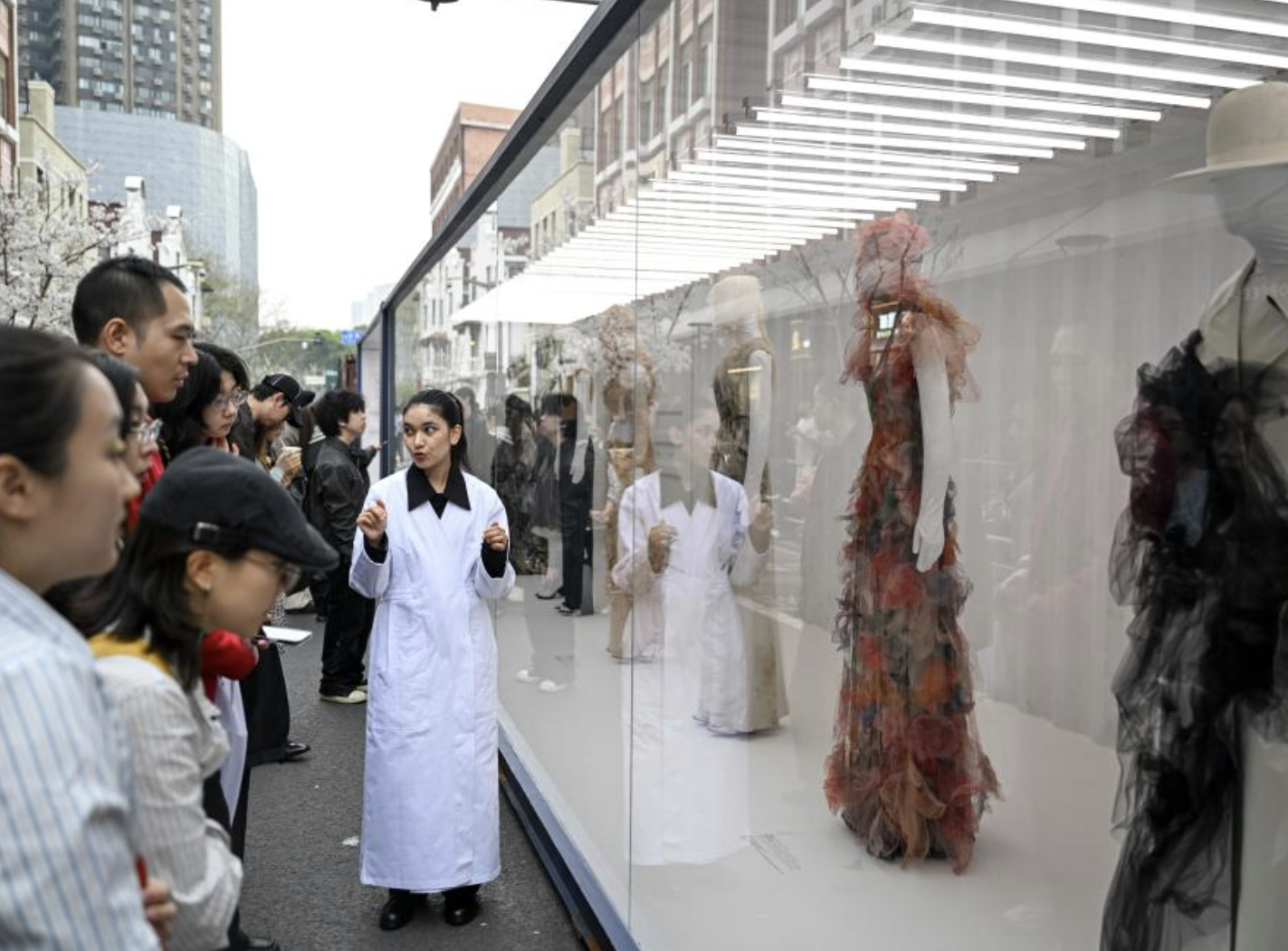
The tour continues with themed exhibitions across China:
Beijing: Anonymity: Our History of Masks
Chengdu: Tabi: Collectors
Shenzhen: Bianchetto: Atelier Experience
Each activation explores a distinct facet of the house’s identity anonymity, transformation, craftsmanship and is open to the public, reinforcing the Maison’s desire to democratise its codes while deepening its presence in a rapidly growing market.
A New Frontier for a House Built on Subversion
Maison Margiela’s Shanghai debut is more than a geographic shift it is a conceptual expansion. By merging couture and ready‑to‑wear, by transforming a shipyard into a stage, by placing archival Artisanal pieces inside shipping containers, the house continues to challenge how fashion is presented, consumed, and remembered.
This moment marks a new chapter: global, mobile, and deeply rooted in the Maison’s founding principles of reinvention, anonymity, and the poetic potential of the overlooked.
Margiela has left Paris but it has not left its philosophy behind.