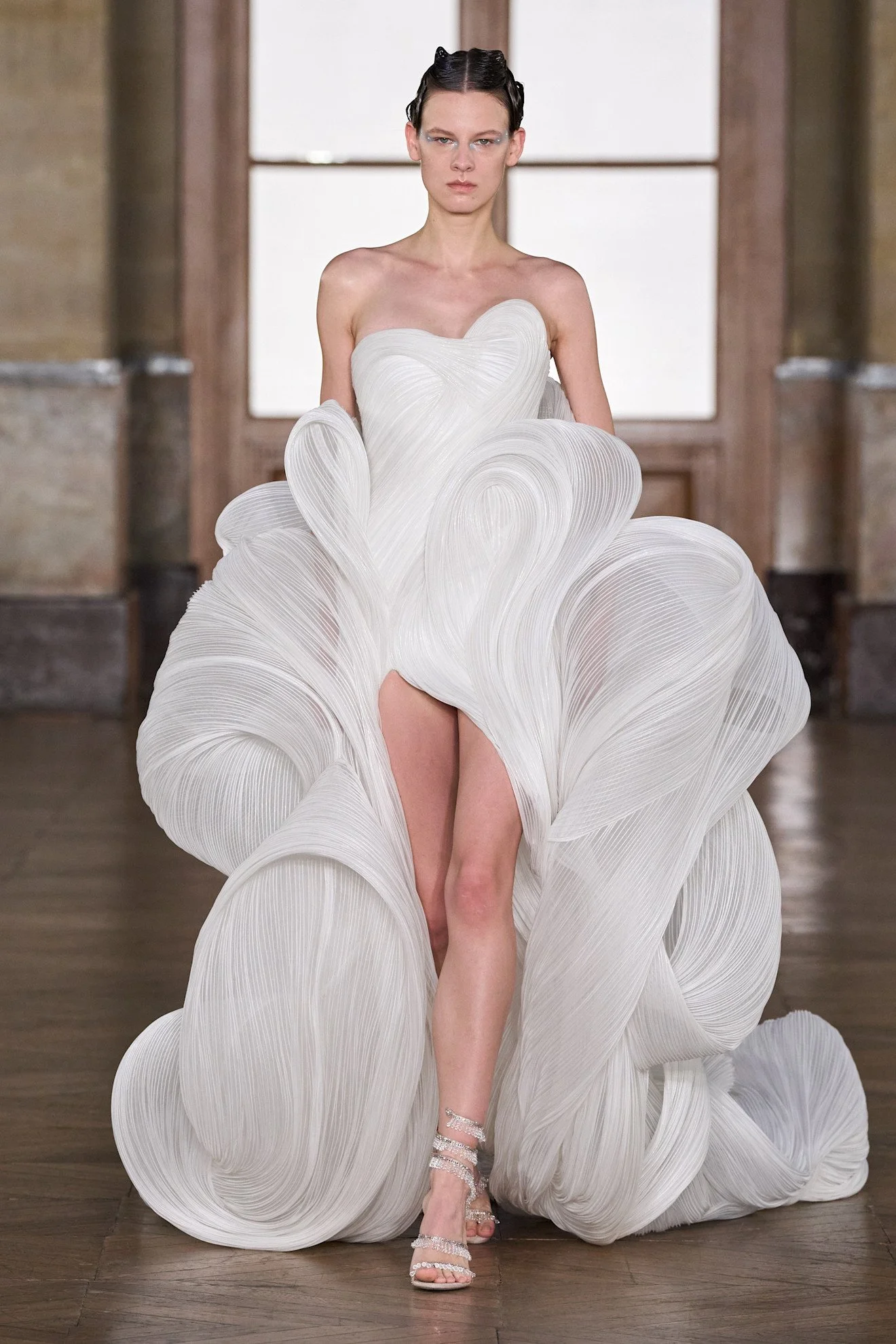
Summer 2026 Haute Couture: How Designers Are Redefining the Bridal Gown
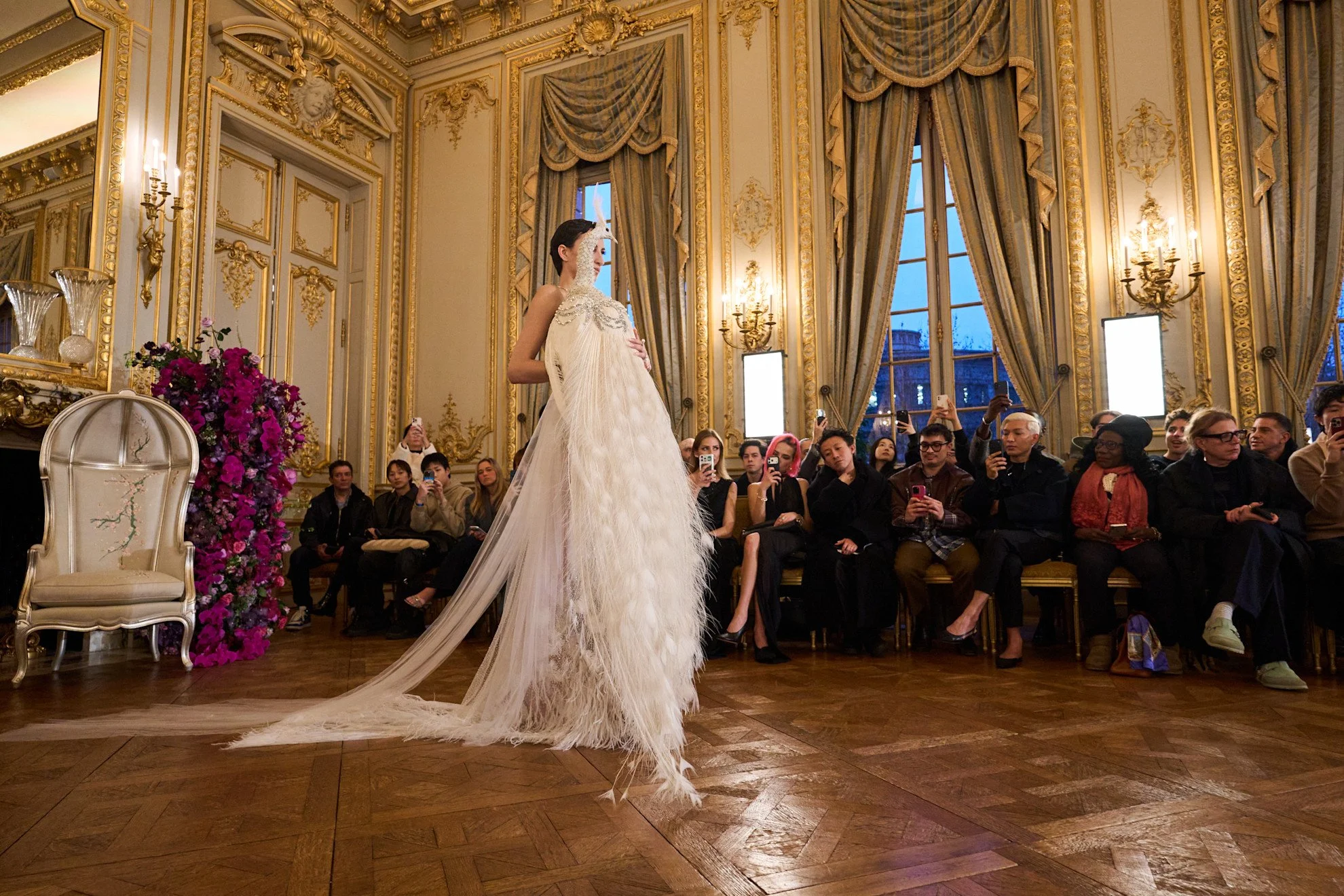
Miss Sohee
As spring’s first blossoms unfurl, so does the quiet anticipation of wedding season that moment when imagination instinctively turns toward the bridal gown, the eternal star of ceremony and spectacle. In Paris, where Haute Couture remains fashion’s most sacred ritual, the Summer 2026 collections unveiled in January offered a breath-taking reminder that bridal couture is not merely a category. It is couture’s purest expression of fantasy, craftsmanship, and emotional resonance.
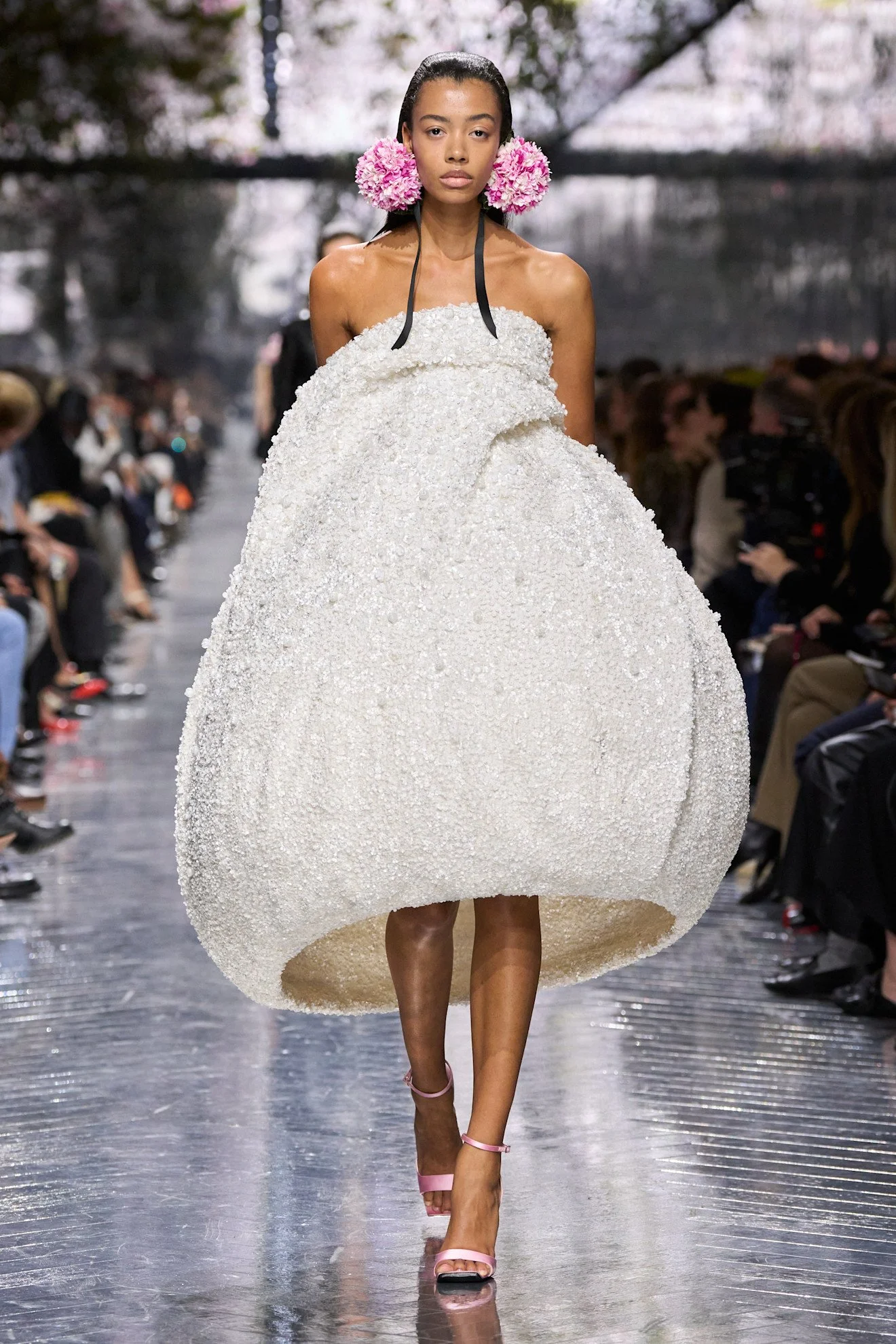
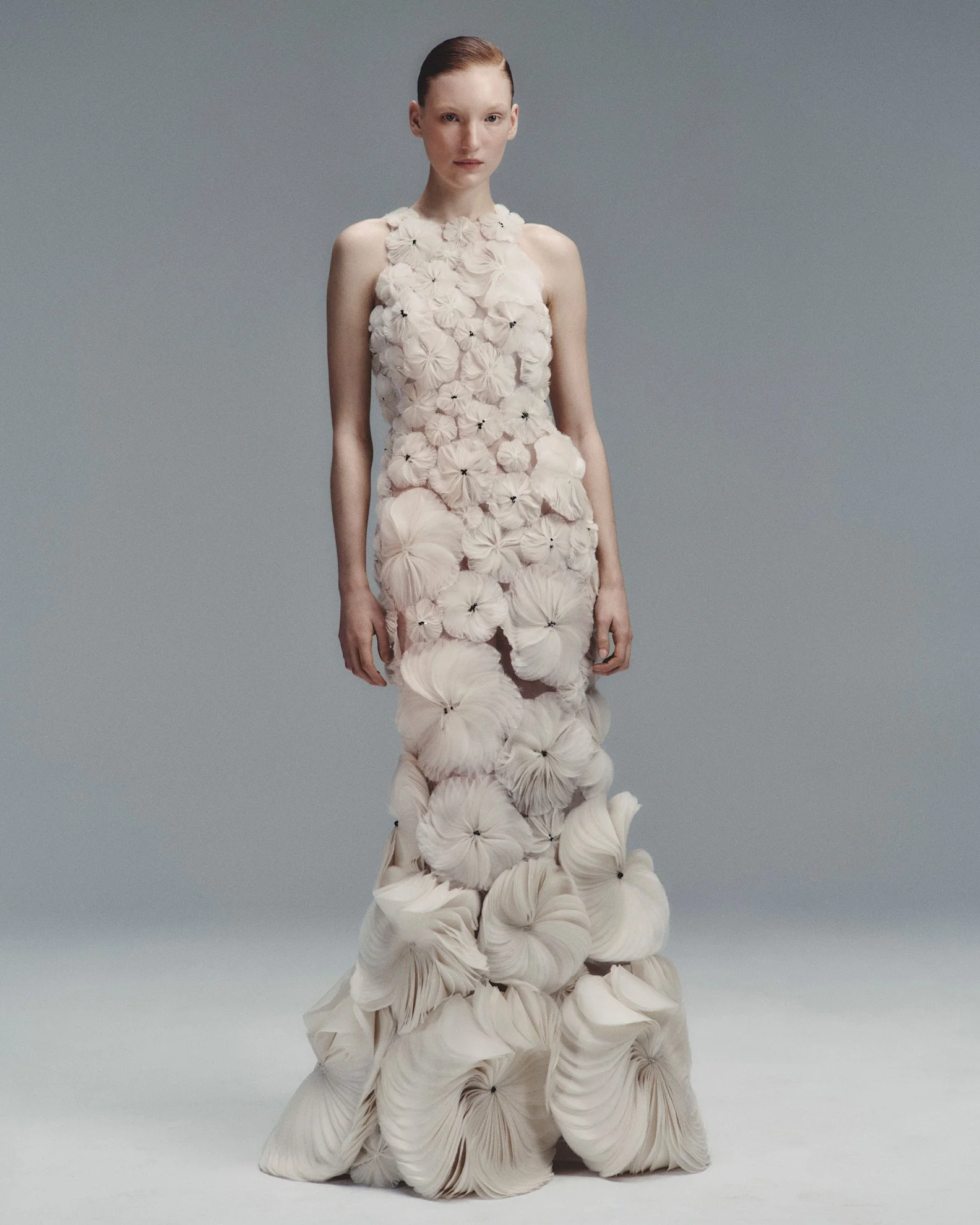
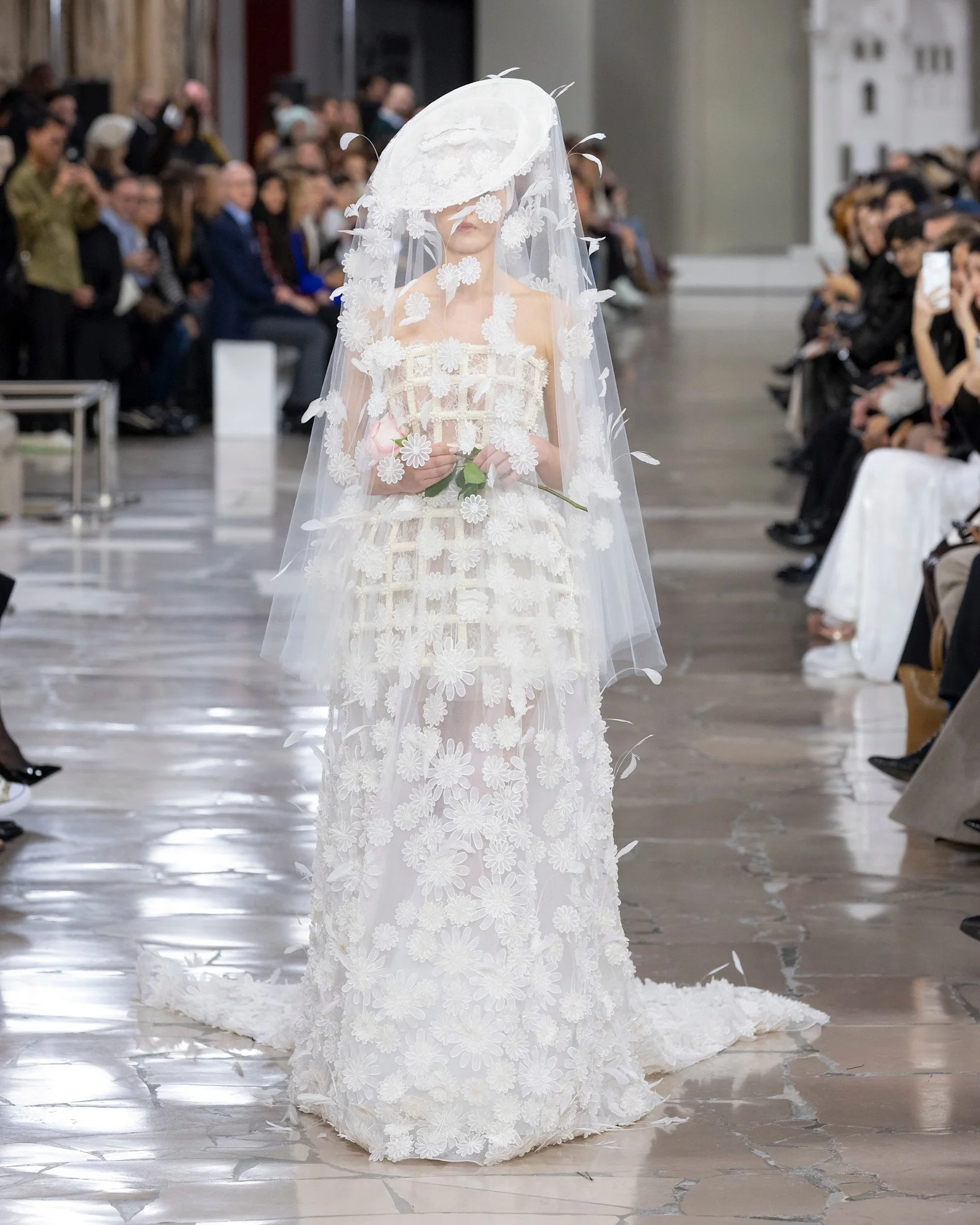
This season, the Maisons delivered visions that were sculptural, poetic, and deeply rooted in their heritage, yet boldly reimagined for a new generation of brides who crave artistry over convention. Jonathan Anderson’s debut couture collection for Dior was a revelation a study in sculptural purity and technical audacity. His bridal silhouettes, rendered in immaculate white, ballooned outward in airy, architectural volumes, as if gently lifted by an invisible current.
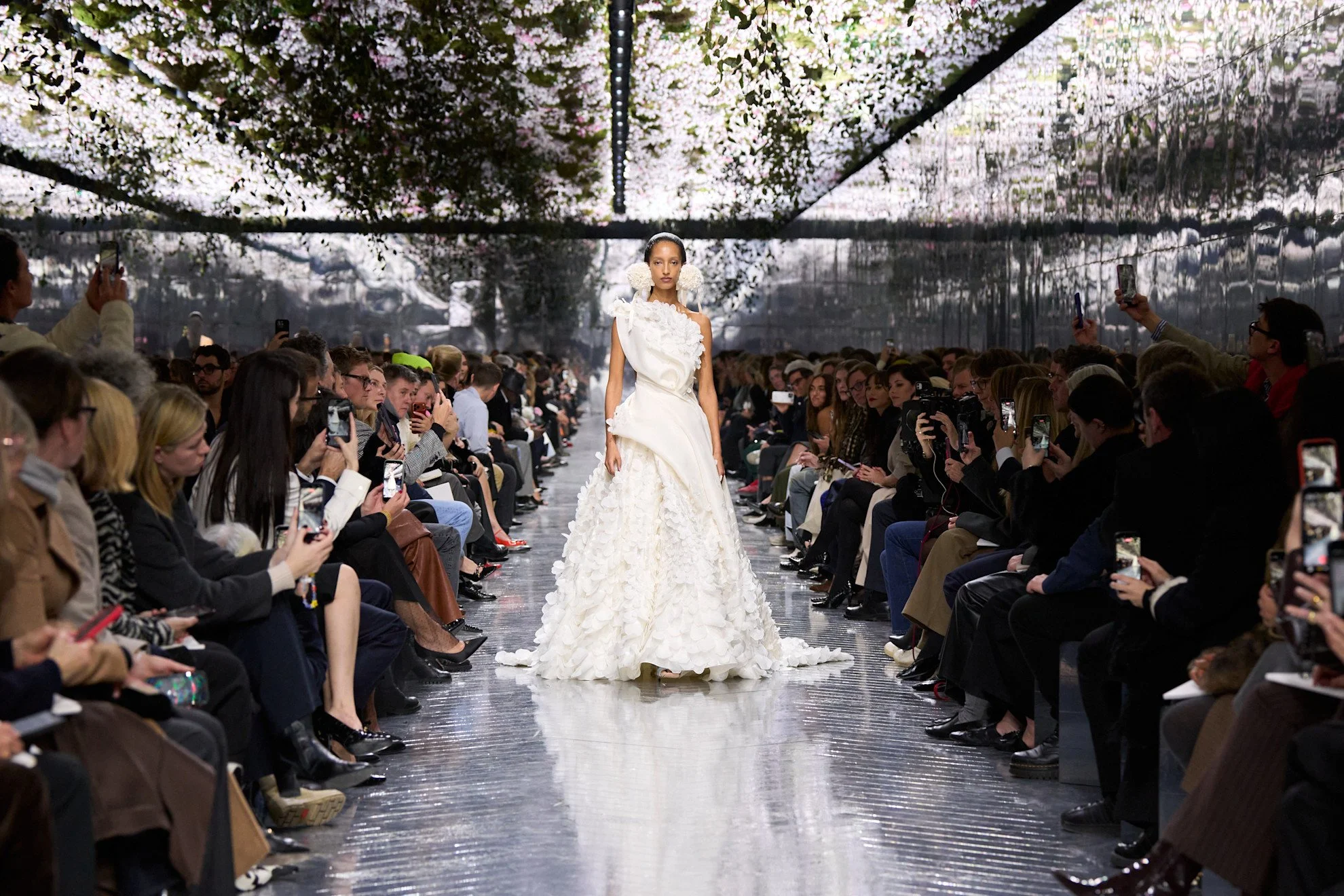
Dior Haute Couture
Where Christian Dior once concealed formidable internal structures beneath soft, romantic surfaces, Anderson inverted the equation: the structure became the poetry. His gowns bowed away from the body through ingenious cutting and feather‑light fabrication, creating movement even in stillness.Feathers a recurring motif were transformed into illusions: cloisonné enamel, reptilian scales, mother‑of‑pearl, or perfectly frayed silk flounces. The result was bridal couture that felt both otherworldly and intimately handcrafted, a modern echo of Dior’s eternal fascination with femininity.
In the gilded salons of the Shangri‑La Hotel, Miss Sohee staged a couture tableau that merged mythology, nature, and fine art. A white peacock alive, regal, and impossibly serene accompanied one model down the runway, setting the tone for a collection where plumage became both symbol and technique.
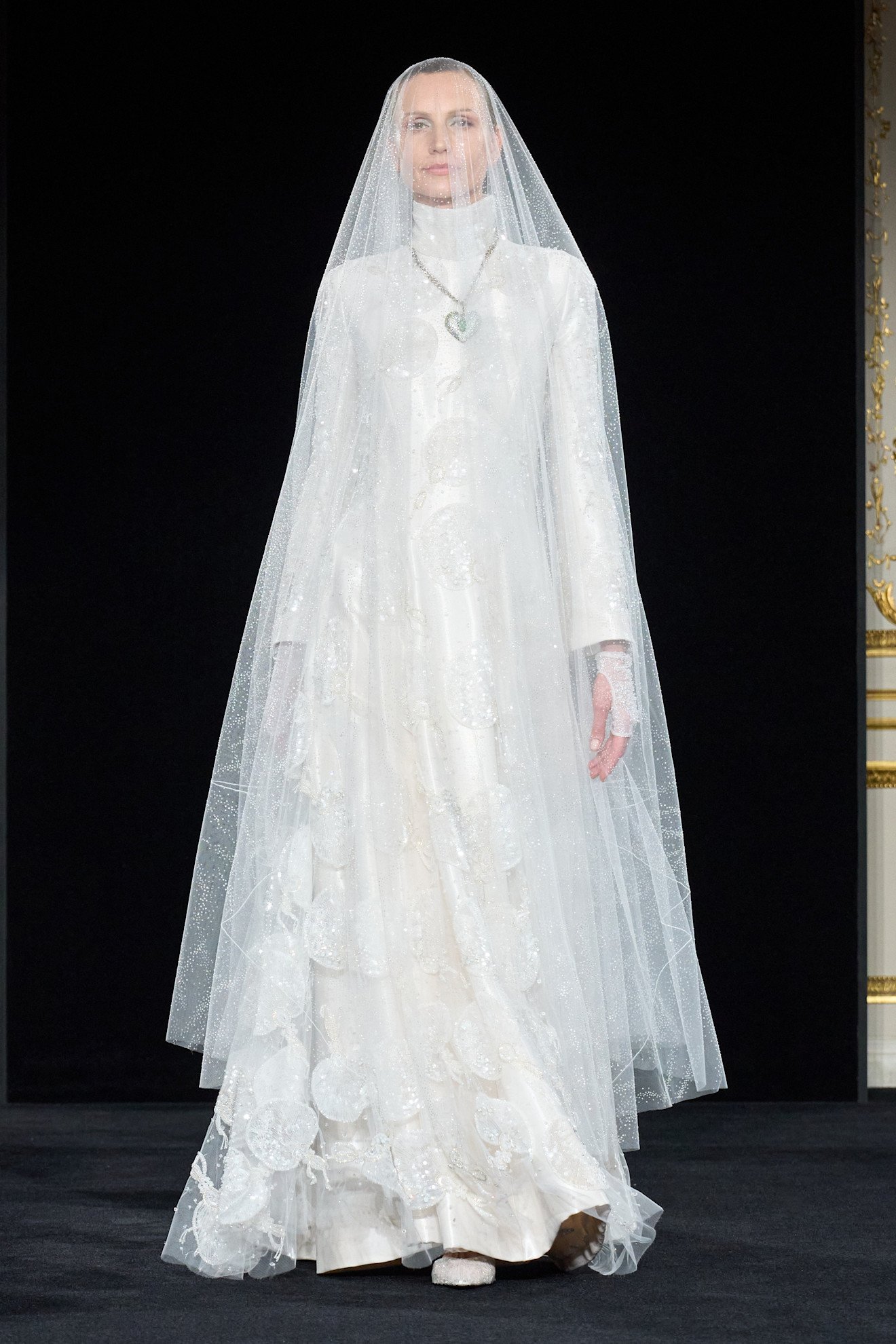
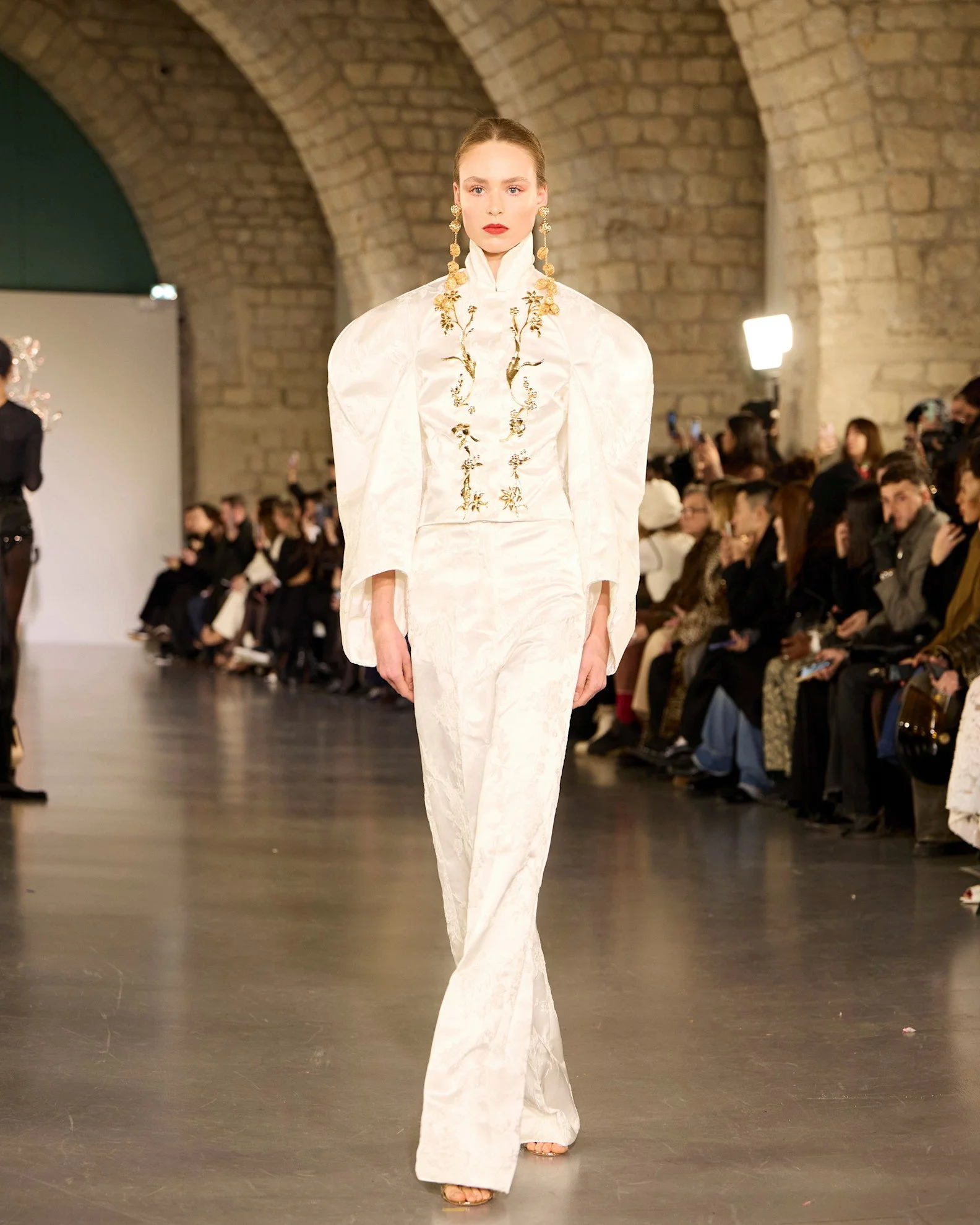
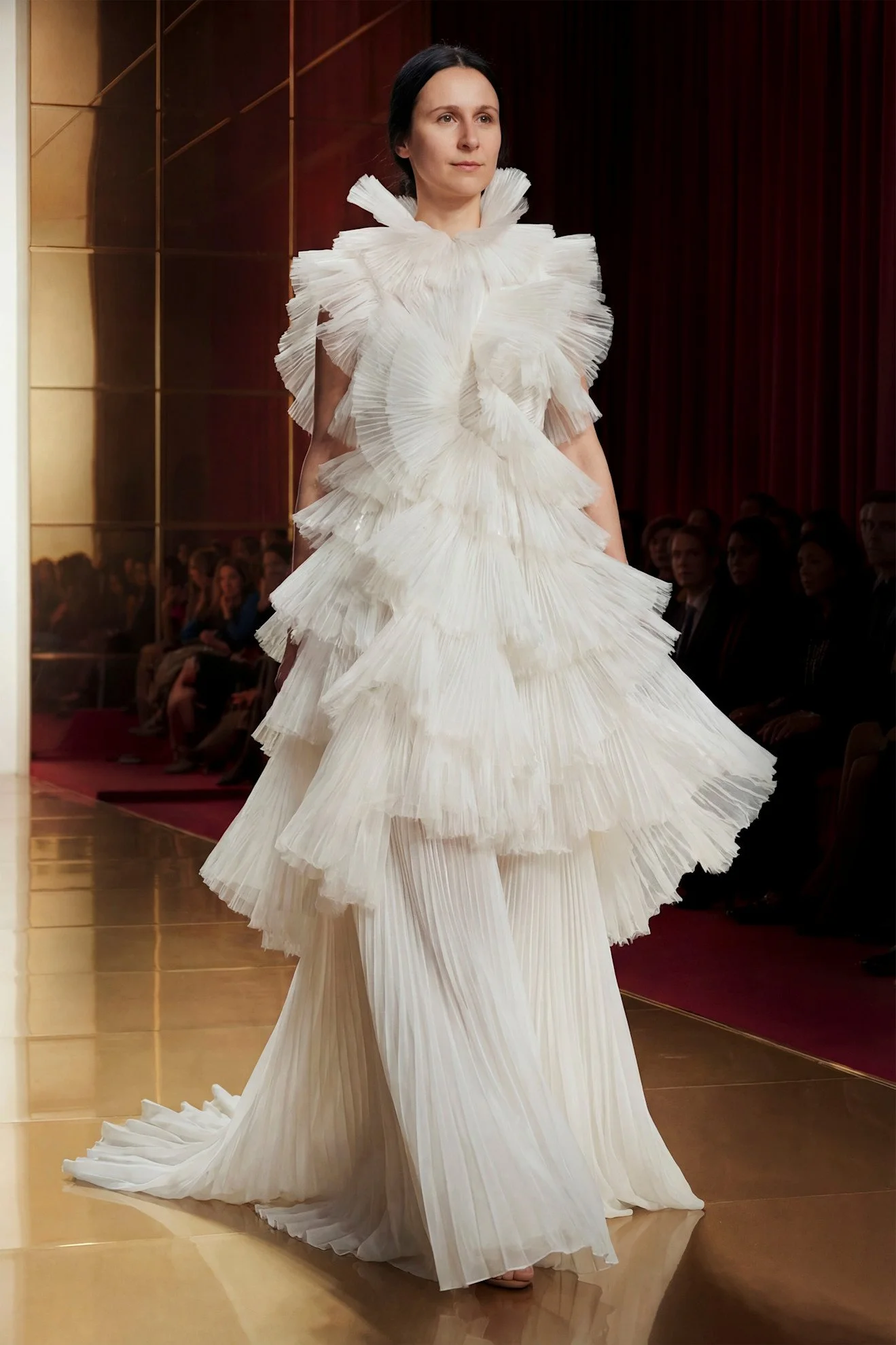
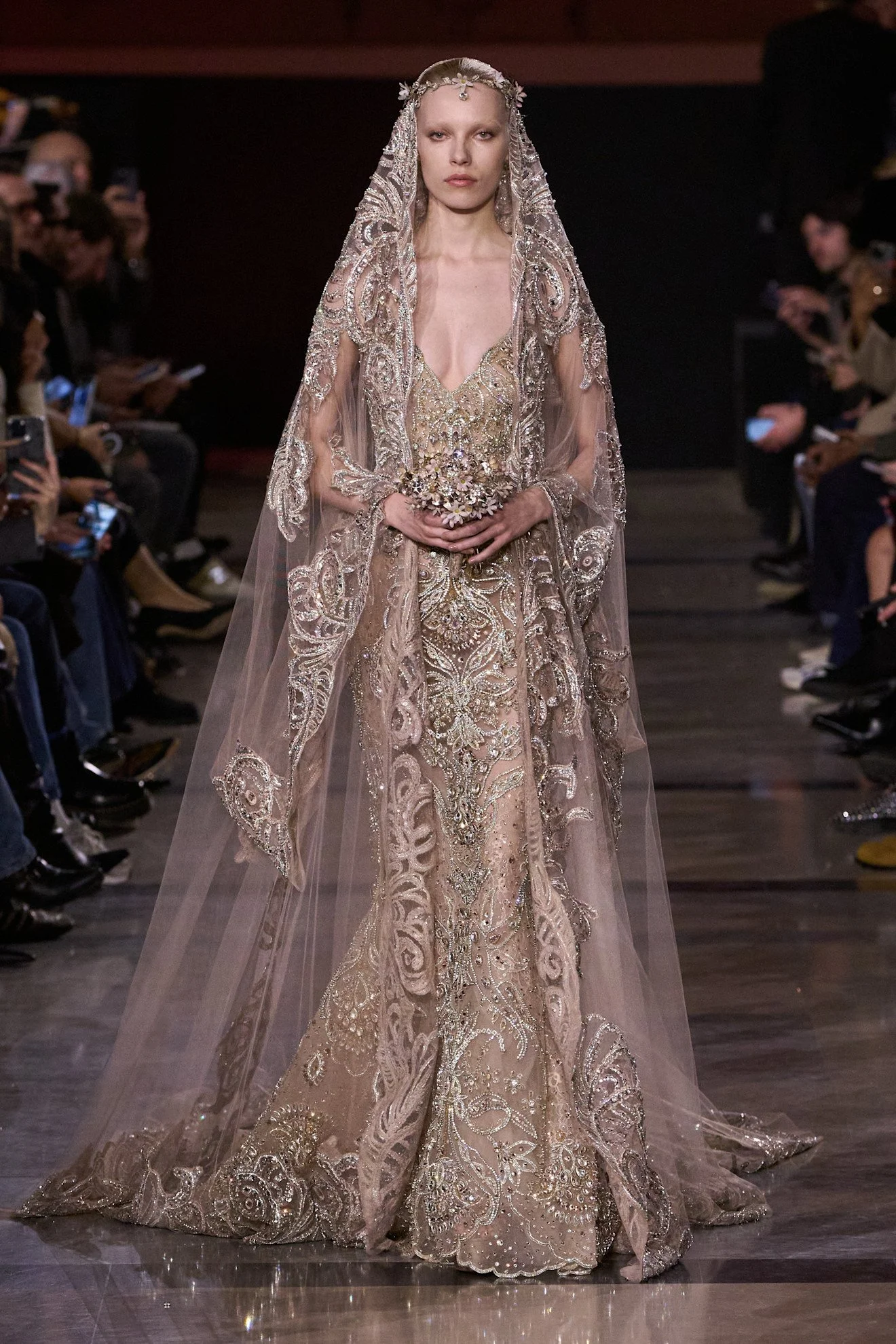
Her bridal‑leaning looks explored scalloped peplum skirts, two‑tone lace and tulle, and fish‑scale feather embroideries in shades of white and soft violet. The craftsmanship was staggering: graphic wisteria embroideries, painterly ink‑wash motifs, and layers of hand‑worked texture. For the bride who views her gown as a work of art, Miss Sohee offered couture that transcends fashion — bridal as living sculpture.
At Armani Privé, the bridal mood was serene, refined, and steeped in the house’s signature modesty. The silhouettes were elongated and whisper‑soft, with a focus on purity of line and quiet luminosity.
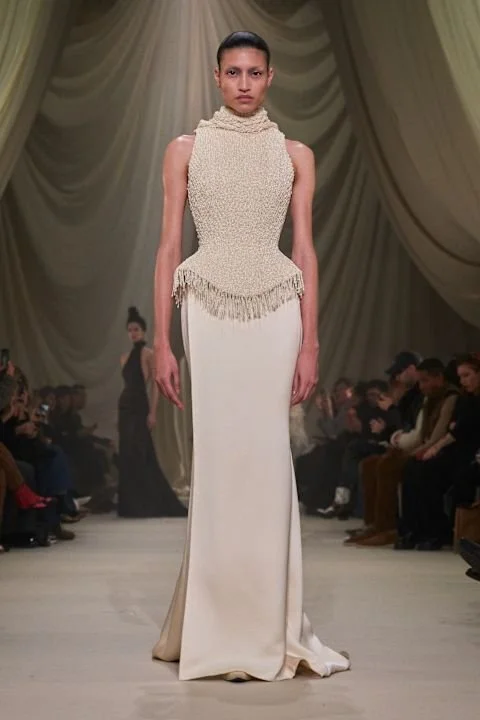
Armani’s couture bride is never ostentatious; she glows. This season reaffirmed that ethos with gowns that skimmed the body in liquid satin, veiled crystal embroidery, and pale, moonlit hues. It was a masterclass in restraint proof that modesty, when executed with mastery, becomes its own form of seduction.
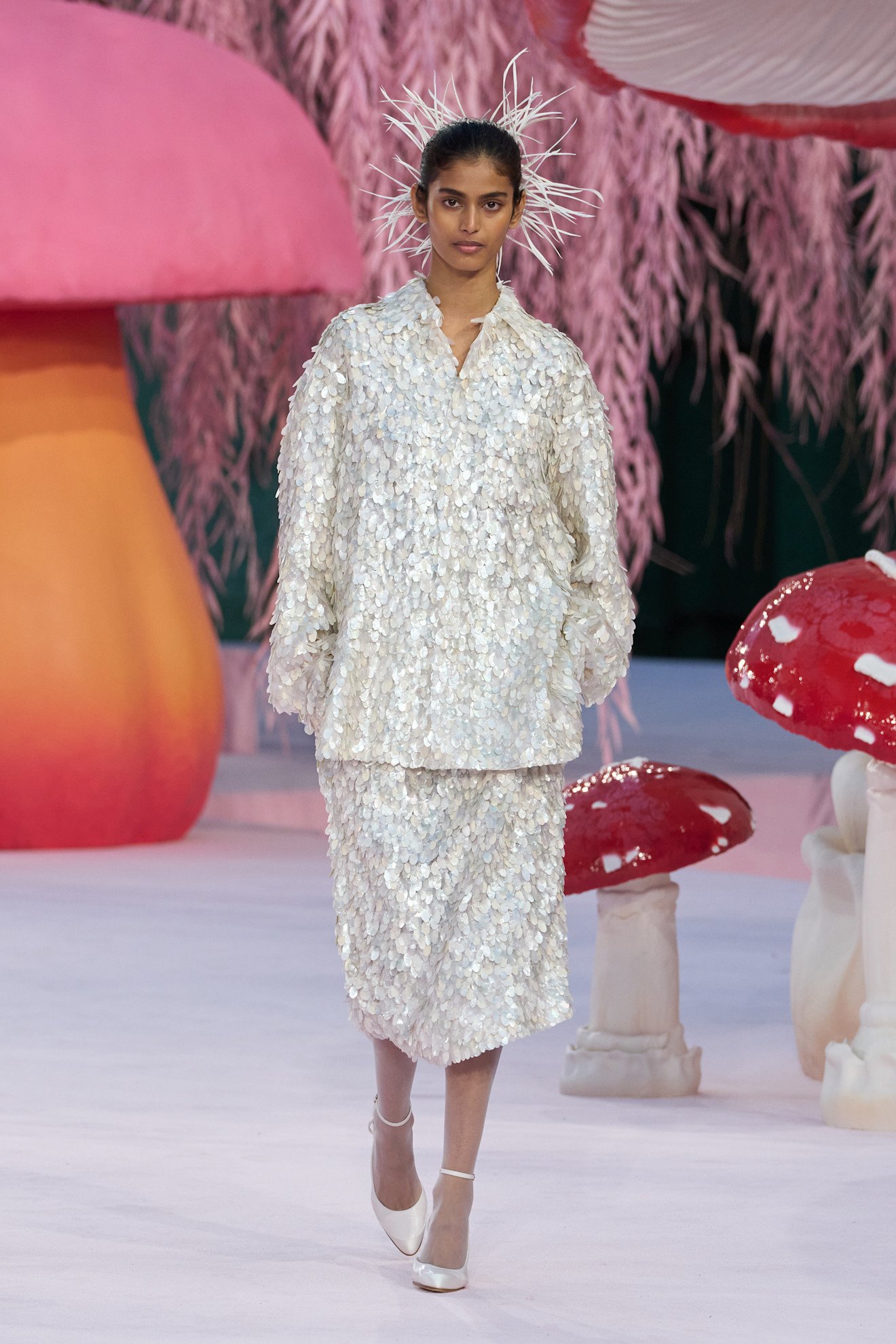
At Chanel, the bridal finale is sacred. Karl Lagerfeld famously chose a supermodel bride to close each couture show, and Virginie Viard continued the ritual. For his first couture outing, Matthieu Blazy honored the tradition with a twist: a bridal daywear look, worn by his protégé, Indian model Bhavita Mandava.
Because at Chanel, couture is always daywear an audacious philosophy Blazy embraced wholeheartedly. The look was crisp, modern, and rooted in the Maison’s codes: immaculate tailoring, soft layering, and a sense of ease that felt refreshingly contemporary for a bridal moment.
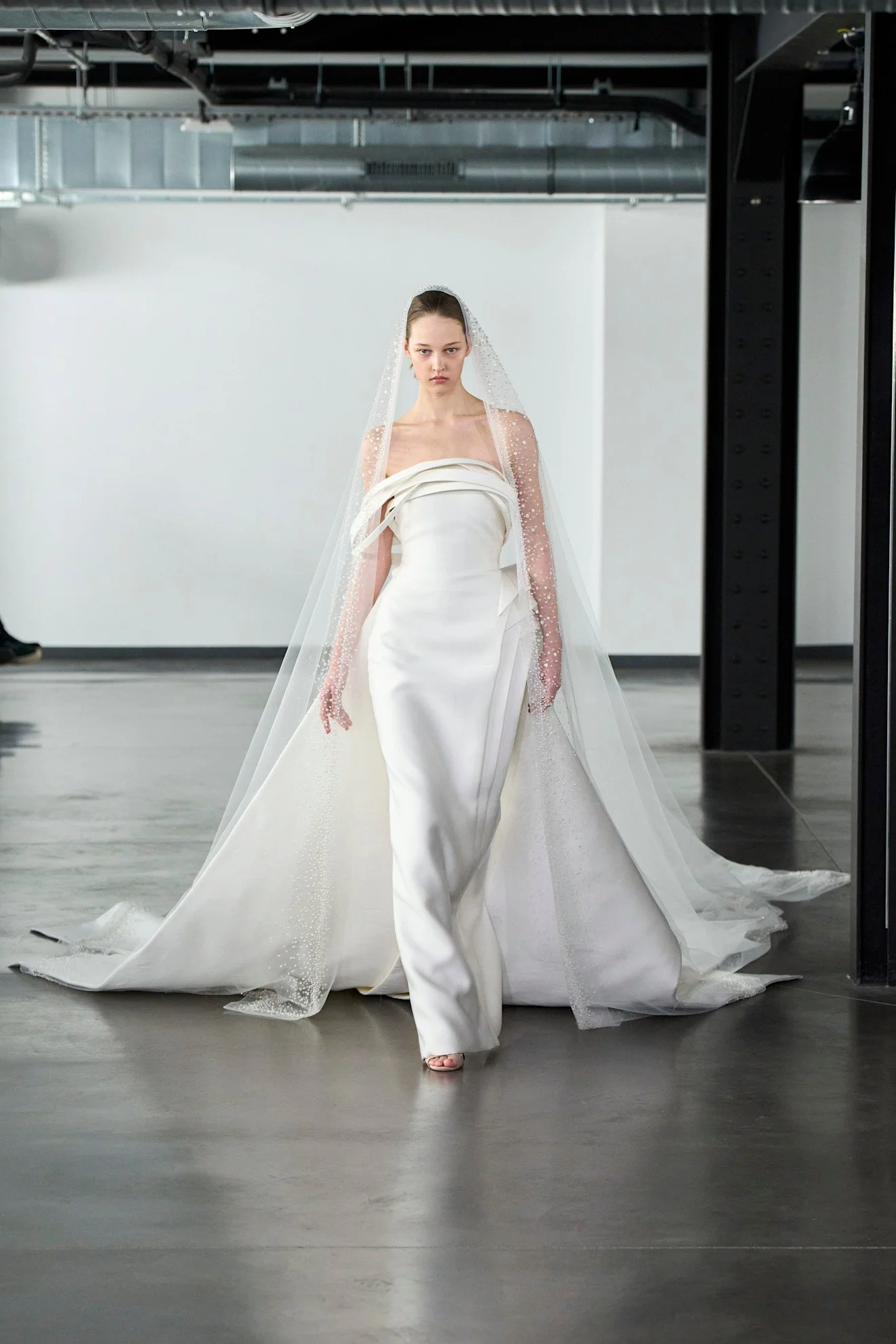
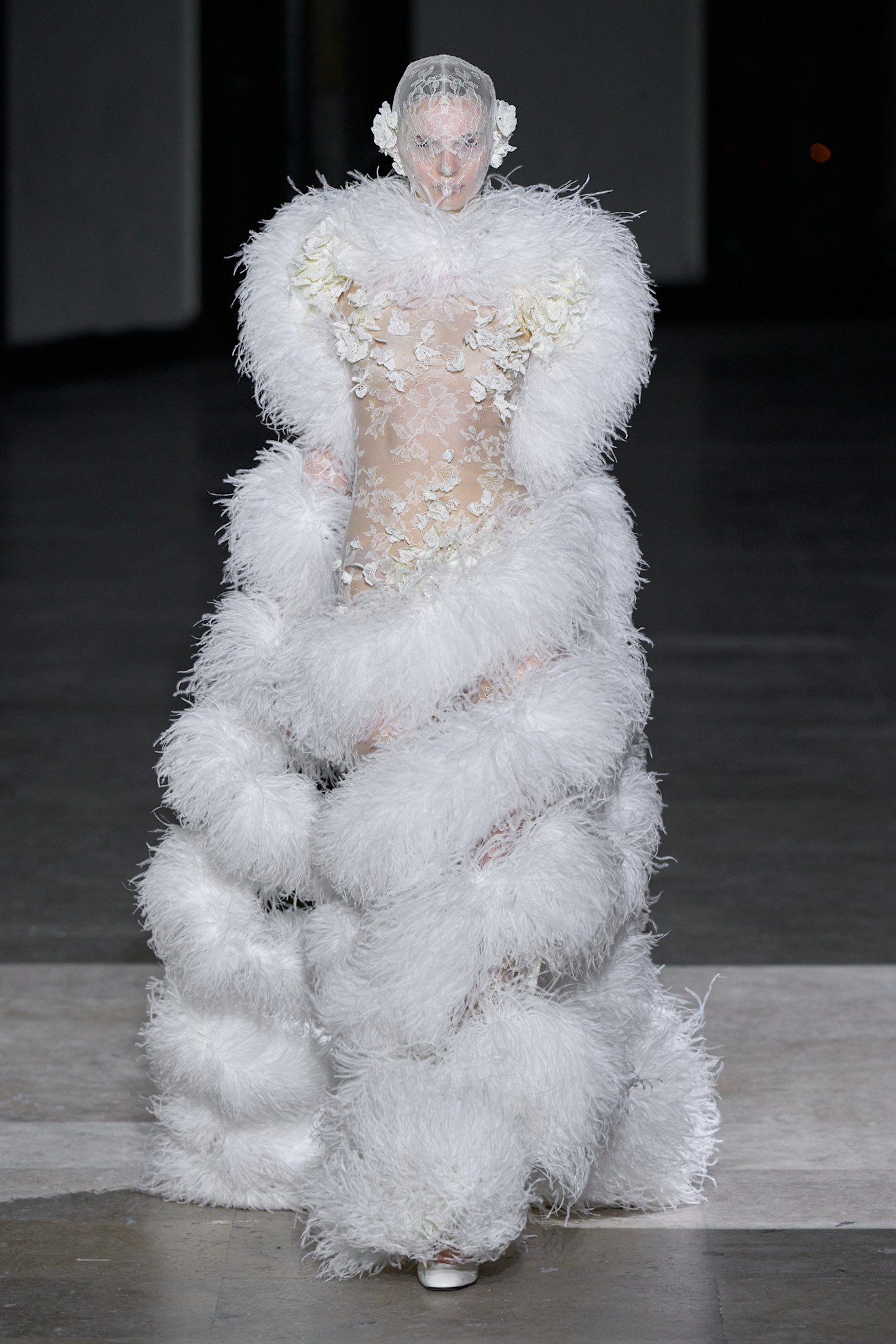
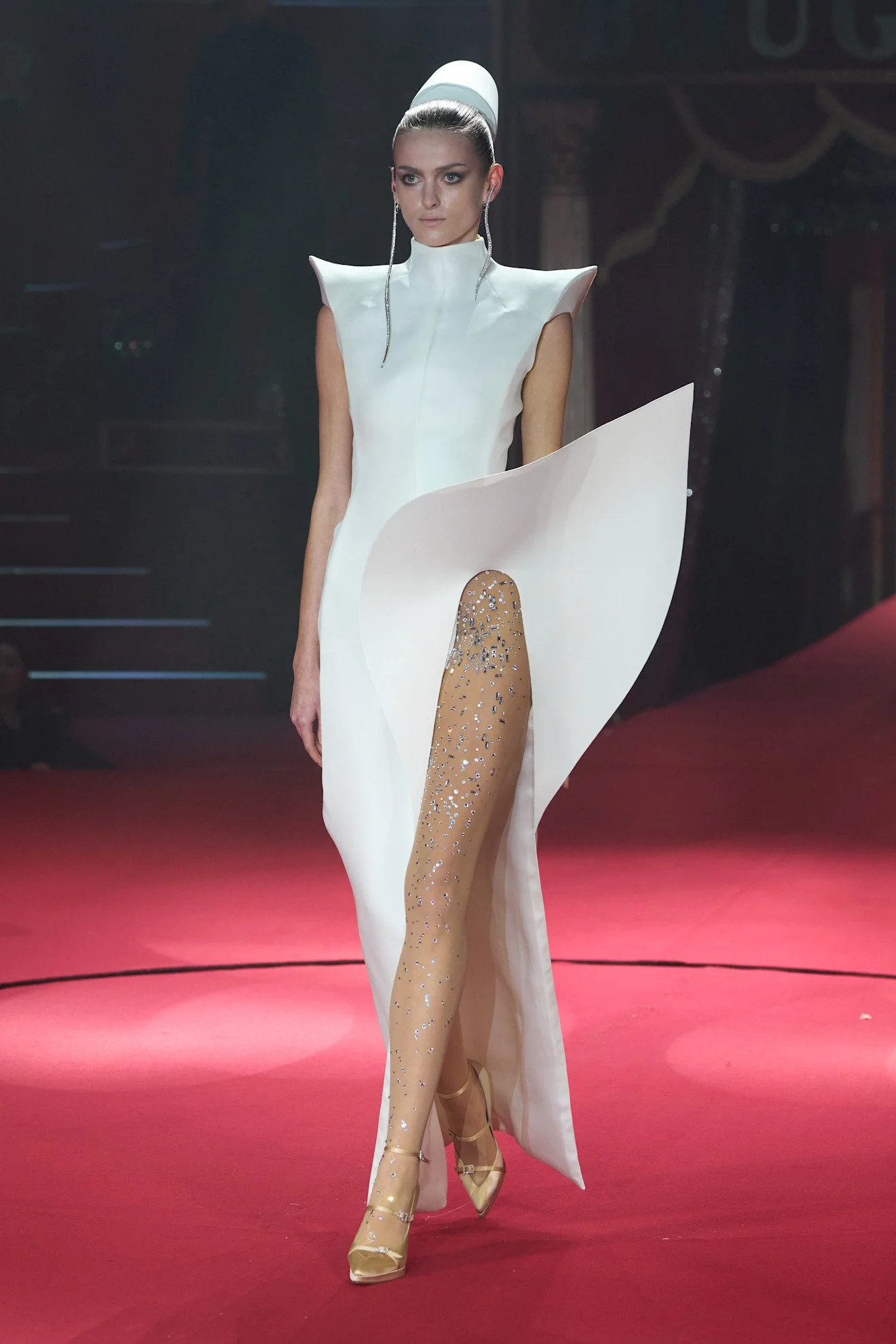
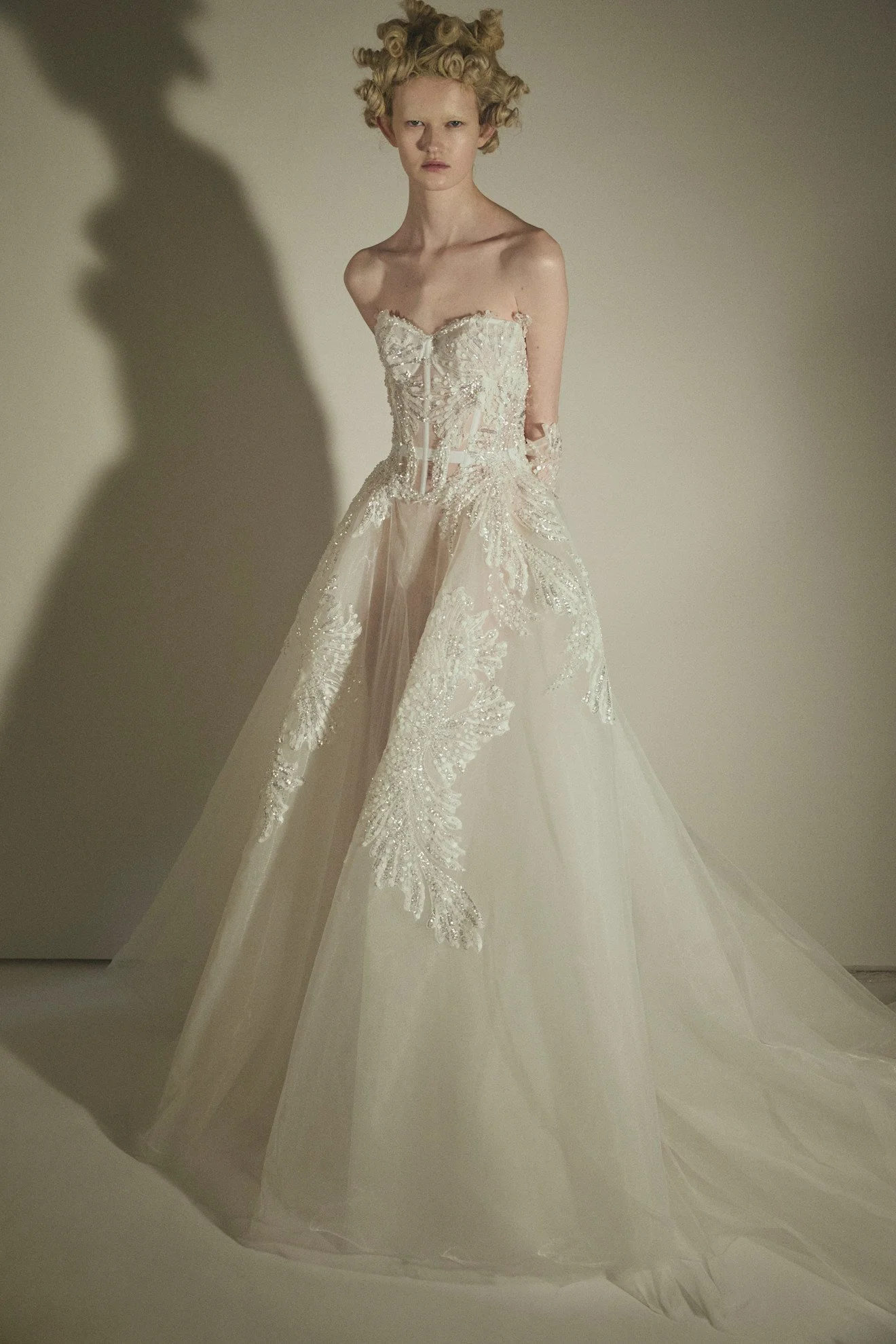
Daniel Roseberry’s Schiaparelli couture is always a study in the surreal, and this season’s bridal‑leaning pieces were no exception. Inspired by Michelangelo’s Sistine Chapel, the gowns were monumental requiring the patience of saints and the hands of artisans who treat fabric like fresco.The standout was a bustier gown with a multi‑layered tulle skirt, a cloud of sculpted volume that floated with celestial lightness. It was bridal couture as divine architecture.
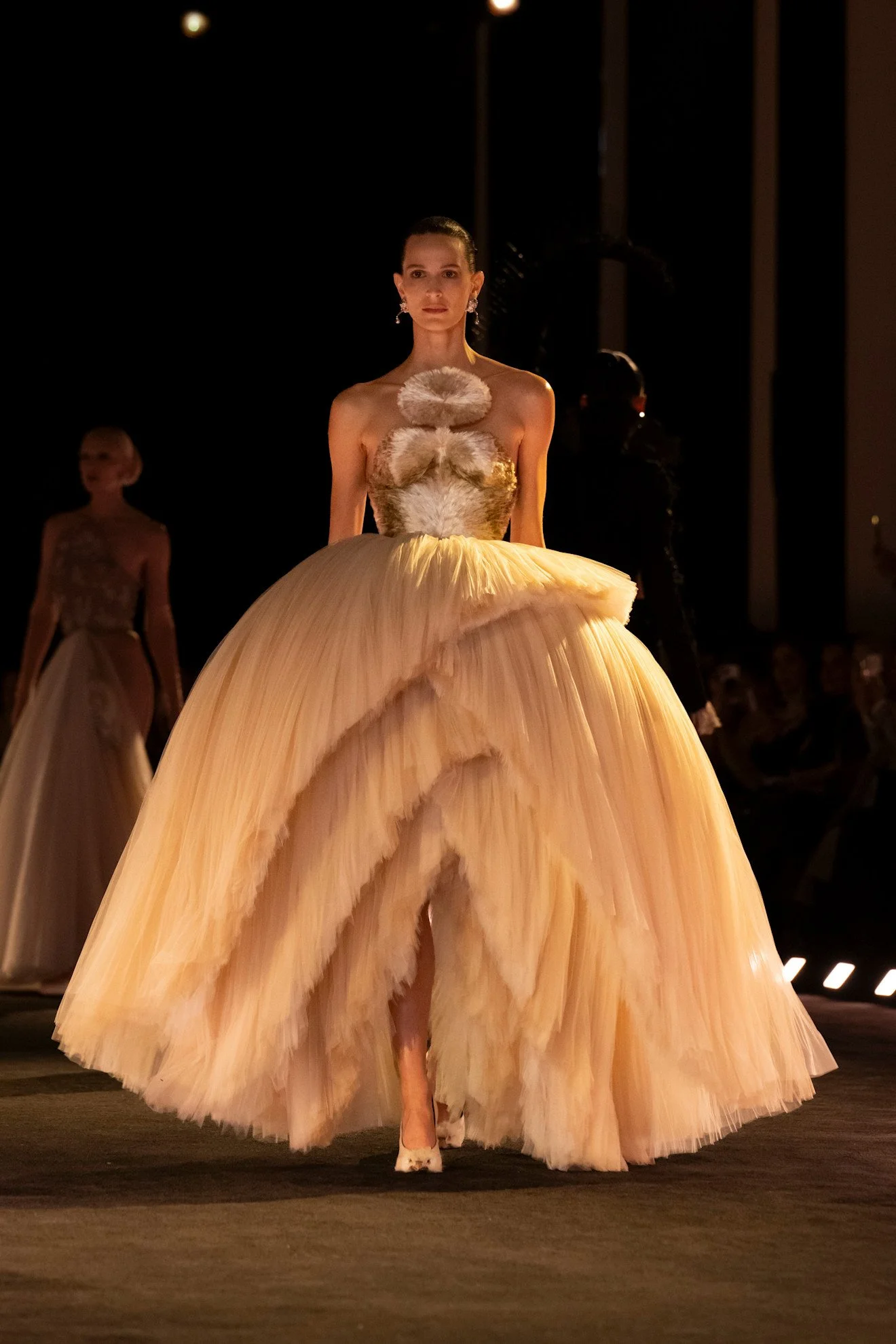
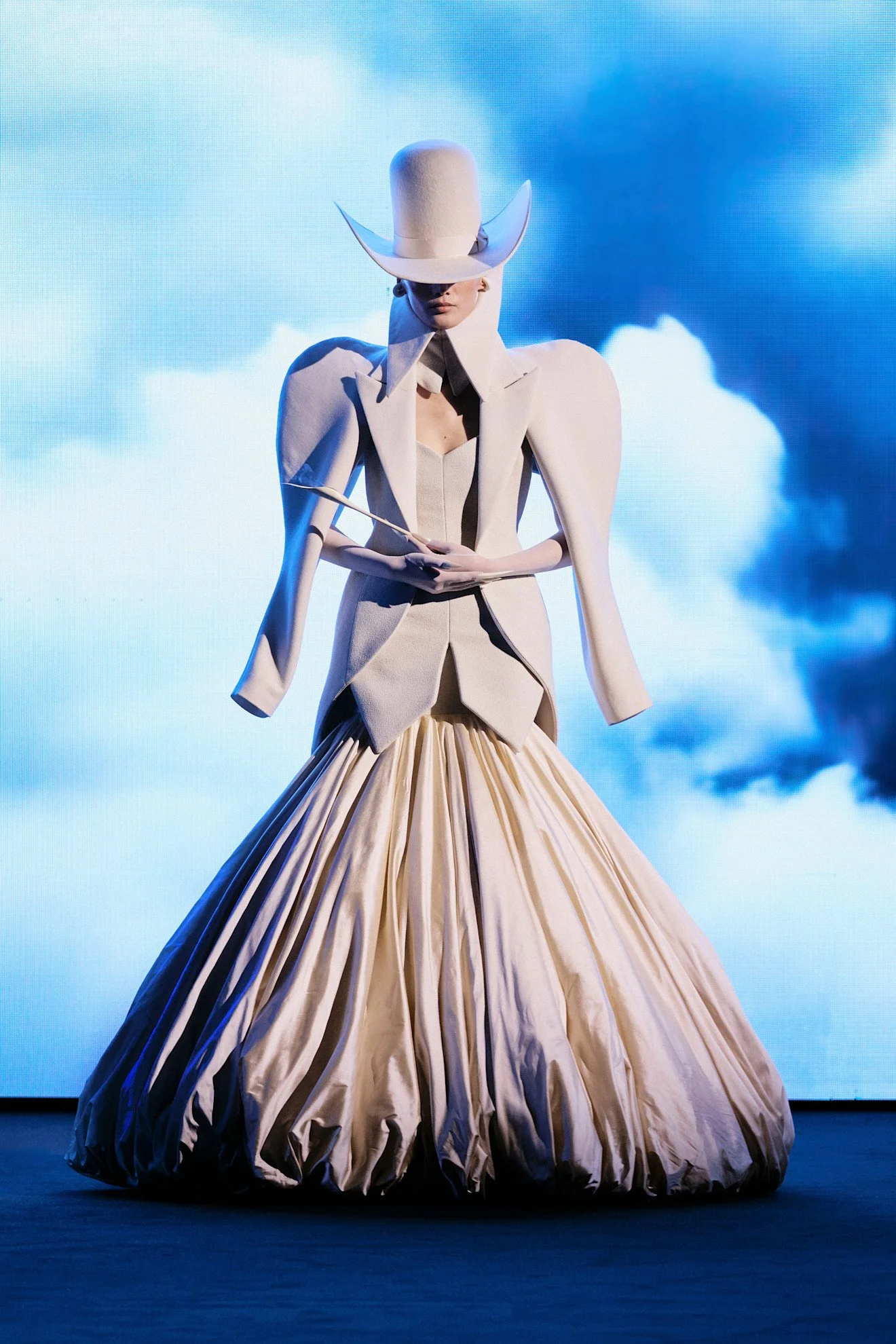
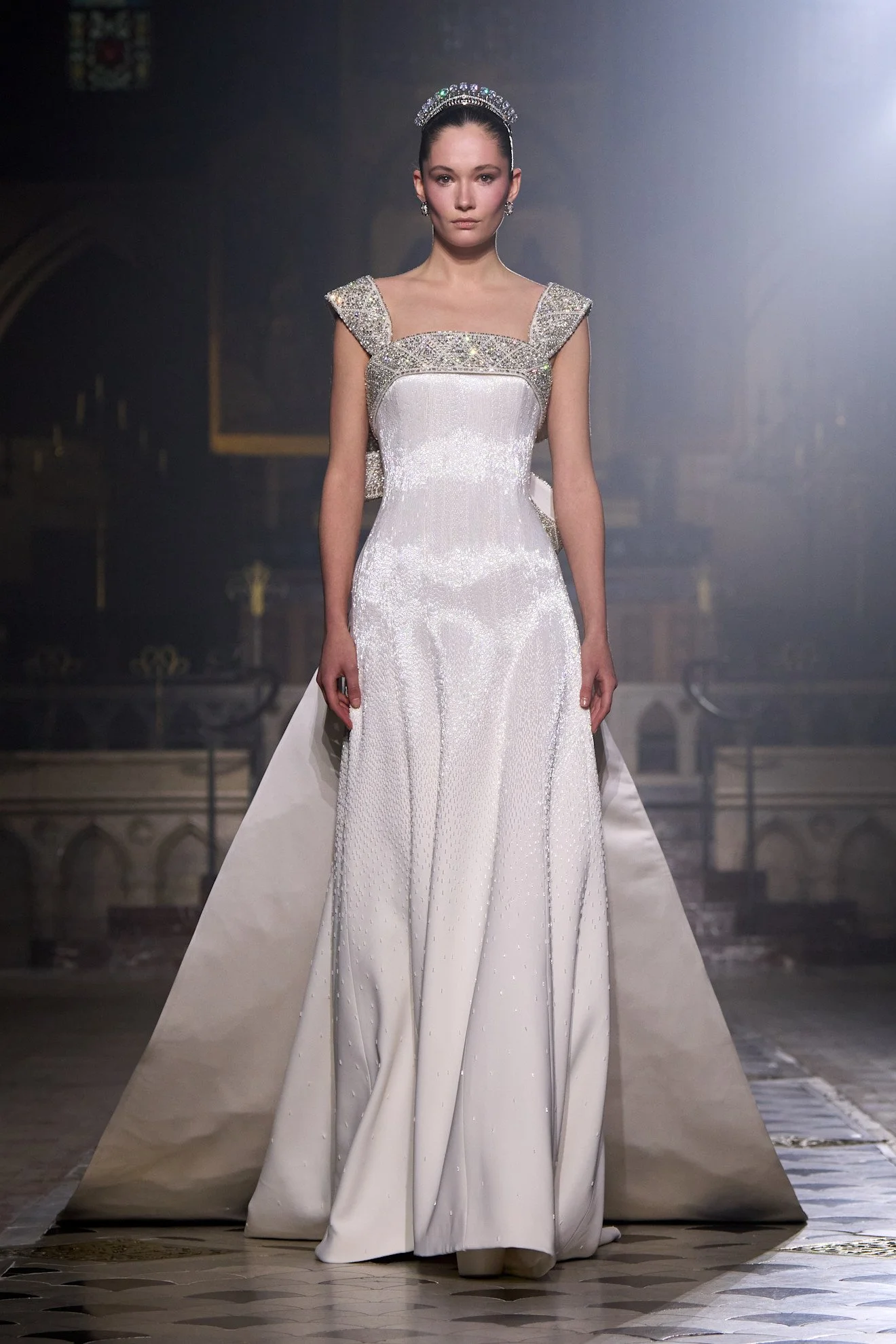
At the Cirque d’Hiver, Stéphane Rolland presented a couture collection inspired by Picasso’s Parade, where circus figures became muses for sculptural, architectural silhouettes. His bridal‑adjacent looks were powerful yet restrained white gowns carved like marble, with capes, volumes, and contours that evoked both movement and monumentality.
Rolland’s bride is a performer, a goddess, a figure of myth. She does not walk; she commands.
A New Direction for Bridal Couture
What made Summer 2026 compelling is that the designers didn’t rely on the old tropes of bridal couture no exaggerated romance, no forced symbolism, no unnecessary drama. Instead, they focused on construction, clarity, and identity.
The modern couture bride isn’t looking for a fantasy imposed on her. She’s looking for a design language that reflects who she is:
confident, intentional, and uninterested in excess.