
John F. Kennedy Jr. and Carolyn Bessette: The Style Icons Behind the Most Anticipated Love Story Series
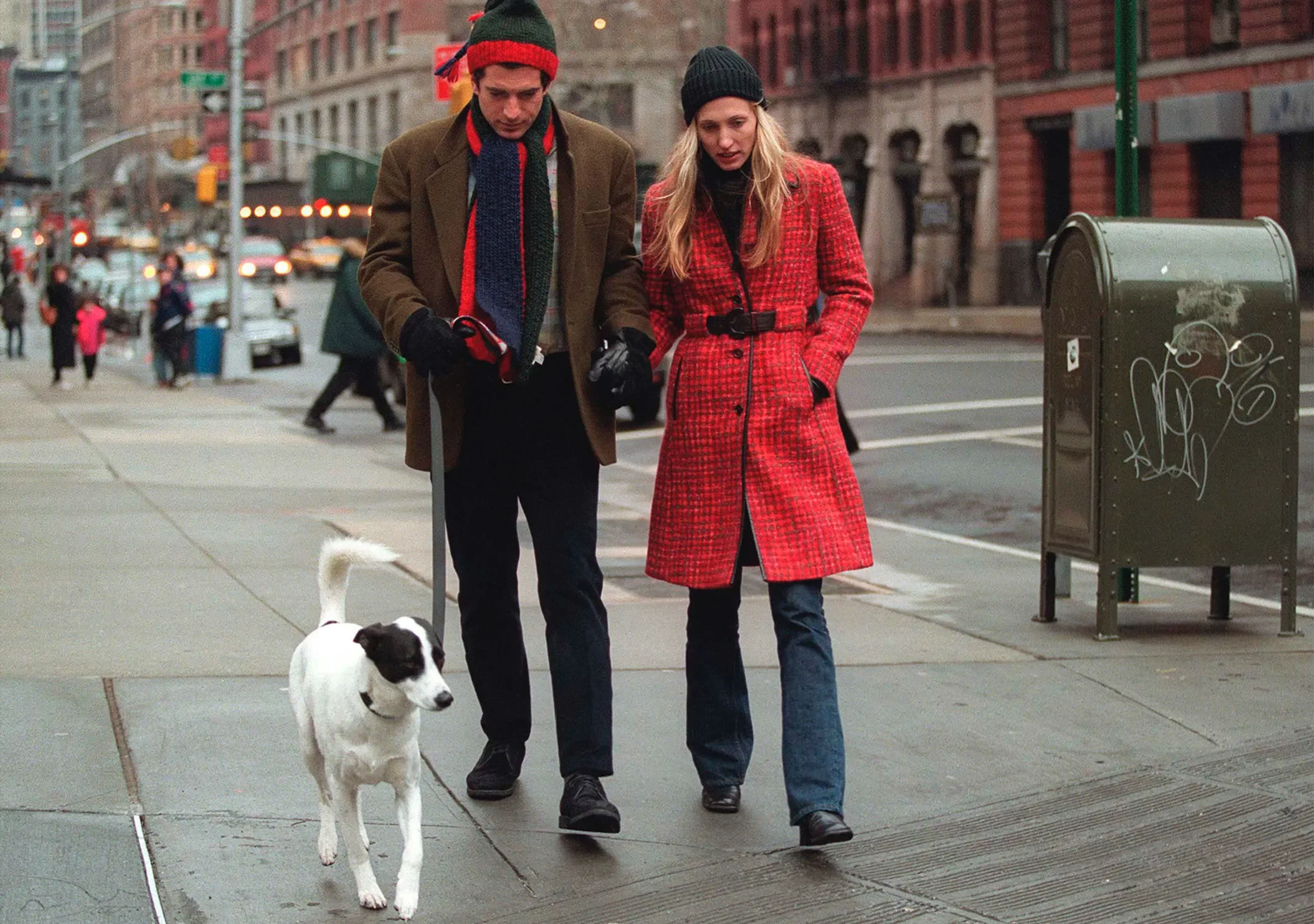
There are love stories that belong to pop culture, and then there are love stories that belong to history. John F. Kennedy Jr. and Carolyn Bessette‑Kennedy were the latter a couple whose elegance, mystery, and tragic brevity transformed them into modern American mythology. Now, decades later, their world is returning to the screen in the highly anticipated eight‑episode series Love Story, premiering on Galentine’s Day. And while the romance is irresistible, it is the style the quiet glamour, the minimalism, the American chic that has fashion lovers counting the days.
Few couples have ever embodied the idea of “American royalty” quite like John and Carolyn. He was the son of the most iconic U.S. president in history, the golden‑haired heir to the Kennedy dynasty, a family long regarded as the closest thing America has to aristocracy. Before marrying Carolyn, John was the man everyone wanted to date linked to Cindy Crawford, Madonna, Brooke Shields, Sarah Jessica Parker, and Daryl Hannah. His charisma was effortless, his presence magnetic, and his lineage unmatched.
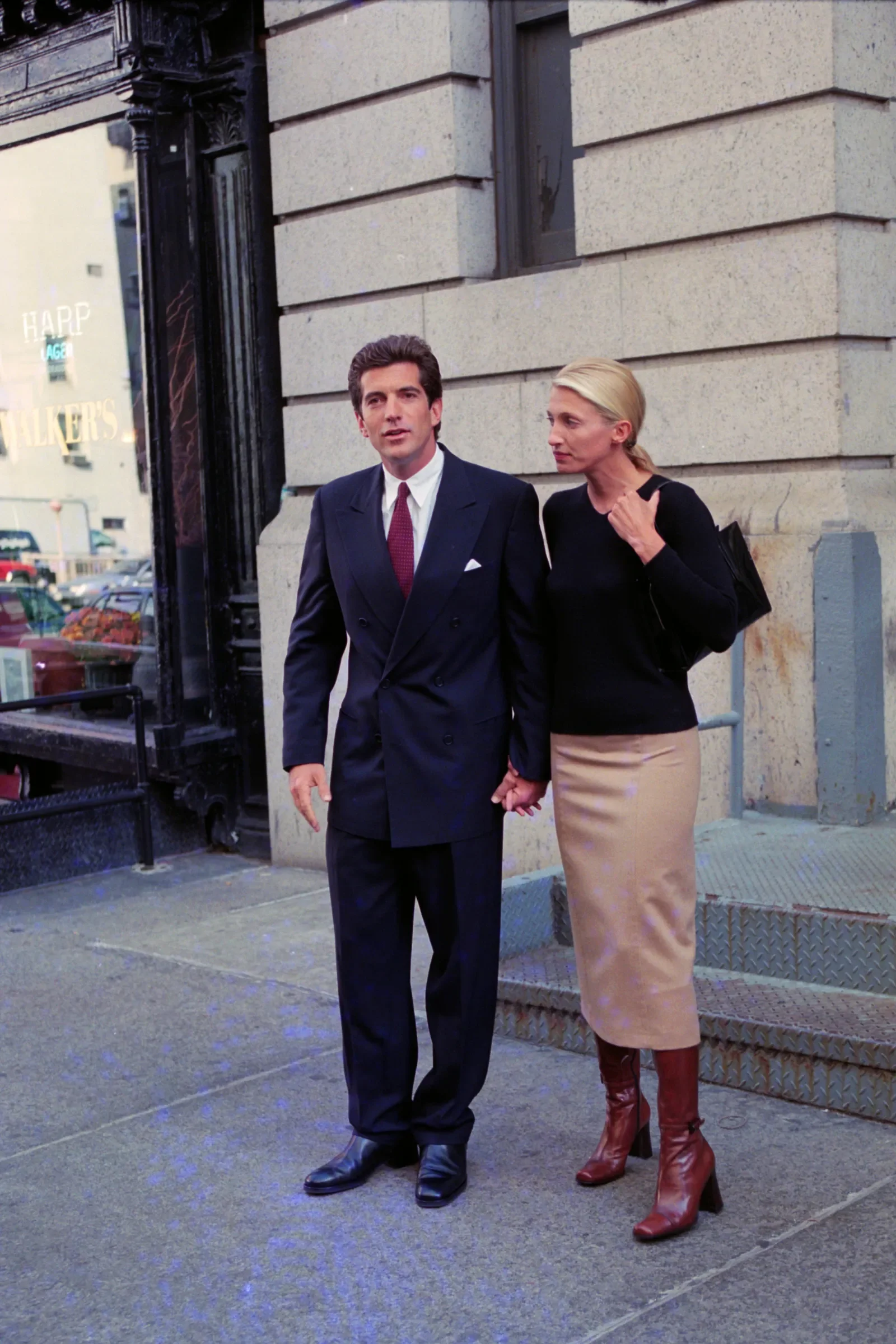
Carolyn, by contrast, was the epitome of understated sophistication. Born in upstate New York and raised in Connecticut, she modeled briefly before joining Calvin Klein first in sales, then rising to become the brand’s director of publicity. It was there, in the minimalist universe of Klein’s New York, that her aesthetic sharpened: clean lines, monochrome palettes, architectural silhouettes, and a refusal to be anything other than herself. She met John in 1992, when he was still dating Daryl Hannah, and by 1994 they were inseparable — trailed relentlessly by paparazzi who couldn’t look away from the couple that defined a decade.
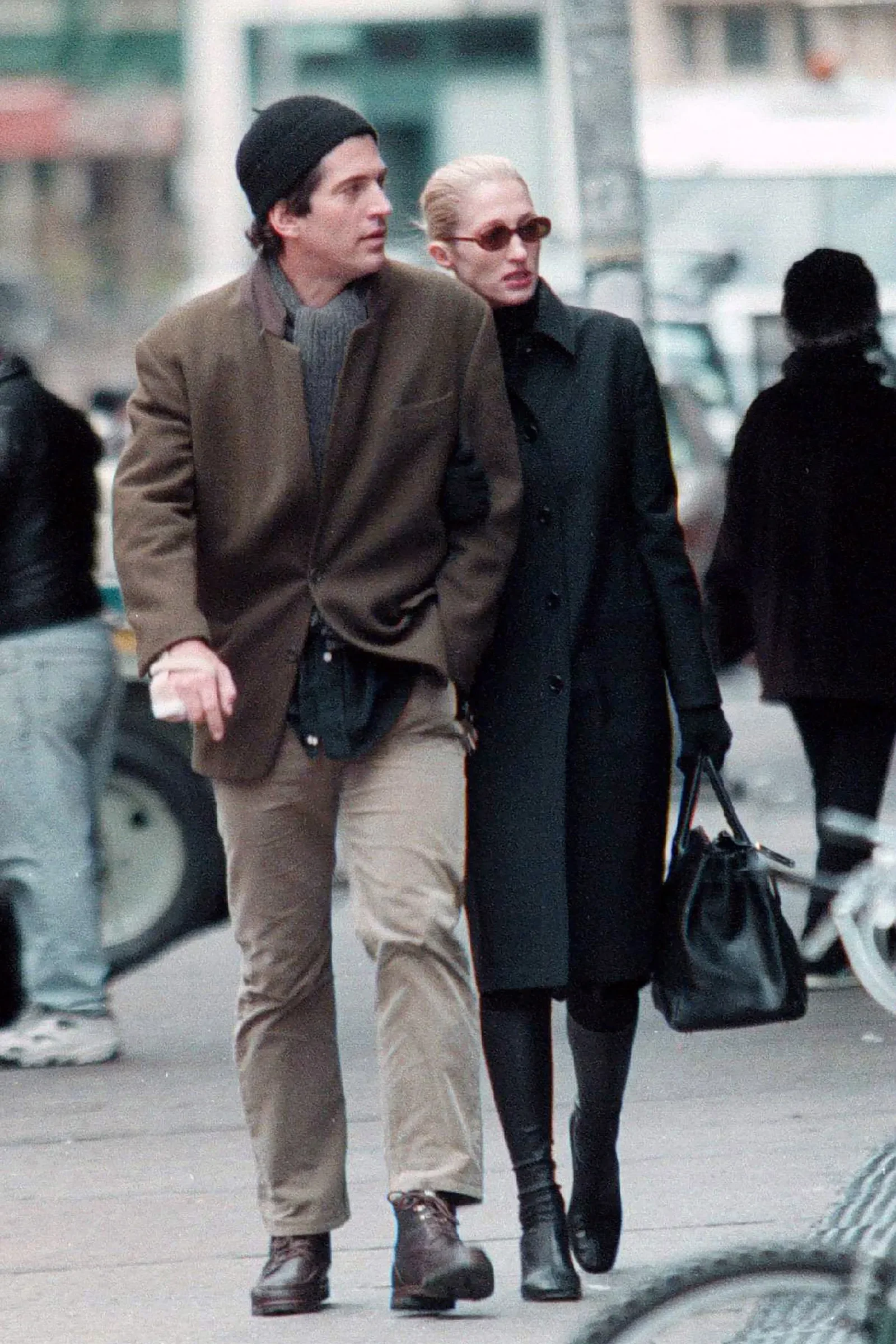
The series promises to explore not only their romance but the visual language that made them unforgettable. Carolyn’s style, in particular, has become a cultural reference point a blueprint for modern American minimalism. Her wardrobe was a study in restraint: crisp white shirts, bias‑cut skirts, slim black trousers, camel coats, tortoiseshell sunglasses, and the occasional pop of red lip. She was the woman who could walk down the street in a simple black turtleneck and still look like the most photographed person in New York.
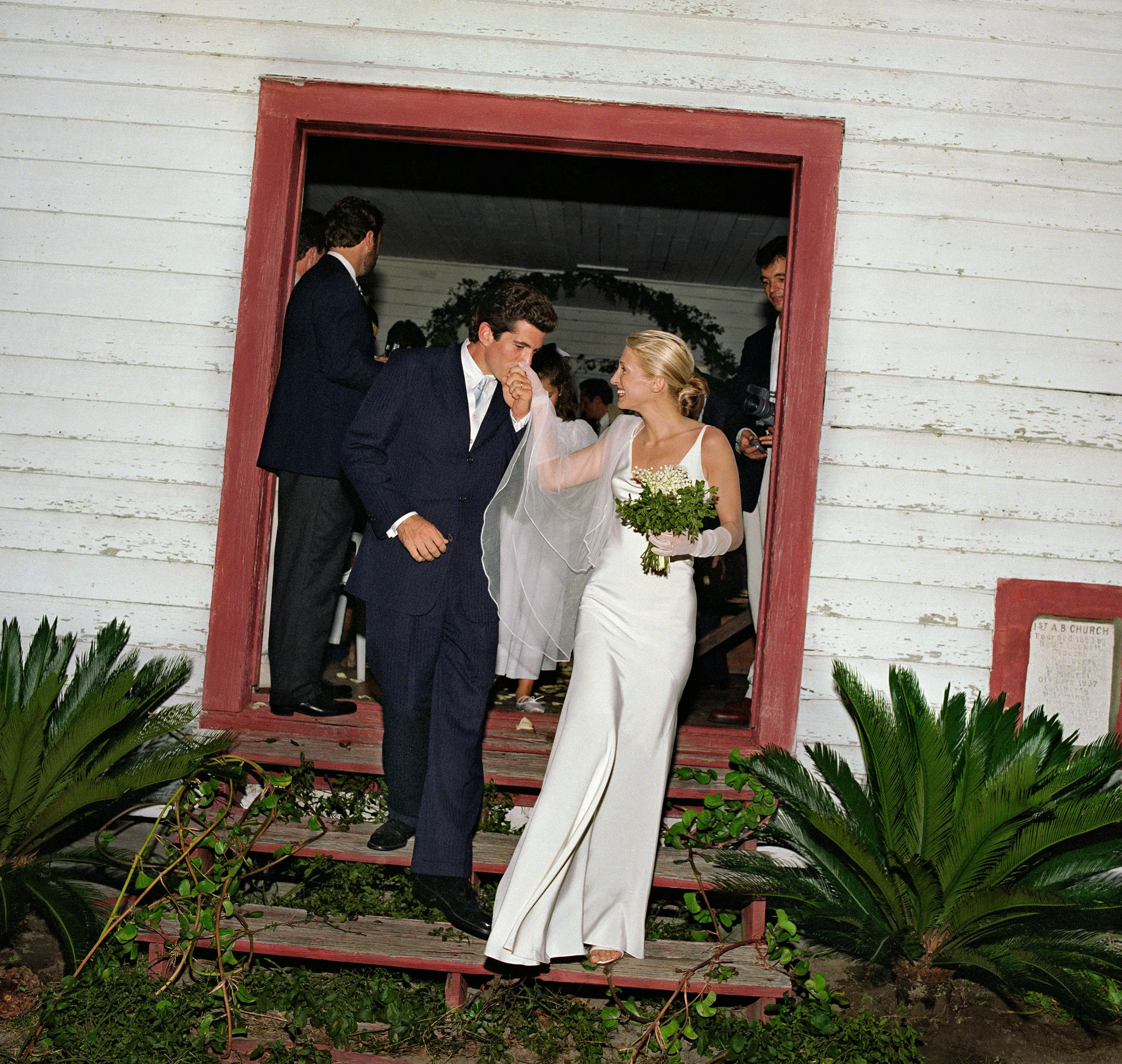
Her wedding dress a white silk slip by Narciso Rodriguez, then a little‑known designer at Calvin Klein became one of the most influential bridal looks of the century. It was the anti‑princess dress: no lace, no volume, no embellishment. Just purity of line, purity of fabric, and purity of intention. It made Rodriguez an overnight sensation and cemented Carolyn as the high priestess of ’90s chic.
The timing of the series feels almost poetic. Fashion is once again in a Carolyn moment. Calvin Klein’s Fall/Winter 2026 collection referenced her unmistakably the clean tailoring, the ivory knits, the sensual minimalism that defined her. Designers across New York and Europe continue to cite her as inspiration, proving that her influence has not faded but deepened with time. She remains the ultimate mood board: elusive, elegant, and eternally modern.
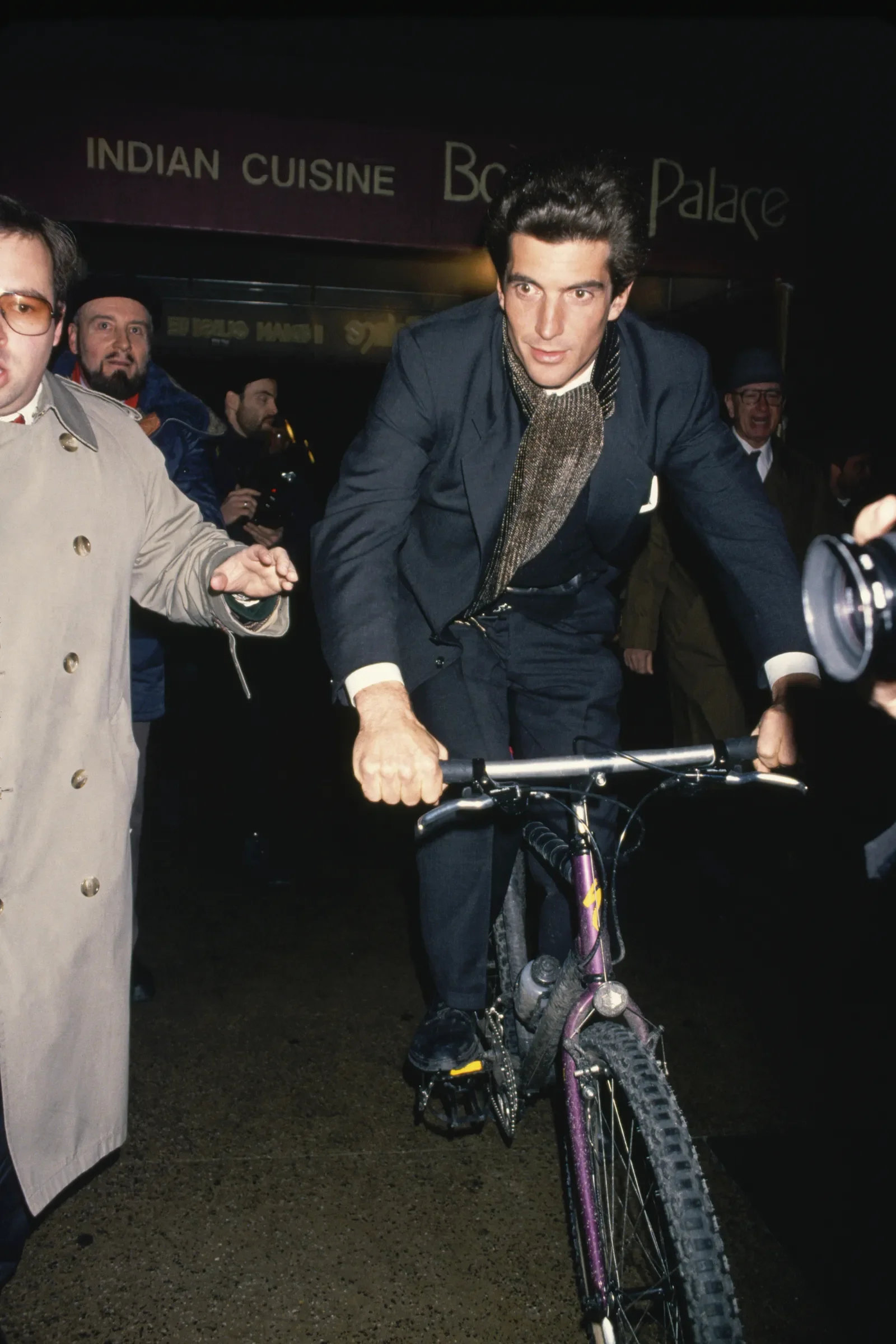
John’s style, too, deserves its own spotlight. His look was the embodiment of East Coast privilege: relaxed Oxford shirts, worn‑in chinos, navy blazers, and that unmistakable Kennedy ease. He was athletic, sun‑kissed, and effortlessly handsome the kind of man who could step off a bicycle in Tribeca and look like he’d walked out of a Ralph Lauren campaign. The series is expected to capture this aesthetic in detail, from his tailored suits to his casual weekend uniform, offering a nostalgic return to a pre‑digital New York where style was lived, not curated.
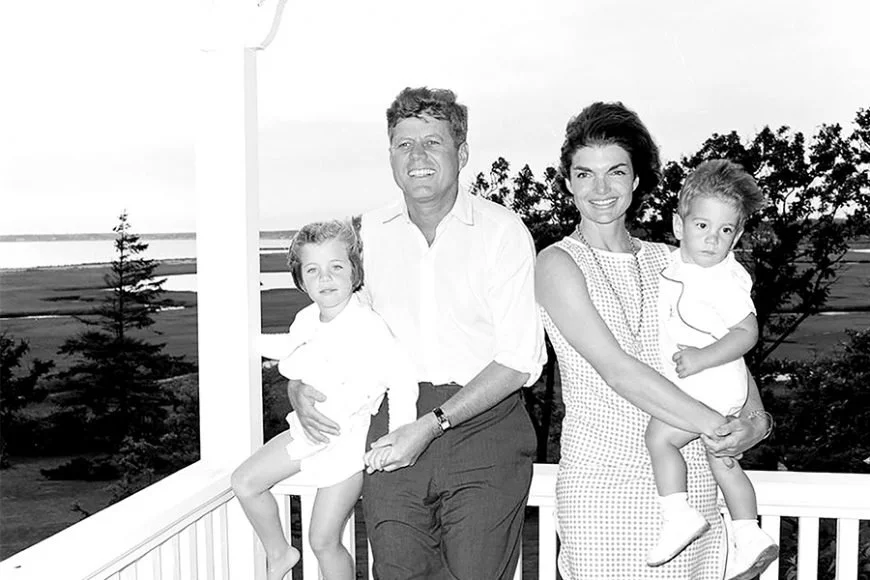
President John F. Kennedy and First Lady Jacqueline Kennedy with their children Caroline and John F. Jr. in Hyannis Port Massachusetts
The casting of Naomi Watts as Jacqueline Kennedy Onassis. Watts, already celebrated for her roles in Feud: Capote vs. The Swans and The Watcher, steps into the shoes of one of the most iconic women of the 20th century. Jackie’s presence in the series adds another layer of fashion history the pillbox hats, the pearls, the immaculate tailoring. Her influence on John’s life was profound, and her disapproval of his relationship with Daryl Hannah is well‑documented. Yet she never lived to meet Carolyn; Jackie died in 1993, just before the couple began dating. The series will inevitably explore this emotional gap the mother he adored, the woman he loved, and the legacy that shaped them both.
But Love Story is not simply a retelling of romance or tragedy. It is a portrait of a cultural moment a time when New York was raw and glamorous, when celebrity was mysterious rather than manufactured, when style was instinctive rather than algorithmic. It is a chance to revisit the ’90s through the lens of two people who defined its elegance.
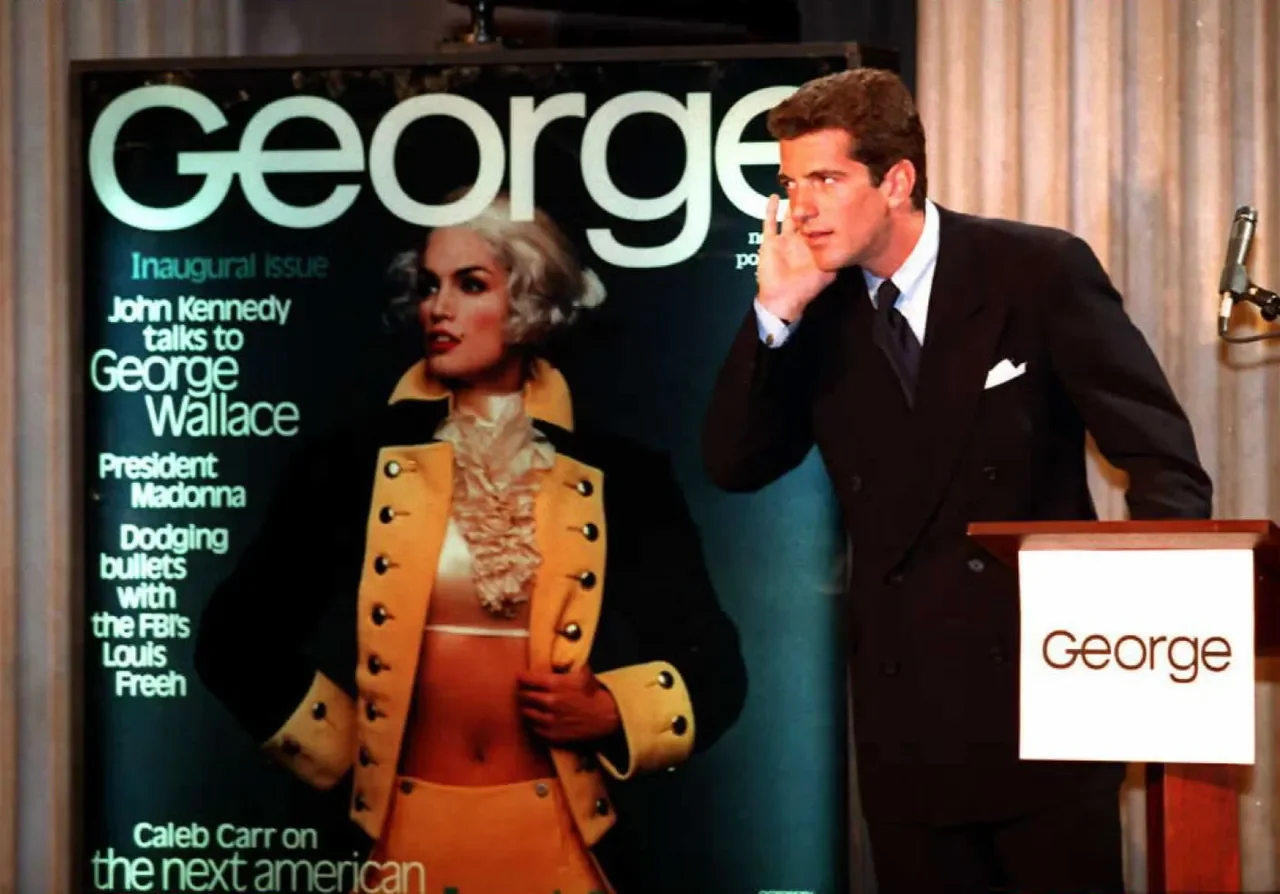
The tragedy of their deaths in 1999 a plane crash off Martha’s Vineyard, with John at the controls froze them in time. He had earned his pilot’s license only the year before, fulfilling a childhood dream. The accident ended not only their lives but an era, leaving behind a sense of unfinished beauty that still lingers.
This is why the series matters. It is not just nostalgia; it is a cultural excavation. A chance to understand why John and Carolyn still captivate us, why their style remains relevant, why their love story feels cinematic even before Hollywood touches it.
Love Story promises to be more than a biographical retelling. It is poised to become a fashion moment, a mood board for a generation rediscovering the allure of quiet luxury, minimalism, and the mystique of a couple who lived and loved in the spotlight yet somehow remained unknowable.
And perhaps that is their greatest legacy: the beauty of what they revealed, and the elegance of what they kept for themselves.